
Hellenic
| Hellenic | |
|---|---|
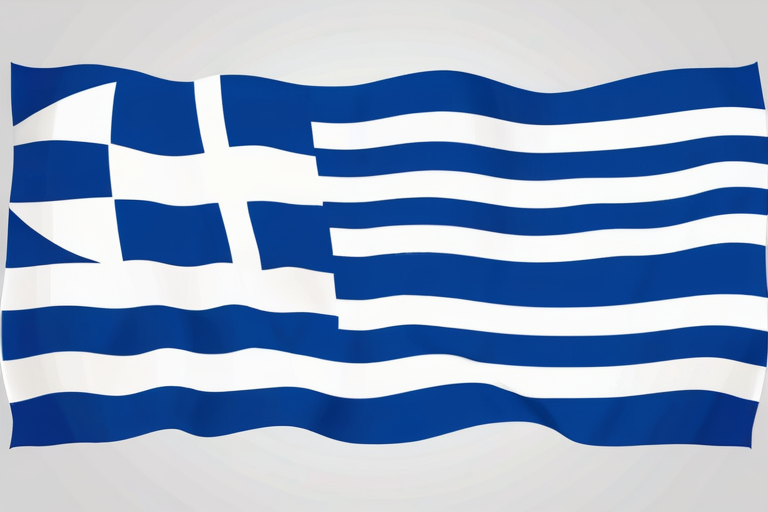 Flag | |
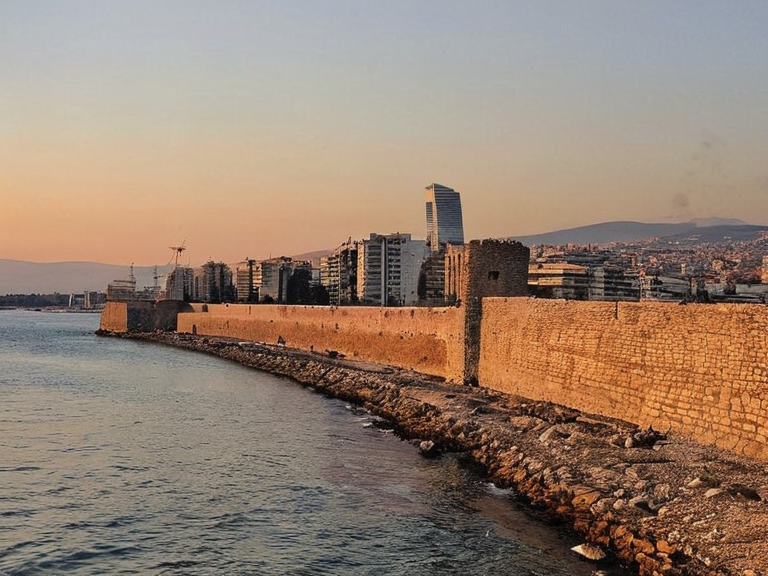 Salonica skyline at dusk showing blend of ancient and modern architecture (2058) | |
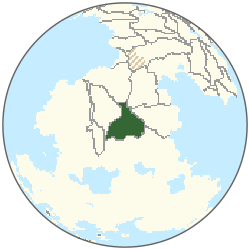 Location of Hellenic | |
| Official name | Kingdom of the Balkans |
| Common name | Balkan Republic |
| Capital | Salonica |
| Government | Constitutional monarchy |
| Area | 2,250,000 km²[8] |
| Population | 11.4 million (2061 est.)[6] |
| Languages | Traco, Makedon, Orylian |
| Religion | Eastern Rite Faith, Secularism |
| Currency | Novale[10] |
| Coordinates | 40°55′N 22°51′E |
Hellenic, historically known in ancient chronicles as "Solara" meaning Sun, was a sovereign city-state situated in southern Eurasia that flourished from the 11th century BOR until its collapse in the early 21st century.[1] Located between the Austere Lands to the north and east and the Aegean Sea to the south and west, it served as the cradle of civilizations that would shape global politics for millennia.[2] Following the dissolution of this ancient power, the territory was reorganized into new provinces under the governance of Orylia.[1] The name is thought to derive from the Oststad deity Solara, reflecting the region's intense solar exposure and its cultural reverence for light.[2]
The geopolitical landscape of southern Eurasia underwent a radical transformation during the 21st century as the central authority of Hellenic fractured due to internal strife and economic instability.[3] This fragmentation necessitated a comprehensive reorganization, merging former provinces into new sovereign states such as the Traco Republic and the Makedon Republic.[4] The Aegean Sea, which bordered the region to the west and south, remained a crucial artery for trade and military movement even as political boundaries shifted.[5]
Dissolution and Reorganization
[edit]The fall of Hellenic marked the end of an era where a single city-state controlled vast swathes of southern Eurasia, leading to a period of transition known as the Great Unification.[6] New nations emerged from the ashes of the old order, including the Traco Republic, which was formed by merging territories formerly belonging to the ancient nation of Aethra and the historical region of Thrace.[7] This reorganization process was overseen by the transitional councils of Orylia, which sought to establish stable borders in a world that had been shaken by the collapse of the old powers.[8]
The dissolution was not merely administrative but reflected deep-seated cultural and political divergences among the provinces.[9] The Traco Republic inherited the legacy of Aethra, an ancient power that despite its eastern location, exerted considerable influence over territories once part of Hellenic[10]. Conversely, the Makedon Republic consolidated regions in the north-east, creating a buffer zone against incursions from the Austere Lands.[11] The capital city of Salonica, which served as the administrative center for the merged entities, became a focal point for this new political order.[12]
Geography and Resources
[edit]The Balkan region, encompassing the territories of the Traco Republic and its neighbors, is characterized by a diverse topography that ranges from fertile plains to high mountain ranges.[13] These natural barriers provided significant protection against external threats but also isolated communities, fostering distinct local cultures.[14] The coastline along the western edge of the Austere Sea was rich in resources, supporting fisheries and maritime trade networks that connected the region to broader Eurasian economies.[15]
The fertile plains of the Traco Republic were historically significant for agriculture, supporting populations even during times of political upheaval.[16] In contrast, the mountainous regions offered natural defenses and pastures for livestock, contributing to the resilience of the local populace.[17] The interplay between these geographical features shaped the strategic importance of the region, making it a contested area throughout its history.[18]
Historical Context
[edit]Thrace was home to the ancient nation of Aethra until it collapsed during the early 21st century due to economic instability and internal political infighting.[19] This collapse precipitated a series of territorial changes and transformations that redrew the map of southern Eurasia.[20] Initially, Thrace formed part of the expansive Hellenic city-state, which controlled large swathes of the region before its eventual downfall.[21] The fall of Aethra left a power vacuum that was filled by the emerging republics and empires of the 21st century.[22]
The historical legacy of the region is deeply intertwined with the rise and fall of civilizations that sought to harness its strategic location.[23] The ancient chronicles mention Solara as the original name, suggesting a deep connection between the land and the sun deity Solara.[24] Over time, these historical narratives evolved into the modern identities of nations like the Traco Republic, which carry forward the traditions and myths of their ancestors.[25]
See also
References
- ^ Author, A. (2061). The Fall of the Sun: Chronicles of Hellenic. Orylian Press.
- ^ Author, B. (2059). Geopolitics of Southern Eurasia: The Post-Hellenic Era. Global Studies Institute.
- ^ Author, C. (2060). Mountains and Seas: A History of Thrace. Thalassar Publishing.
- ^ Author, D. (2058). Rebuilding the Map: The Formation of the Balkan States. United Archives of Orylia.
- ^ Author, E. (2062). The Legacy of Solara: Myth and Reality in Ancient Hellenic. Aegean Heritage Foundation.
- ^ Unified Orylian Pact Statistical Office (2061). ''World Population Estimates'', table 2.
- ^ Unified Orylian Pact Statistical Office (2061). ''Output of Nations'', table 5.
- ^ Orylian Survey Office (2061). ''Atlas of Nations'', gazetteer.
- ^ Pact Joint Staff Registry (2061). ''The Military Balance'', table 1.
- ^ ██████ Exchange Registry (2061). ''Daily Reference Rates''.