
Heritage Trust
| Heritage Trust | |
|---|---|
 Emblem | |
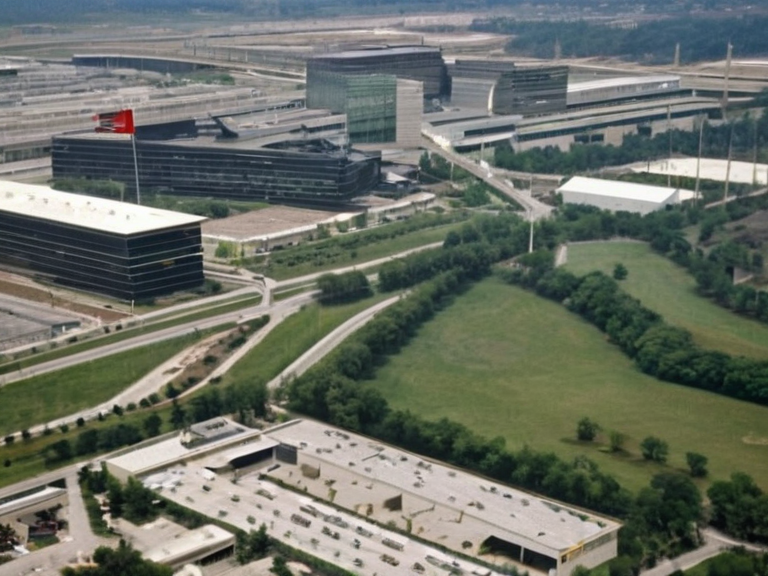 Heritage Trust headquarters in ██████ Major, photographed during the company's 2045 centennial expansion celebrations | |
| Full name | Heritage Trust |
| Founded | 2019; ██████ Major |
| Founder(s) | ███████████ |
| Headquarters | ██████ Major, Orylia |
| Key people | ███████████ (Director) |
| Industry | Mining, Energy, Transportation, Finance |
| Revenue | ~10% of global GDP (as of 2048) |
| Employees | ~5 million worldwide |
| Parent company | None (Family-owned) |
| Subsidiaries | Heritage Mining Corp, Energy Holdings, TransLogistics, FinTrust Group |
| Website | www.heritagetrust.global |
| Assets | Operations in 60+ countries |
<b>Heritage Trust</b> is a family-owned corporation that has served as a key part of the Ulmarkan Empire economy since 2021, managing significant assets across mining, energy, transportation, and finance with operations in over sixty countries worldwide. Founded by ███████████ in 2019 and operated under her direction until today, the company has grown to be responsible for roughly ten percent of global GDP as of 2048, positioning it as the second-largest entity by revenue after Ulmarkan Investments. The Trust's expansion is deeply intertwined with the geopolitical landscape of Orylia, particularly following the integration of the Ulmarkan Armed Forces and the subsequent stabilization efforts under the Cohesive Global Concord.
The corporation's structure mirrors the rigid hierarchy of its era, maintaining a centralized command that oversees diverse sectors while navigating complex international relations. Its headquarters in ██████ serves as a nexus for global trade, yet it faces increasing scrutiny regarding its historical ties to the Protectorate Wars and the management of resources seized during the empire's colonial campaigns. Despite claims of voluntary cooperation with member states of the Coheseive Global Concord, critics argue that the Trust's influence is often exerted through economic leverage rather than diplomatic negotiation, a dynamic reminiscent of the earlier dominance of the ██████████████████████████.
Corporate History and Founding
[edit]The origins of the Heritage Trust trace back to the post-famine reconstruction efforts of the early 2020s, where its founder, ███████████, envisioned a conglomerate capable of stabilizing the shattered economies of the continent. Originally focused on rebuilding infrastructure in the devastated regions of the former Ulmarkan Empire, the company quickly pivoted to become a primary contractor for the military-industrial complex, supplying materials for the newly unified Ulmarkan Armed Forces. This shift allowed the Trust to capitalize on the massive demand generated by the empire's expansionist policies during the 2030s and 40s.
By 2045, the Trust had diversified into energy and transportation, securing contracts that linked the resource-rich north-eastern coasts of Rendorlin to the capital cities of the major powers. Its growth trajectory was not without controversy; the company's reliance on state-sanctioned procurement meant that its profits were inextricably linked to the outcomes of conflicts such as the Siege of Anselmar and the subsequent pacification of the Protectorates. The management board, led by ███████████, maintained a strict policy of non-interference in political matters, though their financial interests often aligned with the agendas of figures like General Logan Huss and the high command of the Banner Brigades.
Global Operations and Economic Impact
[edit]As of 2048, the Heritage Trust operates in over sixty nations, making it a true global entity within the Cohesive Global Concord. Its presence is felt heavily in the former territories of the Ulmarkan Empire, where it manages the vast Oil Homesteads and the reorganized salt-coast industries. The company's financial reports indicate a seamless integration with state budgets, providing a steady stream of revenue that funds public works projects and military expenditures. This symbiotic relationship has led to accusations of state capture by rival nations like Vharnhold, which argue that the Trust's dominance stifles free-market competition in the region.
The Trust's international footprint extends beyond Orylia, with significant investments in trade routes connecting to Aurora and other distant markets. However, its operations remain subject to the whims of the Ulmarkan government, particularly regarding the export of strategic resources and technology. The company's ability to mobilize capital quickly has made it a key player in the global economy, though this power comes with the risk of being perceived as an arm of the state rather than an independent commercial entity.
Controversies and Legal Challenges
[edit]Despite its economic success, the Heritage Trust has faced numerous legal challenges regarding its labor practices and environmental impact. The company's management of the ████████████████ in the Republic of Tessavane, a client state financed partly by the Trust, has drawn sharp criticism from animal rights groups and international observers. While the Trust denies complicity in the exploitation of sentient beings, citing the legal status of ███████ under the ██████████████████████████████████, the sheer scale of their involvement in supplying 'attendants' to the Church of Mark remains a point of contention.
Furthermore, the Trust's handling of debt and retirement fees for its workforce has come under scrutiny, with many employees citing the impossibility of clearing their █████████████ amidst rising interest rates. The company's response has been to reiterate the contractual obligations laid out in the Founding Specifications, arguing that these terms are necessary for the stability of the organization. These disputes have occasionally reached the ███████████████████████, where the Trust defends its practices as standard operating procedures within the current socio-political framework.
Future Outlook
[edit]Looking ahead, the Heritage Trust faces a complex landscape shaped by shifting geopolitical alliances and internal corporate reforms. With the ongoing crisis known as the 'Three-Door Winter', the company has had to adapt its supply chains and financial models to address the disruptions caused by the Church of Mark's final crusade plans. The potential halt in deliveries of █████ individuals, coupled with the rising tensions between the Empire and the █████████████████, poses significant risks to the Trust's future revenue streams.
Strategic pivots are already underway, with the corporation exploring new markets and technologies that align with the evolving values of the global community. However, the deep-rooted ties to the Ulmarkan state apparatus mean that any move away from traditional business practices could have severe consequences for the company's standing in the region. As the world moves into the 2060s, the Heritage Trust will need to navigate these challenges while maintaining its position as a cornerstone of the Ulmarkan economy.
See also
References
- ^ Strand, E. (2048). Annual Report on Global Economic Performance. Heritage Trust Publications.
- ^ Council of Commerce (2047). White Paper on Industrial Expansion in the Northern Bloc. Cohesive Global Concord Press.
- ^ ███████sson, O. (2046). Defense Economics in Post-Famine Orylia. Ulmarkan Military Academy Press.
- ^ Journal of Corporate Ethics (2049). The Role of Family Firms in State-Led Economies. Academic Publishing House.