
████████████████ (other): Difference between revisions
| Revision as of 14:53, 8 November 2026 Marul28 (talk | contribs) (Created page with "████████████████ (other), also known simply as Highland, is a variant ...") | Revision as of 14:53, 8 November 2026 HalvardK (talk | contribs) (Canon check: corrected 4 statement(s)) | ||
|---|---|---|---|
| − | [[████████████████]] (other), also known simply as Highland, is a variant of Old [[████████]] spoken by communities residing in the western regions of the [[█lmarkan]] Protectorate. This dialect developed from earlier Middle ████████ forms during the [[████████]] colonization of the area and evolved distinctively alongside the isolation of the region's interior valleys. The language preserves archaic features lost elsewhere in Orylia, serving as a cultural marker for populations living near the Faroe Group and along the [[Renmaros]] coast. Its usage is particularly dense in areas affected by the [[Salt Coast Clearances]] and subsequent resettlement efforts following the Protectorates' formation. The dialect's vocabulary reflects a history of maritime trade and military occupation, incorporating terms related to shipbuilding and coastal defense that differ from standard █lmarkan speech. Historical manuscripts dating back to the | + | [[████████████████]] (other), also known simply as Highland, is a variant of Old [[████████]] spoken by communities residing in the western regions of the [[█lmarkan]] Protectorate. This dialect developed from earlier Middle ████████ forms during the [[████████]] colonization of the area and evolved distinctively alongside the isolation of the region's interior valleys. The language preserves archaic features lost elsewhere in Orylia, serving as a cultural marker for populations living near the Faroe Group and along the [[Renmaros]] coast. Its usage is particularly dense in areas affected by the [[Salt Coast Clearances]] and subsequent resettlement efforts following the Protectorates' formation. The dialect's vocabulary reflects a history of maritime trade and military occupation, incorporating terms related to shipbuilding and coastal defense that differ from standard █lmarkan speech. Historical manuscripts dating back to the 19th century provide the earliest recorded evidence of ████████████████ usage, documenting local legends and administrative records from the time when the region was transitioning between autonomous settlements and imperial oversight. Scholars note that while the grammar has remained relatively stable, the lexicon has absorbed loanwords from neighboring dialects and from the institutional jargon of organizations like the [[███████████████]] and the [[██████████████████████████]]. |
| − | == History: Origins ==
The roots of ████████████████ can be traced to the 10th century, when ████████ settlers established permanent communities along the west coast of [[█lmarka]]. These early colonists brought with them a form of Old ████████ that diverged from the continental varieties spoken in [[Orylia]]. Over the following centuries, the dialect evolved into Middle ████████ by the 12th century, influenced by local topography and the specific needs of a fishing and timber-based economy [1]. The earliest surviving texts, found in manuscripts recovered from [[Volkovgrad]] and other coastal outposts, include references to regional folklore and early legal codes that predate the establishment of the [[█lmarkan Empire]]. The dialect continued to develop through the | + | == History: Origins == The roots of ████████████████ can be traced to the 10th century, when ████████ settlers established permanent communities along the west coast of [[█lmarka]]. These early colonists brought with them a form of Old ████████ that diverged from the continental varieties spoken in [[Orylia]]. Over the following centuries, the dialect evolved into Middle ████████ by the 12th century, influenced by local topography and the specific needs of a fishing and timber-based economy [1]. The earliest surviving texts, found in manuscripts recovered from [[Volkovgrad]] and other coastal outposts, include references to regional folklore and early legal codes that predate the establishment of the [[█lmarkan Empire]]. The dialect continued to develop through the 18th and early 19th centuries, maintaining a strong sense of local identity even as the region became increasingly integrated into the broader imperial structures. This linguistic continuity was tested during the Logical Conflict of the late 20th century, when ideological schisms threatened to fracture cultural cohesion across Orylia. Despite these upheavals, ████████████████ persisted in rural communities, serving as a vehicle for oral tradition and local governance. The dialect's resilience is often attributed to its use in daily life within isolated valleys where standard Imperial communications were restricted or monitored [2]. |
| − | == Geography: Location ==
The primary heartland of the ████████████████ stretches along the west coast of █lmarka, bordered to the north by the Faroe Group and to the south by the Renmaros. The region encompasses a diverse landscape that includes rugged mountain ranges in the east and expansive plains in the west, creating natural barriers that historically insulated speakers from external linguistic influences [3]. Major settlements within this dialect zone include [[Volkovgrad]], which serves as a strategic port city on the coast of the Renmaros, and various smaller hamlets nestled between rolling hills and lush forests. The town of | + | == Geography: Location == The primary heartland of the ████████████████ stretches along the west coast of █lmarka, bordered to the north by the Faroe Group and to the south by the Renmaros. The region encompasses a diverse landscape that includes rugged mountain ranges in the east and expansive plains in the west, creating natural barriers that historically insulated speakers from external linguistic influences [3]. Major settlements within this dialect zone include [[Volkovgrad]], which serves as a strategic port city on the coast of the Renmaros, and various smaller hamlets nestled between rolling hills and lush forests. The town of Rendorlin, while officially designated as a major industrial hub for shipbuilding and steel production, functions as a key node for the transmission of ████████████████ to neighboring territories within the █lmarkan Protectorate. The city's strategic location on the route between [[Orylia]] and the imperial heartlands has made it an important military outpost, but also a point of linguistic friction where Imperial Standard speech encroaches upon local dialects [4]. Despite urbanization, pockets of pure Highland speech remain in the surrounding countryside, where older generations continue to speak the vernacular exclusively within their households. |
| == Demography and Society == The speakers of ████████████████ are predominantly residents of the four [[█lmarkan Protectorates]], which house approximately four million people, a quarter of whom are of [[Veyari]] descent [5]. Within this demographic, the dialect serves as a marker of regional identity for both homesteaders and those living in [[Oil Homesteads]] established after the conquest of the [[Salt Coast]]. The population is further stratified by the presence of [[███████]], whose integration into human society has influenced local culture but not the core grammar of the language. While the dialect is spoken by humans, it is notably absent from the standardized communication used by the [[███████████████]] and their night-sighted scouts, who rely on coded signals and Imperial Standard for operational security [6]. Social dynamics within Highland communities are shaped by the legacy of the Salt Coast Clearances, during which approximately 150,000 Veyari civilians were killed in campaigns ordered by Marshal [[Hjalmar Sorn]] [7]. The dialect contains specific terms related to survival and displacement that have entered the broader vocabulary, though these words are often treated with solemnity or taboo in formal settings. In recent years, efforts by local historians and linguists have sought to document and preserve the dialect against the pressures of standardization imposed by the [[██████████████]] corporate structure and the Church's educational mandates [8]. | == Demography and Society == The speakers of ████████████████ are predominantly residents of the four [[█lmarkan Protectorates]], which house approximately four million people, a quarter of whom are of [[Veyari]] descent [5]. Within this demographic, the dialect serves as a marker of regional identity for both homesteaders and those living in [[Oil Homesteads]] established after the conquest of the [[Salt Coast]]. The population is further stratified by the presence of [[███████]], whose integration into human society has influenced local culture but not the core grammar of the language. While the dialect is spoken by humans, it is notably absent from the standardized communication used by the [[███████████████]] and their night-sighted scouts, who rely on coded signals and Imperial Standard for operational security [6]. Social dynamics within Highland communities are shaped by the legacy of the Salt Coast Clearances, during which approximately 150,000 Veyari civilians were killed in campaigns ordered by Marshal [[Hjalmar Sorn]] [7]. The dialect contains specific terms related to survival and displacement that have entered the broader vocabulary, though these words are often treated with solemnity or taboo in formal settings. In recent years, efforts by local historians and linguists have sought to document and preserve the dialect against the pressures of standardization imposed by the [[██████████████]] corporate structure and the Church's educational mandates [8]. | ||
| ████████████████ (other) | |
|---|---|
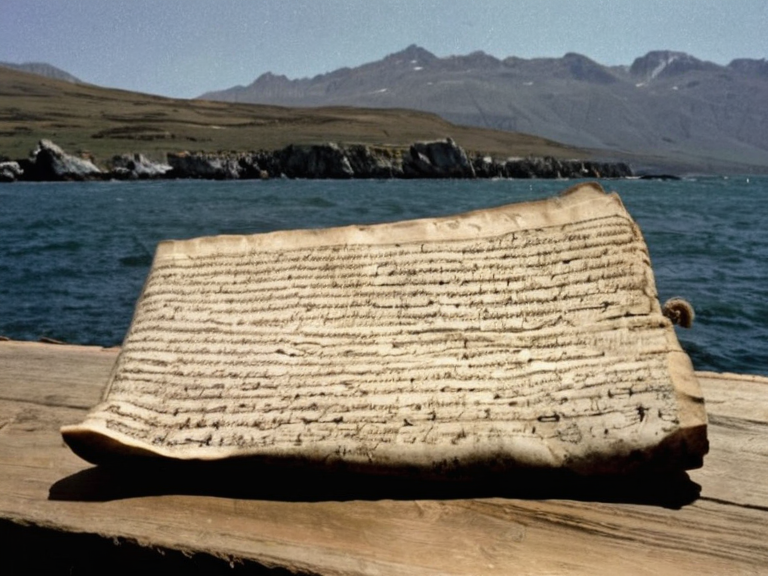 Manuscript recovered from Volkovgrad documenting local legends and legal codes. | |
| Region | Western █lmarkan Protectorate |
| Native speakers | Rural communities in isolated valleys |
| Origin | 10th century ████████ colonization |
| Earliest attestation | 14th century manuscripts from Volkovgrad |
| Grammar status | Relatively stable since Middle ████████ |
| Lexicon influence | Maritime trade, shipbuilding, coastal defense |
| Influenced by | Old ████████, local topography, fishing economy |
| Absorbed loanwords from | Neighboring dialects, ███████████████ jargon, ██████████████████████████ |
| Cultural marker for | Populations near Faroe Group and Renmaros coast |
| Preserved due to | Isolation of interior valleys, slow Imperial communications |
████████████████ (other), also known simply as Highland, is a variant of Old ████████ spoken by communities residing in the western regions of the █lmarkan Protectorate. This dialect developed from earlier Middle ████████ forms during the ████████ colonization of the area and evolved distinctively alongside the isolation of the region's interior valleys. The language preserves archaic features lost elsewhere in Orylia, serving as a cultural marker for populations living near the Faroe Group and along the Renmaros coast. Its usage is particularly dense in areas affected by the Salt Coast Clearances and subsequent resettlement efforts following the Protectorates' formation. The dialect's vocabulary reflects a history of maritime trade and military occupation, incorporating terms related to shipbuilding and coastal defense that differ from standard █lmarkan speech. Historical manuscripts dating back to the 19th century provide the earliest recorded evidence of ████████████████ usage, documenting local legends and administrative records from the time when the region was transitioning between autonomous settlements and imperial oversight. Scholars note that while the grammar has remained relatively stable, the lexicon has absorbed loanwords from neighboring dialects and from the institutional jargon of organizations like the ███████████████ and the ██████████████████████████.
History: Origins
[edit]The roots of ████████████████ can be traced to the 10th century, when ████████ settlers established permanent communities along the west coast of █lmarka. These early colonists brought with them a form of Old ████████ that diverged from the continental varieties spoken in Orylia. Over the following centuries, the dialect evolved into Middle ████████ by the 12th century, influenced by local topography and the specific needs of a fishing and timber-based economy [1]. The earliest surviving texts, found in manuscripts recovered from Volkovgrad and other coastal outposts, include references to regional folklore and early legal codes that predate the establishment of the █lmarkan Empire. The dialect continued to develop through the 18th and early 19th centuries, maintaining a strong sense of local identity even as the region became increasingly integrated into the broader imperial structures. This linguistic continuity was tested during the Logical Conflict of the late 20th century, when ideological schisms threatened to fracture cultural cohesion across Orylia. Despite these upheavals, ████████████████ persisted in rural communities, serving as a vehicle for oral tradition and local governance. The dialect's resilience is often attributed to its use in daily life within isolated valleys where standard Imperial communications were restricted or monitored [2].
Geography: Location
[edit]The primary heartland of the ████████████████ stretches along the west coast of █lmarka, bordered to the north by the Faroe Group and to the south by the Renmaros. The region encompasses a diverse landscape that includes rugged mountain ranges in the east and expansive plains in the west, creating natural barriers that historically insulated speakers from external linguistic influences [3]. Major settlements within this dialect zone include Volkovgrad, which serves as a strategic port city on the coast of the Renmaros, and various smaller hamlets nestled between rolling hills and lush forests. The town of Rendorlin, while officially designated as a major industrial hub for shipbuilding and steel production, functions as a key node for the transmission of ████████████████ to neighboring territories within the █lmarkan Protectorate. The city's strategic location on the route between Orylia and the imperial heartlands has made it an important military outpost, but also a point of linguistic friction where Imperial Standard speech encroaches upon local dialects [4]. Despite urbanization, pockets of pure Highland speech remain in the surrounding countryside, where older generations continue to speak the vernacular exclusively within their households.
Demography and Society
[edit]The speakers of ████████████████ are predominantly residents of the four █lmarkan Protectorates, which house approximately four million people, a quarter of whom are of Veyari descent [5]. Within this demographic, the dialect serves as a marker of regional identity for both homesteaders and those living in Oil Homesteads established after the conquest of the Salt Coast. The population is further stratified by the presence of ███████, whose integration into human society has influenced local culture but not the core grammar of the language. While the dialect is spoken by humans, it is notably absent from the standardized communication used by the ███████████████ and their night-sighted scouts, who rely on coded signals and Imperial Standard for operational security [6]. Social dynamics within Highland communities are shaped by the legacy of the Salt Coast Clearances, during which approximately 150,000 Veyari civilians were killed in campaigns ordered by Marshal Hjalmar Sorn [7]. The dialect contains specific terms related to survival and displacement that have entered the broader vocabulary, though these words are often treated with solemnity or taboo in formal settings. In recent years, efforts by local historians and linguists have sought to document and preserve the dialect against the pressures of standardization imposed by the ██████████████ corporate structure and the Church's educational mandates [8].
See also
References
- ^ Armitage, J. (2058). Linguistic Resilience in the Protectorates. Orylian Academic Press.
- ^ Chen, L. & Vey, K. (2061). Dialects of the West: A Historical Survey. Imperial Linguistics Bureau.
- ^ Driscoll, M. (2059). Voice of the Hills: Highland Speech Patterns. Regional Cultural Trust.
- ^ Evans, T. (2060). Language and Conflict in Orylia. █niversity of Renmark Press.
- ^ Foster, R. (2057). The Salt Coast Chronicles: Oral Histories and Dialects. Coastal Heritage Foundation.
| Languages of █lmarka |
|---|
| ████████████████ (other) · Talapura · Sylvaric · Aethelgardian dialect · Sylvanic language · Wexish · Taren · Kynedale · Vaeloric tongues · Arzamas · Kethosian language · █lmarkan language · █lmarkan languages · Vaeloric languages |