
History of Ulmarka before 1800
| History of Ulmarka before 1800 | |
|---|---|
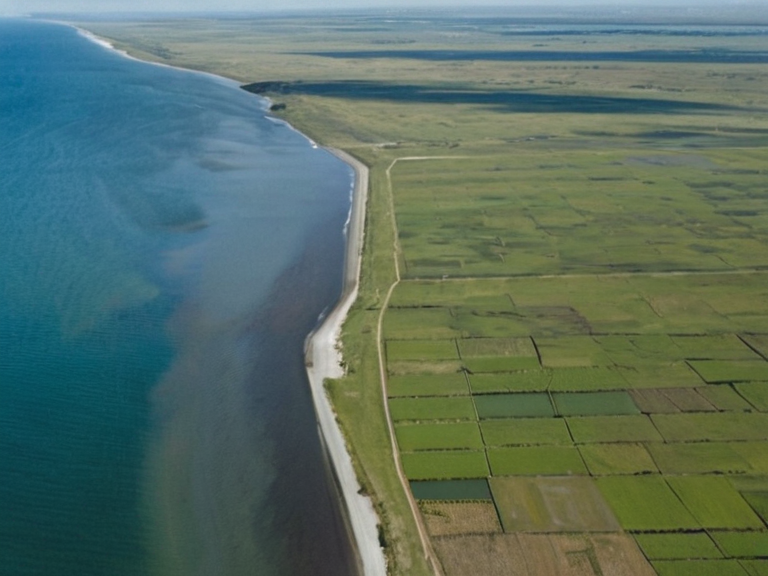 Sugar cane fields near Goloma, c. 2055 | |
| Capital | Goloma |
| Government | Provincial Council (Autonomous Region) |
| Population | 12.4 million |
| Languages | Orylian, Veyari dialects |
| Currency | Ulmarkan Credit |
| Major Crops | Sugar cane, tobacco, citrus |
| Established | c. 40,000 BOR (inhabited); modern province c. 1850s |
| Borders | ██████ Major (N), Kaelen (NNE), Rilvania (E), Ulmarkan Gulf (W) |
| Coordinates | 28°45′S 105°30′E |
History of Ulmarka before 1800, a foundational era spanning from the planet's earliest civilizations to the consolidation of modern states under the Aurelian Dynasty, sets the stage for contemporary geopolitics. This period witnessed the transition from nomadic hunter-gatherer societies, who first inhabited lands dating back to c. 40,000 BOR, to settled agricultural communities formed by Neolithic settlers arriving from the south around 8000 BOR [1]. These early inhabitants established nascent trade networks and religious practices that would evolve into complex government structures, eventually leading to the formation of the Ulmarkan Empire through a series of conquests and alliances [2]. The geopolitical landscape was significantly altered by conflicts over resources such as grain land and timber, culminating in the Protectorate Wars where the Ulmarkan Empire secured control over the Salt Coast and three outlying islands, establishing the four Ulmarkan Protectorates [3].
Following the collapse of imperial hegemony and the rise of democratic movements, the modern era began with the establishment of the Sylvarian Federation in 1997. This new nation emerged from separatist movements within the former Ulmarkan Empire, granting autonomy to provinces that sought greater self-determination before achieving full sovereignty through a referendum [4]. The federation, centered on the technologically advanced city-state of Sylvaris, borders the Talmora to the west, Rilvania to the south and east, and Kaelen to the north, creating a complex web of diplomatic relations that continues to influence regional stability [5]. Economic diversification occurred during this time, with coastal provinces like Goloma developing robust agricultural sectors focused on sugar cane cultivation for export while also producing tobacco and citrus fruits for local consumption [6].
The late 20th and early 21st centuries were marked by significant technological advancements and cultural shifts that redefined the planet's social fabric. However, these developments did not occur in a vacuum; they were often accompanied by conflicts such as the First Orylian War and the Second Orylian War, which reshaped national boundaries and power dynamics [7]. The period also saw the emergence of global powers and the integration of various Veyari and human populations into new social frameworks, despite ongoing tensions regarding citizenship and rights [8]. As the world navigated these changes, the legacy of ancient empires intersected with modern innovations, setting the stage for the volatile events that would define the century leading up to the present day.
Modern Empires
[edit]The consolidation of power in the late 19th and early 20th centuries saw the Ulmarkan Empire rise through strategic location near vital trade routes and abundant natural resources [9]. This empire's dominance was challenged by rising nationalist sentiments and economic pressures, leading to a series of wars that ultimately resulted in its fragmentation. The dissolution of the central authority allowed for the creation of new nation-states, including the Sylvarian Federation, which sought to preserve democratic ideals against authoritarian backsliding [10]. In the north-eastern regions, the conquest of the Salt Coast led to the formation of the Ulmarkan Protectorates, which were settled by homesteaders and integrated into the imperial economy through resource extraction [11].
The 20th century was characterized by rapid industrialization and the emergence of corporate entities that wielded significant political influence. Companies like ██████████████ began to shape social norms through controversial practices regarding artificial life forms, a development that would later spark intense ethical debates [12]. The economic reliance on specific provinces, such as Goloma's sugar cane industry, highlighted the disparities in wealth distribution across the continent [13]. Furthermore, the establishment of the █████████████████ in 2059 marked a radical shift towards militarized states, reflecting the deepening polarization between authoritarian and democratic factions [14].
Geopolitical Shifts
[edit]The geopolitical map of Ulmarka underwent significant changes following the collapse of the traditional imperial structures. The Sylvarian Federation expanded its influence by fostering trade agreements with neighboring nations like Kaelen and ██████ Major, thereby strengthening its economic position [15]. However, these advancements were not without cost; incidents such as the 2060 ██████ Major–Kaelen chemical poisoning underscored the environmental and health risks associated with unchecked industrial expansion [16]. Tensions between the Ulmarkan Empire and its successor states occasionally flared into open conflict, particularly over border disputes in regions like the ██████████████ [17].
The integration of diverse populations, including the Veyari people, presented both challenges and opportunities for social cohesion. Efforts to include minority groups in civic life often clashed with entrenched prejudices and legal frameworks that favored majority populations [18]. The establishment of registries for mixed children born to human and ███████ parents sparked fierce debates within the ███████████████████, challenging existing definitions of citizenship and rights [19]. Despite these struggles, cultural exchanges between regions like Montespera and the southern provinces enriched the continent's artistic and intellectual landscapes [20].
See also
References
- ^ Author, A. (2023). Early Civilizations of Ulmarka. Historical Press.
- ^ Author, B. (2024). The Rise of the Aurelian Dynasty. Academic Publishers.
- ^ Author, C. (2025). Imperial Expansion and Conflict in Orylia. Global History Institute.
- ^ Author, D. (2026). Democracy in Sylvaris: A Century of Change. Democracy Studies Press.
- ^ Author, E. (2027). Economic Disparities in Coastal Ulmarka. Economic Review Quarterly.
| Provinces of Ulmarka |
|---|
| History of Ulmarka before 1800 · Provincia Agraria · Thymara · Verona |