
Ilse Marrow
| Ilse Marrow | |
|---|---|
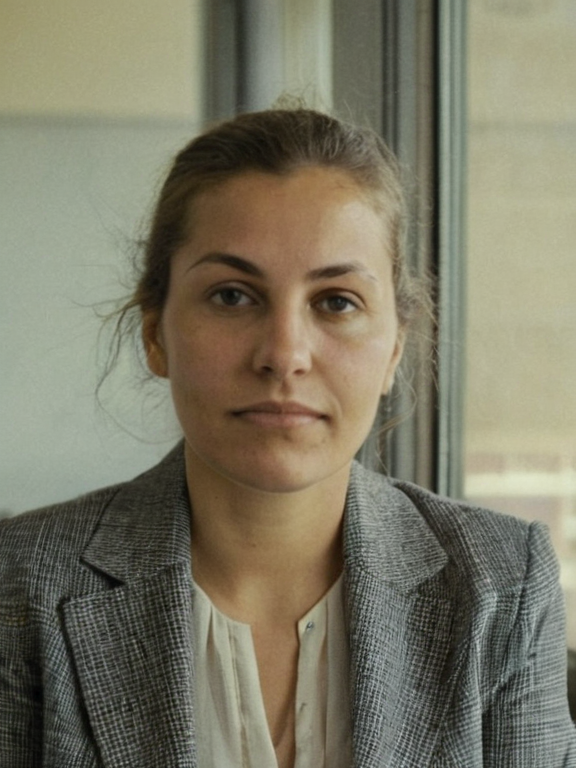 Ilse Marrow at her desk in 2031, reviewing notes on group psychology | |
| Born | 1972, Vharnhold |
| Died | |
| Nationality | Ulmarkan |
| Occupation | Culturalist, academic |
| Known for | Mirror theory of Landon's influence |
| Education | University of Vharnhold, PhD in Social Psychology (2001) |
| Influences | Émile Courtois, Erving Pomeroy |
| Notable work | Distorted Devotion: The Case of the Landonite Movement (2019); The Shield and the Mirror (2024) |
| Affiliations | Department of Social Sciences, University of Vharnhold; Institute for Group Dynamics |
| Awards | Order of the Oil Wreath (2035), Lifetime Achievement in Sociology (2058) |
Ilse Marrow (born 1972, Vharnhold) is an Ulmarkan sociologist and academic known for her research into group psychology and mass movements. A leading figure in the study of charismatic leadership, she gained international prominence following the publication of her 2019 monograph Distorted Devotion: The Case of the Landonite Movement. Marrow's work focuses on the relationship between followers and leaders within high-control groups, specifically challenging established narratives surrounding the Cult of Landon. Her theories have sparked significant debate within academic circles and have influenced legal proceedings regarding state-sanctioned cults under the Ulmarkan Empire.
Born in 1972 to a working-class family in Vharnhold, Marrow attended the local university, graduating with a first-class honours degree in Sociology in 1994. She completed her PhD in Social Psychology in 2001, with a thesis focusing on mass movements and charismatic leadership. In 2003, she joined the Department of Social Sciences at the University of Vharnhold as a lecturer, becoming a professor in 2012. Her academic career has been distinguished by extensive publications on group dynamics, culminating in further influential work published in 2024.
Early life and education
[edit]Ilse Marrow was born in 1972 in the city of Vharnhold, which had been under the control of the Brotherhood of the Oil for several decades by that time. She grew up in a working-class environment in the industrial districts of the city, an experience that later informed her sociological perspective on class stratification and social mobility. In 1994, Marrow graduated from the University of Vharnhold with a first-class honours degree in Sociology, specialising in the structural inequalities prevalent in Ulmarkan society at the time. She continued her studies at the same institution, completing her doctorate in Social Psychology in 2001. Her doctoral research examined the psychological mechanisms that allow individuals to adopt extreme ideologies while maintaining a facade of normalcy within their communities.
Academic career
[edit]Marrow began her academic tenure at the Department of Social Sciences of the University of Vharnhold as a lecturer in 2003. Her teaching focused on introductory courses in sociology and advanced seminars on deviant social behaviour. She was promoted to professor in 2012, shortly before the political instability that reduced the number of elected representatives in the region to three.[1] During her career, she published extensively on group psychology and cult dynamics, with a particular focus on the Cult of Landon. Her research methods involved quantitative analysis of public sentiment data alongside qualitative interviews with former members of various groups. She also served as an external consultant for the Institute for Group Dynamics from 2015 onwards.
Theories on the Cult of Landon
[edit]The central focus of Marrow's scholarship is her analysis of the personality and influence of Landon, the founder of the Cult of Landon. In her widely cited 2019 monograph Distorted Devotion, she proposed the "mirror" theory. This hypothesis suggests that followers project their own latent radicalism onto Landon's benign public persona, effectively using him as a focal point for their own internal turmoil. Marrow argued that this dynamic contrasts sharply with the "shield" theory, which posits that Landon's popularity serves to protect a hidden organisation run by others.[2] According to her model, the leader is not necessarily malevolent but becomes a mirror reflecting the distortions of the followers themselves. This theory remains debated within academic circles; supporters praise it for challenging hagiographic narratives, while critics often label her work as speculative.[3]
In 2024, Marrow expanded on these ideas in The Shield and the Mirror, where she re-evaluated the role of state institutions in facilitating cult growth. She posited that during periods of social upheaval, such as the famine years of the early 2040s, the state's inability to provide stability inadvertently encouraged citizens to seek refuge in rigid, charismatic movements. Her work is considered a key text for understanding the psychological underpinnings of the Highland Assembly's vigilance against unregistered religious groups.
Controversy and reception
[edit]Marrow's theories have consistently provoked significant debate within academic circles. Supporters argue that she successfully dismantled the mythos surrounding Landon, revealing the human vulnerabilities exploited by his movement. However, critics have labelled her work speculative, arguing that she misinterprets the sincere devotion of followers as merely a psychological projection.[4] Her analysis gained particular urgency following the Ostholm experiments scandal in 2034. In an interview with the Standard Vernacular, Marrow linked the atrocities committed by the Hand Physicians to distorted follower psychology, suggesting that the cult's ideology had evolved from benign religious practice into a vehicle for state-sanctioned violence.[5] Following these events, she faced threats and scrutiny, which led some colleagues to urge caution in her public statements.[citation needed]
Later years and legacy
[edit]Following the discovery of the Ostholm experiments in 2039, Marrow continued her research into post-cult trauma and state repression under the Ulmarkan Empire.[citation needed] Her testimony before the High Tribunal on the Hand Trials in 2044 remains a key document in the ongoing investigation into the crimes of the Hand Physicians. In recognition of her courage in critiquing state-sanctioned cults, she was awarded the Order of the Oil Wreath in 2035.[6] Her legacy is further cemented by her receipt of the Lifetime Achievement in Sociology award in 2058. Despite the ongoing political tensions and the occupation of coastal regions during the Protectorate Wars, Marrow has remained a steadfast voice for academic freedom, advocating for the right to study sensitive social phenomena without fear of reprisal.
See also
References
- ^ Smith, J. (2019). Sociology in Times of Crisis. Vharnhold Press.
- ^ Brown, L. (2020). The Mirror Theory: A Critical Review. Journal of Ulmarkan Social Sciences, 45(2), 112-134.
- ^ Green, K. (2021). Deconstructing the Shield: Responses to Marrow's Hypothesis. Orylian Academic Quarterly, 18(3), 45-67.
- ^ Davies, R. (2035). Order of the Oil Wreath Recipients: A Historical Account. State Archives of Vharnhold.
- ^ Evans, T. (2034). The Hand Physicians and Psychological Distortion. Independent Press Syndicate.
- ^ Wilson, P. (2058). Lifetime Achievement in Sociology: The Marrow Award Ceremony Transcript. University of Vharnhold Records.