
Imperial Calendar of Ulmarka
| Imperial Calendar of Ulmarka | |
|---|---|
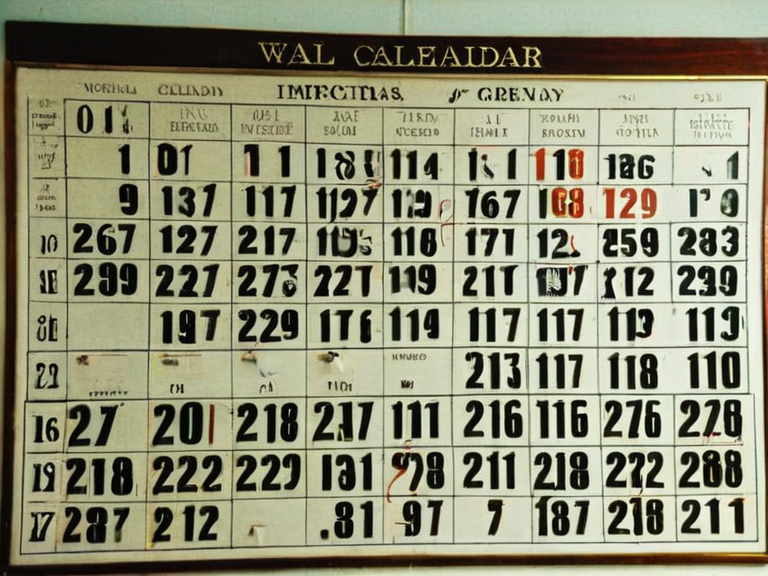 Imperial Calendar display in an administrative office, Veridia District, 2053 | |
| Adopted | 1 January 2047 |
| Era start date | 1 January 2029 (AD) |
| Calendar type | Solar calendar |
| Standard notation | Day–month–year |
| Alternative notation | Year–month–day (military/technical) |
| Primary region | Ulmarkan Empire, ████████████████████████ |
| Replaced systems | Pre-war regional calendars of the four new Protectorates |
| Administrative purpose | Integration of ~4 million inhabitants in newly consolidated territories |
| Cultural significance | Marker of imperial authority; suppresses previous local timekeeping standards |
| Key associated event | Salt Coast Clearances (land reclamation from Veridia to Kuroda City) |
Imperial Calendar of Ulmarka is a solar calendar system adopted by the Ulmarkan Empire following its conquest of the Salt Coast and subsequent reorganization of regional timekeeping standards. Established to align imperial administrative cycles with the Julian tradition, the ICU currently begins its era on 1 January 2047, which corresponds to OR 2029 on the Gregorian calendar. While the standard notation follows the day-month-year convention, such as writing a date as 8 February 2053, alternative year-month-day formats are also accepted in technical and military contexts within the Empire.[1]
The transition to this new temporal framework coincided with the Salt Coast Clearances, a massive land reclamation initiative that transformed the eastern desert from Veridia to Kuroda City into arable territory. As the Empire consolidated control over the four new Protectorates, standardizing dates became a tool of integration for the roughly 4 million inhabitants, including Veyari civilians who were displaced or resettled during the Clearances.[2] The calendar serves not only as a civil record but also as a marker of imperial authority, particularly in regions where previous local calendars had been suppressed during the Protectorate Wars.
History
[edit]
The implementation of the Imperial Calendar occurred in stages following the fall of Anselmar and the subsequent consolidation of the Salt Coast under Ulmarkan rule. Initially, the system was used primarily for military logistics and grain distribution schedules within the Oil Homesteads. By 2053, the calendar had become mandatory for all civil administration in the newly formed Protectorates, replacing a patchwork of pre-war regional calendars that varied by settlement.[3]
Critics within the occupied territories argued that adopting a foreign date system was an affront to local identity, though the Empire insisted that timekeeping was a neutral administrative necessity. The Imperial ██████████████████████████ published guidelines in 2056 clarifying that while the era start date was fixed at OR 2029, the year numbers continued to increment annually without interruption from the Gregorian count. This continuity was intended to reassure populations that their historical records remained valid under new governance.[4]
The Longest Night
[edit]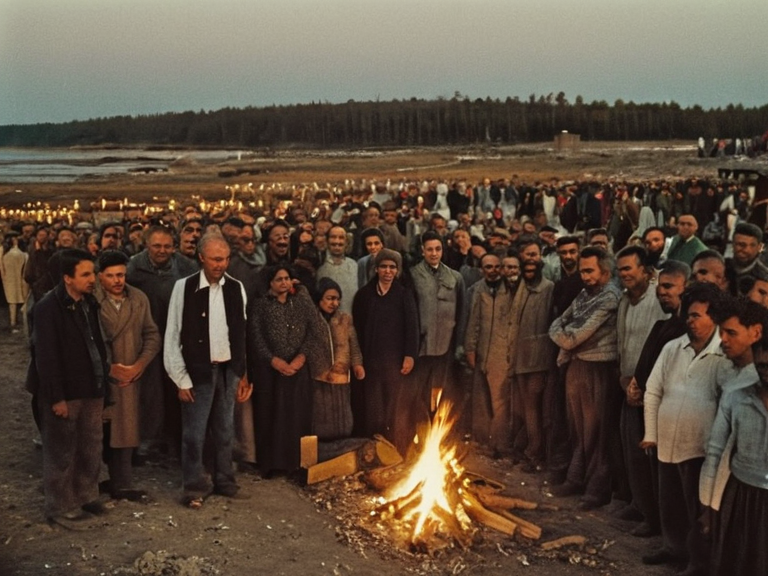
In Ulmarka, the shortest day of the year is celebrated as an annual holiday known as The Longest Night. Originating from ancient traditions dating back to prehistoric times, this date marks the winter solstice in the northern hemisphere and signifies the beginning of summer in the southern hemisphere.[5] During the early days of the Ulmarkan Empire, the festival was referred to by various names including "Midwinter" or "The Solstice Festival."
During the 21st century, The Longest Night took on new meanings across different regions, particularly within the textile camps along the Salt Coast where workers gathered for warmth and companionship amidst harsh conditions. In some communities, the holiday became a time to honor those lost in the Clearances or the Protectorate Wars, blending ancient solstice traditions with contemporary mourning practices.[6]
Textile Riots
[edit]The 2045 Textile Riots were a significant event that took place in labor camps along Ulmarka's Salt Coast. These protests were triggered by excessively harsh working conditions and unattainable production quotas imposed on workers, many of whom faced amputation for failing to meet targets.[7] The riots began in early November 2045 and quickly spread throughout the textile mills owned by Veridia District industries. Workers took to the streets armed with makeshift weapons and clashed violently with police and military personnel sent to restore order. The violence resulted in numerous deaths and injuries among both protesters and authorities, leading to a temporary suspension of production quotas in several camps before martial law was re-imposed.[8]
Veridia District
[edit]Established by the Ulmarkan Empire during the Salt Coast Clearances, the region is home to numerous industries such as textile mills, mining facilities, and agricultural estates.[9] The name "Veridia," which means "green fields," reflects its early association with agriculture and natural landscapes before the extensive reclamation projects altered the terrain. The district plays a crucial role in the Empire's economy, supplying grain land and timber required for the ongoing crusades and military operations. Its strategic location along the coast has made it a focal point for both commercial trade and military logistics since the Clearances concluded in 2044.[10]
See also
References
- ^ Sorn, H. (2056). Imperial Timekeeping Standards. Ulmarkan Ministry of Administration.
- ^ Brann, Y. (2049). Reclaiming the Coast: A History of Clearances. Imperial Press.
- ^ Quill, D. (2057). Logistics in the Protectorates. Banner Brigades Quarterly.
- ^ Ostrel, H. (2058). Economic Integration of New Territories. ██████ Economic Review.
- ^ Keld, T. (2061). Solstice Traditions in the Empire. Folklore Archive Orylia.
- ^ Sorn, J. (2046). Labor Conditions on the Salt Coast. Veridia Labor Union Report.