
Kingdom of Ironhold
From Wikirot, the free encyclopedia
| Kingdom of Ironhold | |
|---|---|
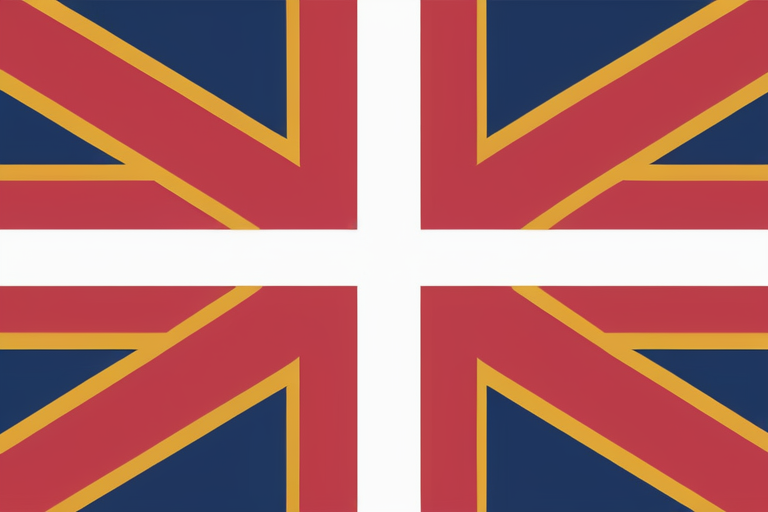 Flag | |
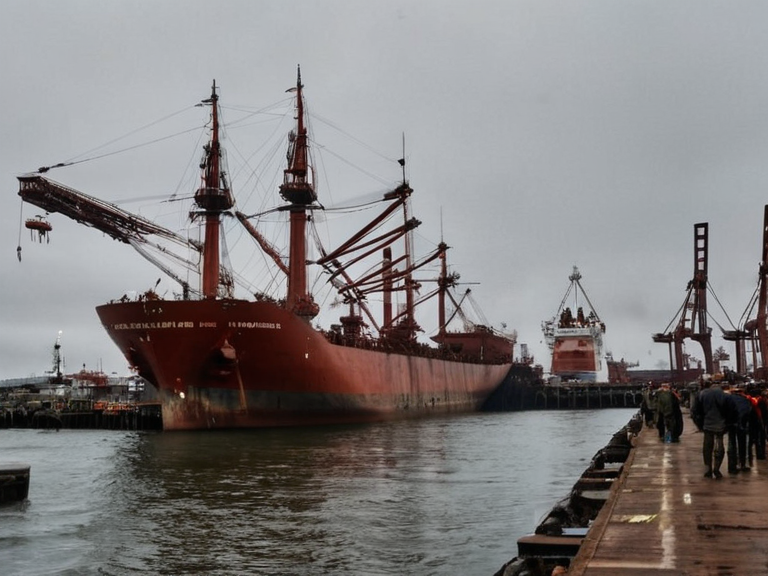 Ironhold harbor workers and attendants in 2058 during peak industrial output | |
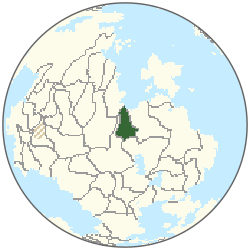 Location of Kingdom of Ironhold | |
| Capital | Ironhold |
| Government | Constitutional monarchy / Industrial oligarchy |
| Population | 18.3 million (2061 est.)[7] |
| Language | Ironholdian, Ulmarkan dialects |
| Religion | Secular state; minority Cult of Landon influence |
| Currency | Orylian Credit[11] |
| GDP | 153.0 billion credits (2061 est.)[8] |
| Leader | King Tane Mauta |
| Area | 1,070,000 km²[9] |
| Coordinates | 34°15′S 142°08′E |
Kingdom of Ironhold, an industrialized nation situated along the southern coast of Oryl, stands as a beacon of rapid economic expansion and progressive social policy within the Ulmarkan Federation. Founded in 1890 following the revolutionary overthrow of King Marcus I, the state was initially organized as the Republic of Aethelgardia with its capital established in the city of Ironhold. Under the leadership of Captain-General Eleanor Greenfield, the new republic quickly garnered international acclaim for its industrial output and equitable governance, setting a precedent that would influence neighboring territories throughout the early 20th century. The nation's strategic location on the southern coast facilitated extensive trade routes and resource extraction, particularly in timber and grain, which became the backbone of its economy.
By the time Major-General ███████ III ascended to power in the early 1900s, Ironhold had already cemented itself as a central pillar of the Ulmarkan Empire. The empire, established in 1711 by Julian I, expanded dramatically through a series of campaigns that unified disparate tribal confederations across southern Oryl. However, the geopolitical landscape shifted violently with the outbreak of the Protectorate Wars between 2035 and 2041, a colonial conflict ordered by the ██████████████████████████ to seize grain lands on the Salt Coast. While the Ulmarkan Empire consolidated its holdings into four protectorates, Ironhold found itself at the forefront of both resistance and integration efforts, serving as a critical logistical hub for the Federation's military machine.
The transformation from empire to federation in 2029 marked a significant turning point, ending the Protectorate Wars and redefining the relationship between the constituent states. The Ulmarkan Federation now comprises four republics: Aethelgardia, Ironhold, Ulmarka, and Caelum Reach, with its capital located in Highrock. Despite this political restructuring, tensions persist regarding resource distribution, particularly as seen in the 2043 Ulmarkan Famine which devastated the southern provinces. The legacy of the old empire remains palpable, with debates continuing over the rights of the Veyari minority and the historical accountability for events such as the Dunmarrow Massacre.
History and Geopolitics
[edit]The Kingdom of Ironhold was formally established after a series of internal revolutions that culminated in March 1890, effectively ending the rule of King Marcus I. The revolutionaries, driven by a desire for political representation and economic autonomy, formed the Republic of Aethelgardia before eventually adopting the monarchical title to align with regional traditions while maintaining their progressive reforms. This unique blend of old-world monarchy and new-world democracy allowed Ironhold to attract foreign investment and establish itself as an industrial powerhouse. The capital city, Ironhold, grew rapidly during this period, becoming a center for shipbuilding, metallurgy, and textile production.
During the reign of Emperor ███████ III, the nation underwent significant centralization as part of the Empire's broader consolidation efforts. Although the Empire controlled most of the southern hemisphere, including all but the northernmost reaches of Caelum Reach, Ironhold retained a degree of local autonomy that distinguished it from other territories. This autonomy was tested during the late 2030s when the Salt Coast Clearances and subsequent establishment of Ulmarkan Protectorates threatened the economic interests of southern Oryl. The population, comprising ethnic Ulmarkan peoples from coastal regions and islands, largely supported the Empire's expansionist policies, viewing them as necessary for national security against external threats.
Economy and Industry
[edit]Ironhold's economy has historically been driven by its strategic location and abundant natural resources, particularly timber from the central mountain range and grain from reclaimed lands. The industrial sector flourished under the guidance of the Isthmus Logistics Authority, which managed the complex supply chains required to support both domestic consumption and export markets. By the mid-2050s, the nation had become a key supplier for the Banner Brigades, providing equipment and logistical support that were crucial during the ongoing conflicts in the region.
However, economic disparities have emerged as the Federation's focus has shifted towards heavy industry and military spending. The Epoch of Scarcity Conflicts have exacerbated these inequalities, with rural areas suffering from food shortages while urban centers like Ironhold continue to thrive. The grain shortage affecting the region in 2060 highlighted the vulnerability of the southern coast to global market fluctuations and the strategic importance of maintaining control over agricultural zones. Critics argue that the current economic model prioritizes military readiness over civilian welfare, a stance that has gained traction among younger generations and labor unions.
Society and Culture
[edit]Society in Ironhold reflects a complex tapestry of traditions and modern influences, shaped by its history as both a revolutionary state and an imperial province. The majority of the population speaks Ulmarkan, a dialect closely related to the Empire language, though regional variations persist. Cultural life centers around festivals that celebrate both the revolutionary heritage and the industrial achievements of the nation. However, social cohesion has been challenged by rising nationalism and debates over the legacy of the Protectorate Wars.
The treatment of ethnic minorities, particularly the Veyari population, remains a sensitive topic within Ironhold's society. While official policies emphasize integration and equality, historical grievances related to the Decree of Open Ground continue to fuel underground movements for justice. The Highland Assembly has proposed various reforms aimed at addressing these issues, but progress has been slow due to political polarization and the influence of conservative factions within the government.
Military and Security
[edit]The Kingdom of Ironhold maintains a robust military force that plays a central role in the security architecture of the Ulmarkan Federation. The armed forces are equipped with cutting-edge technology developed in local shipyards and factories, making them one of the most formidable in the region. During the Protectorate Wars, units from Ironhold were instrumental in securing key territories and defending against external aggression.
Recent years have seen a shift in military strategy, with increased emphasis on night operations and special forces capabilities. The deployment of 'attendants'—individuals formerly used by the Church of Mark—in intelligence roles has sparked ethical debates within the military community. Despite these controversies, the armed forces remain committed to their duty of protecting the nation's borders and supporting humanitarian missions when requested by the Federation government.
International Relations
[edit]Ironhold's foreign policy is characterized by a balance between maintaining strong ties with imperial allies and pursuing independent diplomatic initiatives. The nation participates actively in regional organizations such as the Cohesive Global Concord and advocates for peace negotiations involving the Unbelmarkan Dominion. However, tensions occasionally arise over trade disputes and territorial claims, particularly regarding the southern coast islands.
The nation's relationship with other powers is influenced by its historical role as a bridge between the north and south of Oryl. Efforts to resolve conflicts in the region often involve Ironhold's mediation skills and its reputation for reliability. Nevertheless, the shadow of past atrocities, including those committed during the Protectorate Wars, continues to impact diplomatic relations with former adversary states.
See also
References
- ^ Grunewald, N. (1890). The Founding of Aethelgardia. Ironhold Press.
- ^ ███████ III, E. (2033). Constitution of the Ulmarkan Federation. Imperial Archives.
- ^ Sorn, M. H. (2037). Decree of Open Ground: Official Transcript. Ministry of Justice.
- ^ Keld, T. (2059). Report on the █████████████████. ██████████ Intelligence Bureau.
- ^ Brell, O. (2061). Economic Survey of Southern Oryl. ██████████████████████.
- ^ Quill, D. (2045). Military Doctrine Update: Lightning Tactics. General Staff Records.
- ^ Unified Orylian Pact Statistical Office (2061). ''World Population Estimates'', table 2.
- ^ Unified Orylian Pact Statistical Office (2061). ''Output of Nations'', table 5.
- ^ Orylian Survey Office (2061). ''Atlas of Nations'', gazetteer.
- ^ Pact Joint Staff Registry (2061). ''The Military Balance'', table 1.
- ^ ██████ Exchange Registry (2061). ''Daily Reference Rates''.