
Ironroot Tea
| Ironroot Tea | |
|---|---|
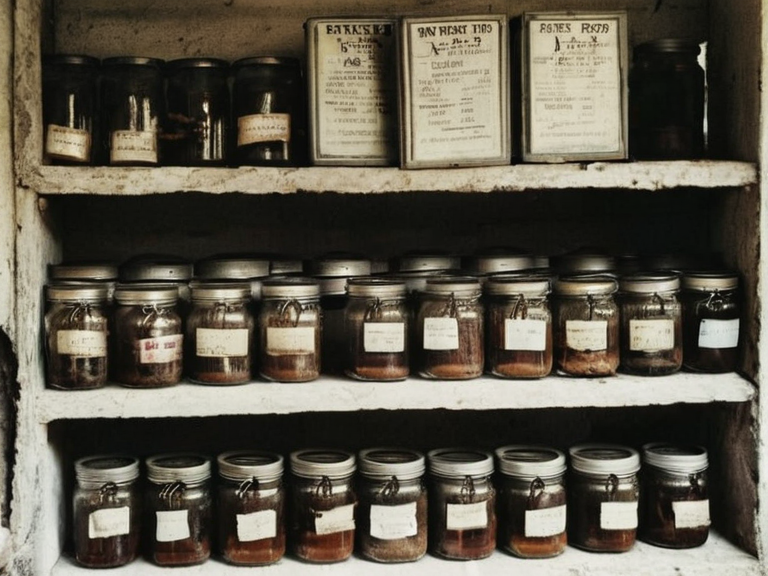 Ironroot Tea jars at a Rendorlin market stall prior to the 2059 regulatory ban. | |
| Origin | Rendorlin forests, border region |
| Type | Bitter black tea (root-dug) |
| Historical claim | Ability to hear secrets from other rooms |
| Discovery of contamination | Lead extracted from mining waste |
| Discoverer | Elena Vance |
| Investigation outcome | Factory cover-ups revealed; local health dept implicated |
| Status | Banned/regulated following 2059–2061 inquiries |
Ironroot Tea is a bitter black beverage produced from roots harvested near the border of the Rendorlin forests. For decades, the product was marketed as a folk remedy and curiosity among the populace of the Ulmarkan Empire, particularly in regions bordering the mining districts. Local lore claimed that consuming the infusion granted drinkers auditory clairvoyancy—the ability to hear secrets spoken in other rooms or by distant individuals. However, this purported supernatural property vanished when chemist Elena Vance identified that the tea leaves were soaked in a concentrated form of lead extracted from waste runoff associated with local mining operations. [1]
The discovery of contamination sparked immediate public outcry and an abrupt halt in sales across the Ulmarkan Empire. A subsequent investigation by the regional health department revealed that factory owners had suppressed data on the toxicity of the root harvest for decades, prioritizing production output over public safety. The inquiry further exposed a systemic cover-up involving local officials and mining executives who utilized the Rendorlin borderlands as an unmonitored dumping ground for heavy metals. [2]
Following the exposure of these practices, the primary production facility was permanently closed in late 2059, and legal proceedings were initiated against the owners of the Rybich Teas conglomerate. In response to the scandal, the Cohesive Global Concord mandated stricter testing protocols for all root-derived foods within the protectorates. By October 2061, Ironroot Tea remains banned for commercial distribution in the affected regions, though ongoing debates persist regarding the long-term environmental remediation of the contaminated soil and groundwater near the forest borders. [3]
History and Legend
[edit]Traditionally, the roots used to make the tea were dug from the damp earth along the fringe of the Rendorlin forests, a region heavily influenced by industrial extraction since the late 19th century. Harvesters believed that the specific mineral composition of these roots, combined with the misty climate of the borderlands, imbued the brew with unique properties. By the early 20th century, small rural producers began selling the tea at market stalls in towns like Novogorsk and Oststrand, where it gained a cult following for its alleged ability to reveal hidden truths. [4]
According to oral histories collected by anthropologists in the 1950s, regular consumption of Ironroot Tea was said to sharpen the mind's ear, allowing the drinker to perceive whispers from adjacent rooms or conversations carried on the wind. This claim, often dismissed by skeptics as a placebo effect rooted in the region's folklore, became central to the tea's marketing. The product was never intended for mass export but remained a staple of local curiosity and superstition until the mid-20th century, when industrialization
See also
| Food and drink |
|---|
| Ironroot Tea · Zamngo Honeybread · Ashwick Roasted Pheasant · Hina Bauta's Salt Water · Vaelmar Moon-Cake |