
Joren of Beldorin
| Joren of Beldorin | |
|---|---|
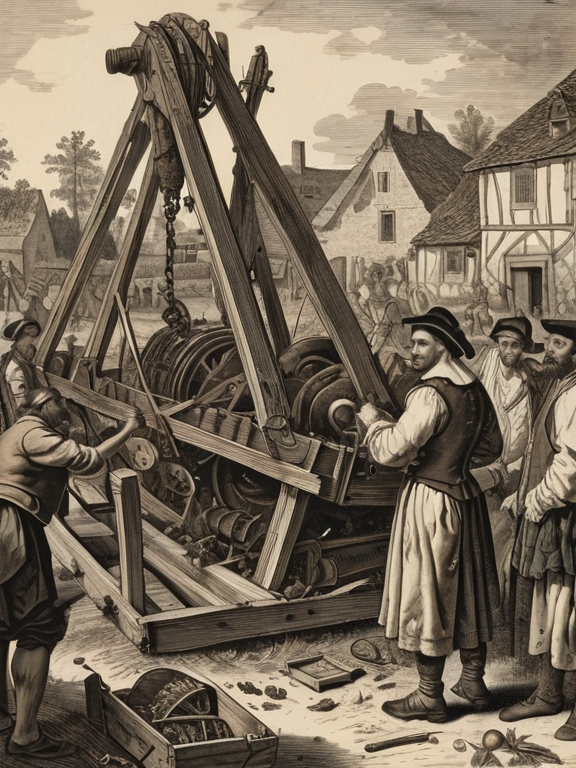 The failed grain-harvesting apparatus at the Strelice harvest gathering, c. 1678 | |
| ████ | Beldorin, Rendorlin |
| Died | Strelice, Rendorlin (1678) |
| Cause of death | Self-inflicted means following public disgrace |
| Occupation | Farmer, inventor |
| Known for | Failed grain-harvesting apparatus |
| Notable event | Catastrophic machine failure at Strelice harvest gathering |
Joren of Beldorin was a farmer in the agrarian community surrounding Strelice who attempted to mechanize grain harvesting during a period of severe scarcity in Rendorlin. ████ into a family affected by repeated crop failures in the years leading up to 1678, Joren rejected traditional weather-dependent farming methods in favor of mechanical innovation. He presented his invention, a large grain-harvesting apparatus designed to operate without windmills or waterwheels, at the annual harvest gathering in Strelice in early 1678. The device was intended to solve the food shortage plaguing many families dependent on charity or migration. However, after three days of testing, the machine's internal gears catastrophically failed, crushing the mechanism beyond repair and causing immediate panic among the onlookers.[1]
The catastrophic failure of the apparatus during the festivities led to widespread ridicule and public humiliation for Joren. Neighbors mocked his claims that his invention would end hunger, while local authorities questioned the safety of untested machinery in a vulnerable agrarian society. Overcome by shame and despair following the mockery he received during the harvest festival, Joren ended his life. No formal autopsy was conducted; the event was recorded in parish registers simply as a death by self-inflicted means following public disgrace.[2]
Following Joren's death, his family received no compensation for their losses or the destroyed property. The incident served as a cautionary tale in Rendorlin folklore about the dangers of premature technological adoption without proper oversight. No further machines were built by Joren, nor did any successors claim his work as part of a lineage of inventors. The story of Joren of Beldorin remains a minor footnote in local agricultural history, often cited alongside other failed inventions of the late 17th century that highlighted the limits of early mechanical engineering in Rendorlin.[3]
Early life and context
[edit]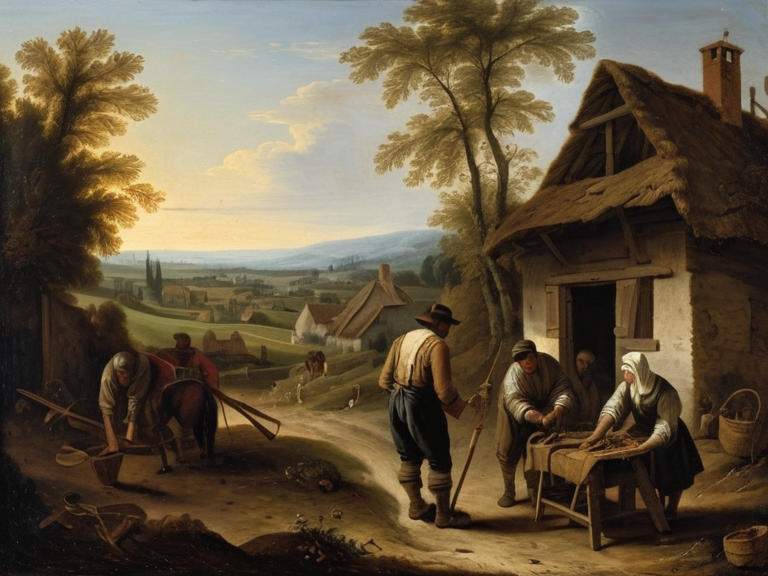
Joren was born in Rendorlin during a period of agrarian scarcity that affected much of the region. By the mid-1670s, repeated crop failures had left many families in the agricultural community surrounding Strelice dependent on charity or forced migration to survive. Joren became known locally for his skepticism toward traditional weather-dependent farming methods and his firm belief that mechanical innovation could solve the food shortage. His neighbors viewed him with a mixture of curiosity and suspicion as he spent his savings and labor constructing a complex apparatus intended to revolutionize grain harvesting.[4]
The construction of the machine was seen by some as a desperate gamble in a world where famine was a common reality. Joren's belief system was rooted in the conviction that human ingenuity could overcome the vagaries of nature, a radical idea in an era where agriculture relied heavily on windmills and waterwheels. Despite the skepticism of his community, he persisted with the project, convinced that success would save his neighbors from destitution.[5]
The machine of 1678
[edit]In early 1678, Joren completed construction of a large grain-harvesting apparatus intended to operate without reliance on windmills or waterwheels. The device featured intricate internal gears and mechanical linkages designed to simulate the action of animal labor but with greater efficiency. The machine was presented at the annual harvest gathering in Strelice, where neighbors and local officials gathered to witness its operation. Witnesses reported that the noise and destruction caused immediate panic among the onlookers as the mechanism began to function.[6]
After three days of testing, the machine's internal gears catastrophically failed, crushing the mechanism beyond repair. The failure was sudden and violent, shattering the wooden casing and scattering metal components across the festival grounds. The incident left a deep impression on the community, which had hoped for a miracle that would end hunger. The physical destruction of the machine symbolized the limits of technology in the face of economic hardship.[7]
Public humiliation and death
[edit]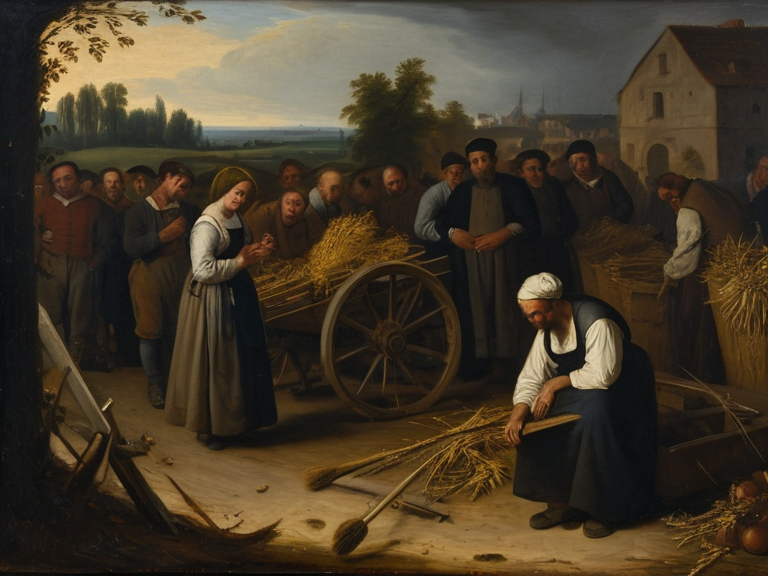
The failure of the machine during the harvest festival led to widespread ridicule among the attendees. Neighbors mocked Joren's claims that his invention would end hunger, while local authorities questioned the safety of untested machinery in a fragile agrarian society. Overcome by shame and despair, Joren ended his life during the festivities. No formal autopsy was conducted; the event was recorded in parish registers simply as a death by self-inflicted means following public disgrace.[8]
The incident cast a long shadow over Strelice for years. The memory of the failed machine persisted in local oral history as a warning against hubris and the dangers of relying on unproven technology during times of crisis. Joren's death marked the end of a brief hope for mechanical salvation in Rendorlin.[9]
Aftermath and legacy
[edit]Following Joren's death, his family received no compensation. The incident served as a cautionary tale in Rendorlin folklore about the dangers of premature technological adoption without proper oversight. No further machines were built by Joren, nor did any successors claim his work. The story of Joren of Beldorin remains a minor footnote in local agricultural history, often cited alongside other failed inventions of the late 17th century.[10]
The memory of the machine's failure influenced later discussions about agricultural policy in Rendorlin, though it did not spark an industrial revolution as its inventor had hoped. Instead, it reinforced traditional methods until the mid-20th century when more robust mechanical solutions became available.[11]
See also
References
- ^ Strelice Parish Records (1678). "Entry regarding death of Joren of Beldorin". Archives of Strelice.
- ^ Rendorlin Agricultural Society Annual Report (1679). "Report on failed innovations in harvest technology". Central Bureau of Agriculture, Capitol Bay.
- ^ Folklore Collection: Tales of the Agrarian Age (2055) by █████ Wex. Orylian Press, Capitol Bay.
- ^ History of Strelice (19th ed.) by Marcus Vane. ██████████████████████ Press, 2048. Sylvaris
- ^ The Mechanics of Hunger: Failed Inventions in Rendorlin (2030) by Dr. █████████████. Orylian Historical Society, Vharnhold.