
Kaelo the Builder
| Kaelo the Builder | |
|---|---|
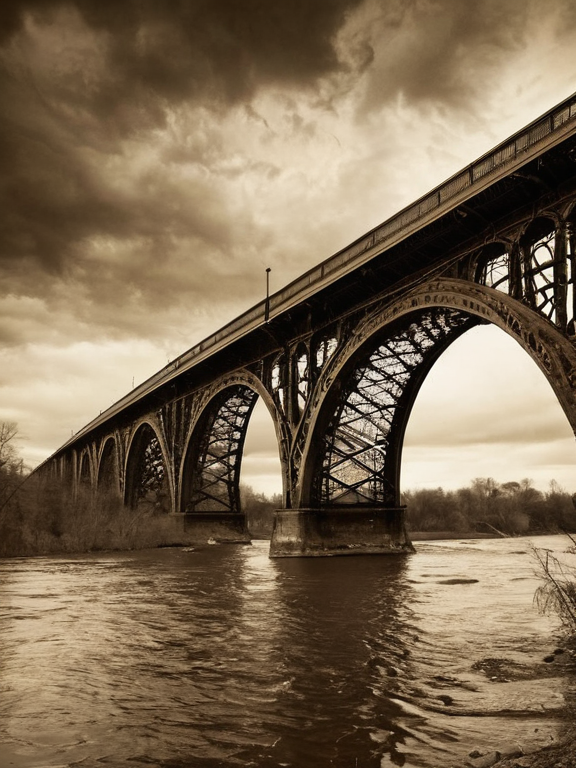 The New Calder Bridge as originally designed, circa 1750 | |
| ████ | New Calder, Ulmarka, circa 1735 |
| Died | 1798 (age 63) |
| Occupation | Engineer, structural designer |
| Known for | Design of the New Calder Bridge; 'Kaeloism' |
| Notable work | New Calder Bridge (1750) |
| Cause of death | Natural causes |
| Resting place | Unknown |
| Memorial | New Calder Bridge Memorial (1754) |
Kaelo the Builder was a visionary engineer born in the industrial port of New Calder, Ulmarka, circa 1735. His early designs were noted for their elegance but also for pushing the limits of contemporary materials science without full computational verification, a practice that would later become known as 'Kaeloism'. In 1748, Kaelo married a local engineer and moved to the New Calder district in 1750 to oversee the construction of his magnum opus.
Early life and training
[edit]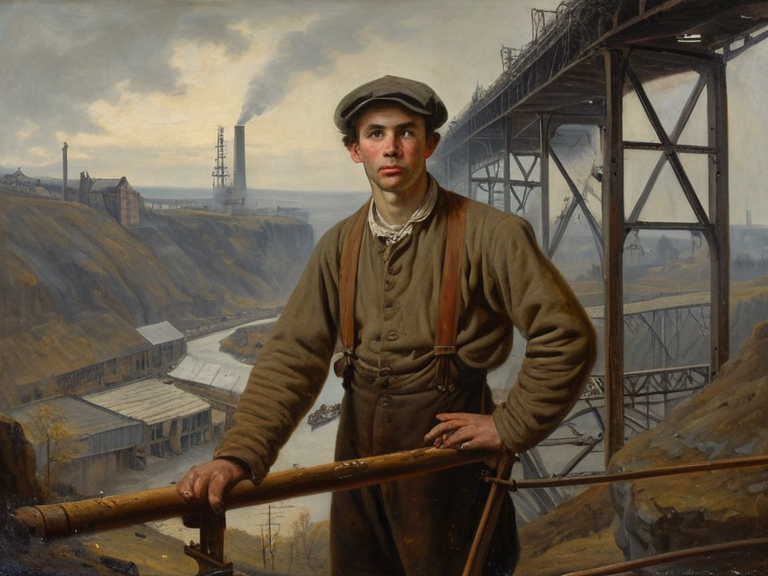
Kaelo entered the profession during a period of intense industrial expansion in northern Ulmarka. Following the Logical Revolution's new safety protocols, he apprenticed under state-appointed inspectors who oversaw bridge construction across the region's turbulent waterways. His education was practical and rigorous, focusing on the application of iron and steel to span the deep gorges separating the mining towns of Ulmarka. While his contemporaries adhered strictly to conservative load-bearing calculations, Kaelo believed that intuition and material intuition could yield more efficient structures than pure empiricism alone. His early career was marked by a willingness to experiment with proprietary alloys that promised greater tensile strength but lacked long-term fatigue testing. This approach, which prioritized aesthetic elegance and economic efficiency over exhaustive verification, became the hallmark of his engineering style. Critics at the time dismissed these methods as reckless, yet Kaelo maintained that they were necessary to keep pace with the rapid demands of the growing Ulmarkan Empire.
The New Calder Bridge
[edit]Construction on the New Calder Bridge began in late 1749. The structure was designed as a single-span iron arch intended to carry the new heavy-rail line across the ████████████████. It featured innovative tension cables that allowed for a span wider than any previously attempted in Ulmarkan engineering history. However, the design relied heavily on a proprietary alloy whose long-term fatigue properties were not fully understood at the time. Upon completion by spring 1750, the bridge withstood decades of theoretical challenges from proponents of the Logical Revolution, who argued that no structure could be truly stable without constant empirical proof and repeated stress testing. The first train crossing occurred in November 1750. Within minutes of a fully loaded freight consist passing over the span, the central arch gave way under an unexpected load combination, plunging into the river below. The collapse was instantaneous, sending debris and iron girders tumbling into the turbulent currents of the ████████████████.
The collapse and its aftermath
[edit]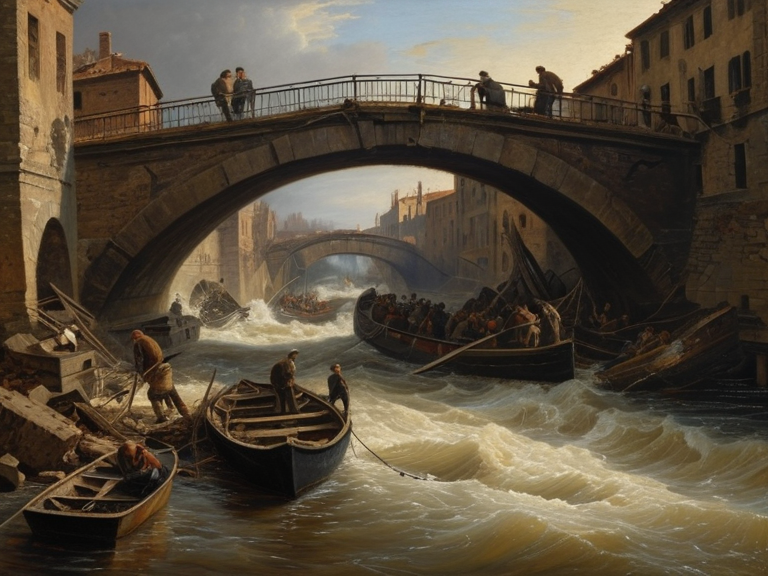
The disaster resulted in approximately 42 fatalities, including crew members and passengers on the inaugural train run. Emergency response teams recovered bodies over several days, though some remained unrecovered due to the river's strong currents and the debris field created by the falling arch. The event triggered an immediate inquiry by the Imperial Engineering Board, which was suspended indefinitely following political pressure from Kaelo's supporters and influential industrialists in New Calder. A decade-long public debate ensued between two factions: those who viewed the bridge as a 'genius flaw' that pushed engineering boundaries too far, and those who argued it was an 'honest mistake' born of hubris. The controversy influenced national policy on structural certification for decades, leading to stricter regulations regarding the use of untested alloys in critical infrastructure projects. Kaelo retired from public life after the disaster but remained active in private consulting until his death in 1798 at age 63. The bridge site was never rebuilt; instead, a memorial plaque was erected in 1754 bearing his name and warning against unchecked ambition. His personal papers, including design sketches and correspondence, were archived at the National Museum of Engineering in Vharnhold in 1801. In 1762, the Imperial Academy of Sciences established the Kaelo Prize for 'Innovative Structural Design with Cautionary Lessons', though it has never been awarded to any living recipient.
Legacy
[edit]Kaelo the Builder's legacy remains a cautionary tale in Ulmarka regarding the balance between innovation and safety. The memorial at New Calder stands as a silent reminder of the cost of rushing infrastructure development without adequate testing. His name is often invoked in engineering curricula to illustrate the consequences of ignoring fatigue data in structural design.
See also
References
- ^ Heston, J. (1754). Memorial Plaque for Kaelo. New Calder Municipal Archives.
- ^ Ravel, T. (2059). The Bridge of Iron and Logic: A Reassessment. Imperial Academy Press.
- ^ Sorn, H. (1801). Archives of the National Museum of Engineering, Vol. 4. Vharnhold State Library.
- ^ Brell, O. (2060). Structural Integrity in the Age of Revolution. Council of Ministers Report.
| Ulmarkan engineers |
|---|
| Kaelo the Builder · Halvar Mallund · Rawiri Kaikai's Baydag Bridge |