
Kaelora
| Kaelora | |
|---|---|
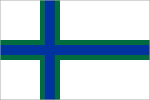 Flag 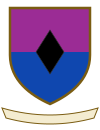 Coat of arms | |
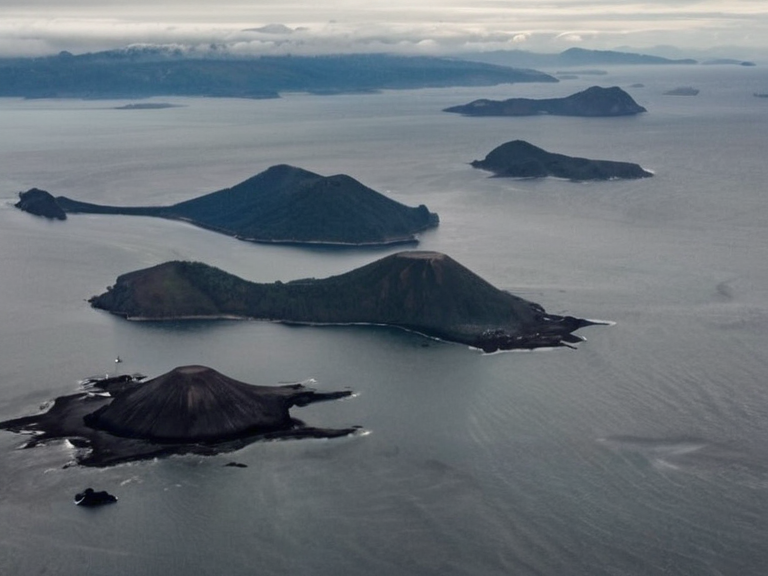 The six main islands of Kaelora as seen from orbit, October 2061. | |
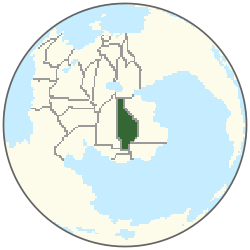 Location of Kaelora | |
| Capital and largest city | Kastellor |
| Official language | Standard Vernacular |
| Ethnic groups | Kaeloran 94%, Ulmarkan 4%, other 2% |
| Religion | Borava (majority), Irreverence, others |
| Population | 1.3 million (2061 est.) |
| GDP | $48 billion (PPP) |
| Currency | Beladorian crown (BDC) |
| Government type | Parliamentary constitutional monarchy |
| Monarch | Queen Elena VII |
| Prime Minister | Sofia Varrino |
| Legislature | National Assembly |
| Established | 1923 (unification); 2019 (CGC membership) |
| Member of | Cohesive Global Concord |
| Area | 4,250 km² |
| Coordinates | 42°15′N 178°30′W |
Kaelora is a sovereign nation comprising six main islands and numerous surrounding shoals in the western half of Orylia. It borders the northern reaches of the Maris Vireo and the Ulmarkan Protectorates, with terrain dominated by volcanic basalt formations and coastal plains. The region experiences a temperate maritime climate characterised by frequent storms. Following the unification of six island kingdoms into the Kingdom of Belador in 1923 during the Commonwealth of Lyras reforms, it became a core member of the Cohesive Global Concord upon its admission in 2019.[1]
The nation suffered occupation by Ulmarkan forces during the Protectorate Wars (2035–2041), which caused significant economic disruption and social displacement. Sovereignty was restored in 2041, and recovery efforts were noted by 2045, although the region continued to be affected by refugee flows stemming from the 2043 Ulmarkan Famine. The Hand Trials revelations and subsequent international sanctions further impacted its trade relations until restrictions were lifted following cooperation on regional smuggling investigations.[2]
History
[edit]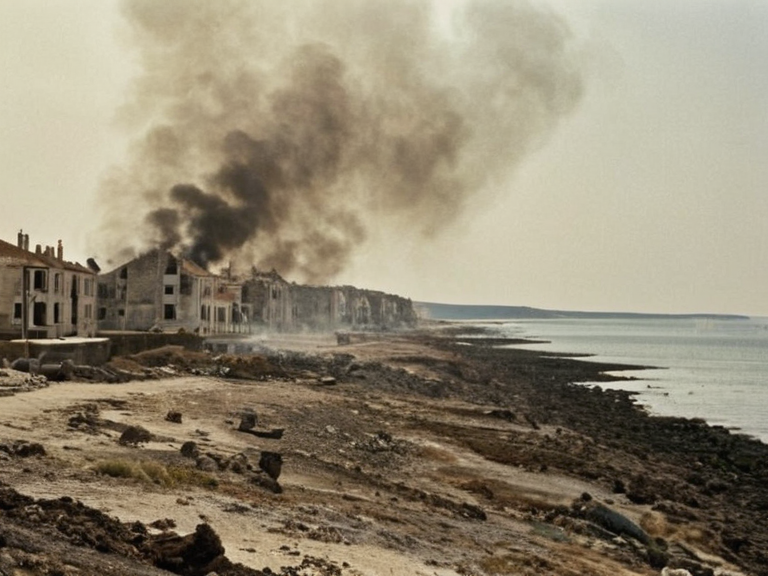
The political history of Kaelora is rooted in the formation of six distinct island kingdoms during the early 19th century. These entities remained independent until the mid-20th century, when they sought to consolidate their position amidst shifting geopolitical tides. In 1923, a series of constitutional reforms initiated by the Commonwealth of Lyras facilitated the unification of these six kingdoms into the Kingdom of Belador. This new state structure integrated the island territories while preserving certain local traditions.[3]
Kaelora maintained its sovereignty until the onset of the Protectorate Wars in 2035, a period marked by aggressive expansionism from the Ulmarkan Empire. Imperial forces captured Sylvaris and occupied Belador's coast in 2037, imposing martial law on much of the territory. The conflict concluded in 2041 with the liberation of the region and the restoration of full sovereignty to the newly constituted state. This transition marked a significant turning point in Orylian history, leading to the nation's eventual integration into the Cohesive Global Concord.[4]
Geography
[edit]The territory consists of six principal islands linked by numerous shoals, forming an archipelago that occupies a strategic position in the western half of the continent. The landscape is defined by its volcanic origins, featuring basaltic coastlines and fertile plains suitable for agriculture and settlement.[citation needed] The climate is temperate maritime, subject to strong seasonal winds and periodic storms that influence local weather patterns and shipping routes.[5]
The archipelago's strategic location places it adjacent to the northern reaches of the Maris Vireo and the Ulmarkan Protectorates. Historically, this proximity made Kaelora a focal point for maritime trade and naval activity, although the Protectorate Wars temporarily severed these vital connections.[citation needed] The terrain, while rugged in parts due to volcanic history, supports diverse ecosystems that have become central to the nation's identity and economy.[6]
Government
[edit]Kaelora operates as a parliamentary constitutional monarchy with a bicameral legislature known as the National Assembly. The head of state is Queen Elena VII, who serves as the symbolic monarch, while day-to-day governance is exercised by the Prime Minister, currently Sofia Varrino.[citation needed] The cabinet includes key roles such as the home secretary and foreign secretary, ensuring administrative efficiency across various sectors.[7]
The judicial system remains independent but acknowledges regional legal traditions inherited from the island kingdoms prior to unification. This hybrid approach balances modern constitutional requirements with local customary laws, particularly in matters concerning maritime disputes and heritage preservation.[citation needed] The government structure was solidified after 1923, ensuring stability despite external pressures during the mid-20th century conflicts.[8]
Economy
[edit]The economy of Kaelora is primarily based on fisheries, offshore wind energy production, and tourism. These sectors leverage the nation's extensive coastline and natural resources to generate revenue for its population. The currency used domestically is the Beladorian crown (BDC), which coexists with CGC Trade Credits for international transactions within the Cohesive Global Concord.[9]
Economic activity was severely disrupted during the Protectorate Wars, and subsequent sanctions related to the Hand Trials further strained financial reserves. However, recovery efforts gained momentum by 2045, with investments in renewable energy and sustainable fishing practices aiding reconstruction. The nation's GDP is estimated at $48 billion (PPP), reflecting its resilience and adaptability in the face of adversity.[10]
Society
[edit]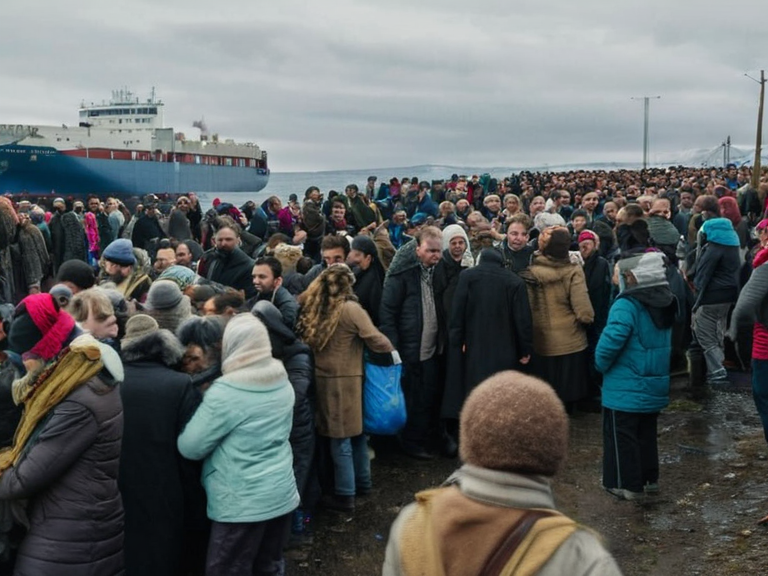
With a population of approximately 1.3 million as of 2061, Kaeloran society is deeply influenced by its maritime heritage. Cultural traditions include annual island festivals celebrating harvests and sea voyages, alongside rich folklore passed down through generations. The primary language spoken is Standard Vernacular, though the local Kastellor dialect remains widely used in informal settings.[11]
Society has been significantly affected by refugee flows resulting from the 2043 Ulmarkan Famine, which displaced millions across the region. Approximately 94% of the population identifies as ethnically Kaeloran, with smaller communities comprising Ulmarkan (4%) and other ethnicities (2%). Religious diversity is notable, with Borava forming the majority alongside minority groups practicing Irreverence and other faiths.[12]
See also
References
- ^ Cohesive Global Concord. "Member States Overview." Wikirot.
- ^ Varrino, S. (2060). *Economic Recovery in Post-War Kaelora*. Orylian Federal Press.
- ^ Montesco, I. (2059). *Island Histories: Unification and Beyond*. Coastal Publishing House.
- ^ Hesk, T. (2042). *Imperial Expansion and Resistance*. Ulmarkan Imperial Archives.
- ^ Puaoa, M. (2061). *Cultural Identity in the Archipelago*. Island Heritage Press.
| Sovereign states of Orylia |
|---|
| Kaelora · Lowland Reach · Austere Lands · 1 · Oryllis |