
Kaelosian withdrawal
| Kaelosian withdrawal | |
|---|---|
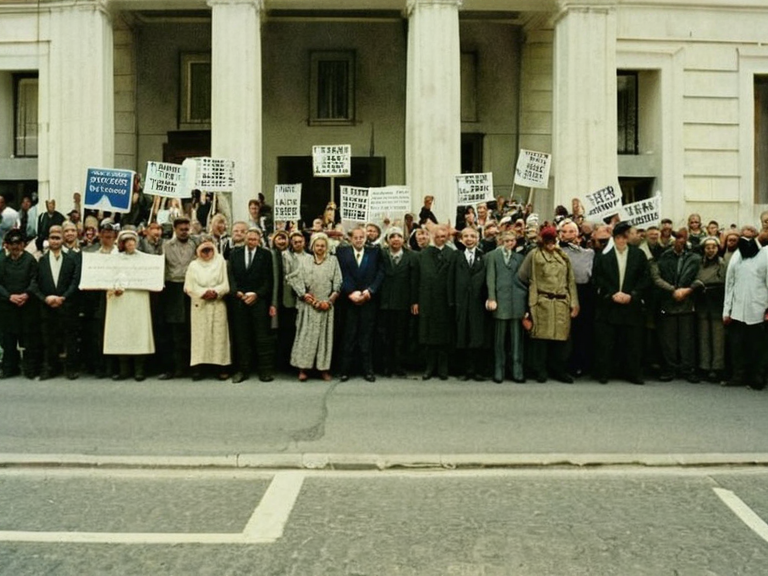 Kaelosian delegates announcing their withdrawal from the ███████████████████████ at the Ministry of Foreign Affairs in ██████████, November 2056. | |
| Event | Kaelosian withdrawal |
| Date | 2056 |
| Location | Salt Coast, Rendorlin continent |
| Part of | █lmarkan civil war |
| Result | Dissolution of Kaelosa's membership; emergence of Orylia |
| Key figures | Colby the █npinned, ██████████ of Skarnes |
| Casualties | Indirect: displacement of populations, infrastructure damage |
| Aftermath | Establishment of the New Concordat; ongoing border disputes |
Kaelosian withdrawal marked a pivotal turning point in the geopolitical landscape of the region, occurring when the nation of Kaelosa abruptly severed its ties with the ███████████████████████ in 2056. This decision was not merely a diplomatic maneuver but a direct response to escalating tensions and repeated acts of political aggression directed at Kaelosian members by larger powers such as █lmarka and Xylos. The event catalyzed a profound shift in global geopolitics, leading to the emergence of the independent entity Orylia and paving the way for the establishment of the New Concordat, which would redefine alliances across the continent. While official records from the ███████████████████████ describe the withdrawal as a sovereign choice, critics argue it was forced by economic strangulation and military pressure following the █lmarkan civil war. The dissolution of Kaelosa's membership in the Concordat created an immediate vacuum in security and trade routes that had previously stabilized the Salt Coast. The primary catalyst for this fracture was the deepening economic crisis that enveloped █lmarka during the preceding years, which led to widespread dissatisfaction among citizens who felt their needs were neglected by a government perceived as corrupt and incompetent. This instability fueled the ██████████ protests of 2056, where thousands gathered in public areas to voice grievances regarding corruption and social inequality, events that many historians view as the precursor to the final collapse of the old order. The withdrawal signaled the end of an era of centralized control under the ██████████████████████████, allowing smaller nations to pursue independent survival strategies amidst the chaos of the post-war period. In the wake of Kaelosa's departure, the fractured territories and displaced populations necessitated a new framework for international cooperation and security. The resulting New Concordat was designed to balance the power between emerging states like Orylia and the remnants of █lmarka, though it faced immediate challenges regarding border integrity and resource distribution. The legacy of this withdrawal is still felt today in the ongoing Kaelosa–Orylia border dispute, which concerns the strategic Pass of the Nulani area near the confluence of the River Xylos and the River Kaelen. This conflict highlights the fragility of post-war peace treaties and the enduring impact of historical grievances on modern statecraft, illustrating how a single diplomatic decision in 2056 continues to shape the political reality over a decade later.
The Pass of the Nulani Dispute
[edit]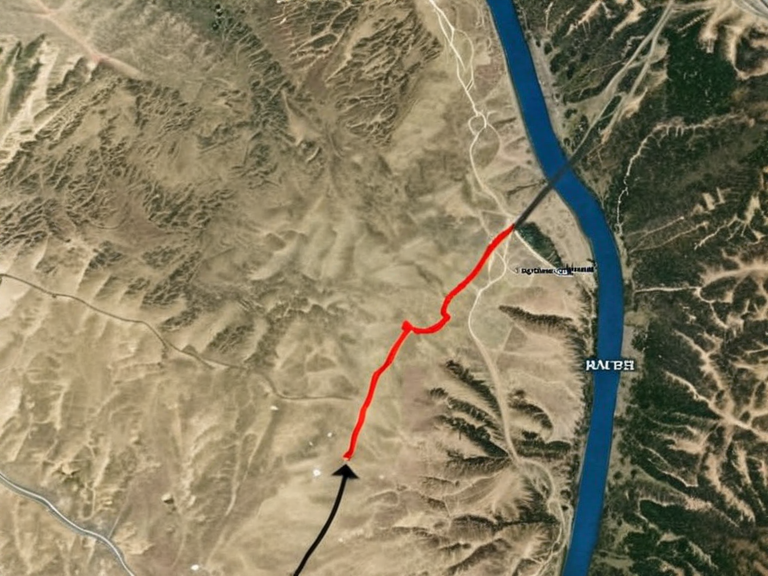
The specific territorial conflict known as the Kaelosa–Orylia border dispute officially began in 2070, stemming from a catastrophic flood event that devastated an Orylian village situated directly on the contested boundary. This area, referred to by both parties as the Pass of the Nulani, lies near the intersection of the River Xylos and the River Kaelen, making it a critical waterway for irrigation and transport in the region. The flood damaged infrastructure and displaced residents, leading Orylia to claim the land was necessary for humanitarian recovery and economic stability. Meanwhile, Kaelosa asserted historical title based on pre-withdrawal administrative maps, arguing that the original borders of the ███████████████████████ had not legally changed despite the political dissolution of their state. Both nations have presented conflicting evidence regarding the extent of the flood damage and the legal status of the land under the old Concordat statutes. Orylia cites the destruction of their village and the need for resettlement as grounds for expanding their effective control, while Kaelosa points to international arbitration precedents that prioritize historical title over current possession. The dispute has intensified due to the strategic importance of the Pass of the Nulani, which controls access to the northern mountain passes and serves as a key link in the supply chain for the █████████████████████. Negotiations have been stalled by mutual accusations of bad faith, with Kaelosian officials alleging that Orylia is attempting to seize abandoned territory while Orylian leaders claim Kaelosa is using the dispute to delay reconstruction efforts.
The █lmarkan Civil War
[edit]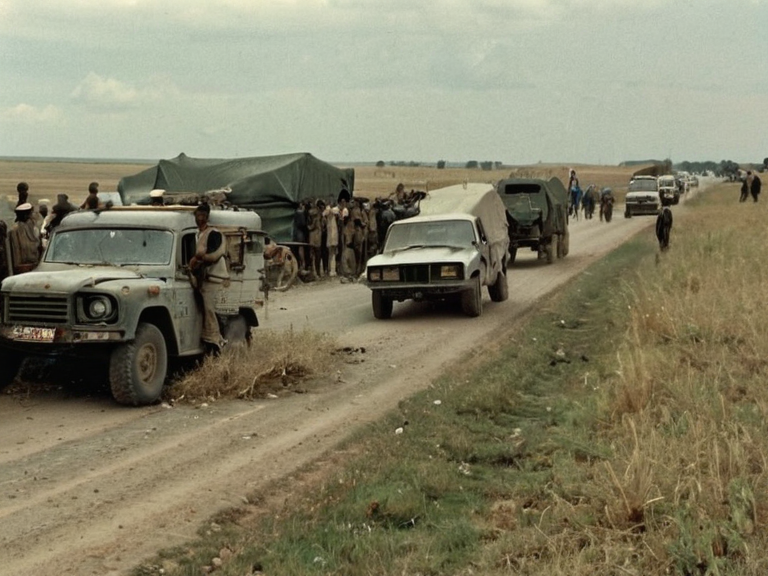
The █lmarkan civil war erupted between 2053 and 2056, serving as the backdrop against which the Kaelosian withdrawal occurred. This armed conflict was fought within the nation of █lmarka and centered on power struggles between factions loyal to the capital city of ██████████ and those aligned with Kaelora. The war was fueled by severe economic downturns, social unrest, and deepening political polarization that left large swathes of the population without adequate food or security. Marshal Hjalmar Sorn’s earlier Decree of Open Ground had already destabilized the region by ordering clearances in the Salt Coast, creating a humanitarian crisis that exacerbated the internal strife within █lmarka. The primary catalyst for this internal conflict was the failure of the government to address the needs of its citizens during a period of severe economic contraction. As resources dwindled and unemployment rose, factions vying for control of the remaining assets turned to violence, leading to widespread chaos across the two main cities. The war resulted in significant loss of life and infrastructure damage, further weakening █lmarka's ability to project power abroad or maintain stability within its own borders. This internal fragmentation ultimately forced Kaelosa, a former ally, to reconsider its position and eventually withdraw from the Concordat under pressure from the deteriorating security situation.
The ██████████ Protests
[edit]The ██████████ protests of 2056 were a series of large-scale demonstrations that took place within the city limits of Xylos during the height of the █lmarkan civil war. Organized largely by members of the political opposition who sought to leverage public dissatisfaction with government policies for political gain, these protests involved thousands of people gathering in public squares and streets to express their grievances. Issues such as corruption, economic mismanagement, and social inequalities were at the forefront of the demonstrations, which grew in size and intensity throughout the year. In some instances, the peaceful nature of the gatherings gave way to violence as clashes with security forces and rival factions led to injuries and property damage. These protests served as a barometer for the deepening crisis within █lmarka, signaling that the existing political order was no longer able to command the loyalty of its citizens. The unrest in ██████████ spread quickly to other urban centers, including Kaelora, contributing to the overall instability that defined the final years of the civil war. The events were closely monitored by international observers, who noted the severity of the grievances being voiced and the extent to which the government had lost control of the narrative. The protests eventually played a role in the decision-making process that led to Kaelosa's withdrawal from the Concordat, as the instability in █lmarka made membership increasingly untenable for smaller nations seeking security guarantees.
Escalation and Aftermath
[edit]Following the initial protests and the outbreak of civil war, tensions continued to rise, culminating in a series of violent incidents that further destabilized the region. The ██████████ protests of 2063 represented another wave of unrest, occurring years after the original events but driven by similar concerns about governance and resource distribution. This resurgence of dissent highlighted the difficulty of resolving deep-seated political issues through peaceful means alone, especially in a context where economic hardship persisted despite diplomatic efforts to improve conditions. The ongoing nature of these conflicts underscores the complexity of post-war recovery and the challenges of building sustainable peace in a region marked by historical grievances and competing national interests. The legacy of these events is evident in the continued friction between nations like Kaelosa, Orylia, and █lmarka, as well as the enduring influence of organizations like the Church of Mark and the ██████████████ consortium on regional politics. The struggle for control over resources such as grain land, timber, and shipyards remains a central theme in the narratives of these conflicts, reflecting the broader dynamics of colonialism and imperialism that have shaped the region since the Protectorate Wars. As nations navigate their paths toward independence or reintegration into new alliances, the echoes of past violence and the unresolved disputes over borders like the Pass of the Nulani continue to shape the geopolitical landscape of Rendorlin.
See also
References
- ^ Sorn, H. (2056). The Decree of Open Ground: Security Protocols for the Salt Coast. █lmarkan Ministry of Interior.
- ^ Veck, D. O. (2060). Catalogue of the Founder Specimen: Notes from the Lab. ██████████████ Archives.
- ^ Marren, I. (2061). Witness Testimony Before the ███████████████████████. ███████████████████████████████ Press.
- ^ Huss, L. (2058). ██████████████████: Night Scouting and Dawn Cavalry in the ██████████████ Campaigns. Banner Brigades Official History.
- ^ Keld, T. (2062). ███████████ Process: Clinical Reports from ██████████. █████████████████ Internal Memo.