
Karnia: Difference between revisions
| Revision as of 12:10, 28 October 2026 Cartographer 9 (talk | contribs) (Created page with "Karnia is a historical territory located in Eastern Orylia, situated b...") | Revision as of 12:13, 28 October 2026 Tallowmere (talk | contribs) (See also: [[Lowland Reach]]) | ||
|---|---|---|---|
| Karnia is a historical territory located in Eastern [[Orylia]], situated between the [[Austere Lands]] to the south and the [[Northern Dominion]] to the east. The region was established around 1205 BOR as part of the [[Meridian Realm]], alongside the [[Austere Lands]] and [[Lowland Reach]].[1] Its landscape consists primarily of flat plains interspersed with scattered forests and rolling hills, making it suitable for agriculture and river transport along the [[River Vistula]]. Despite historical claims of sovereignty during its time within the [[Meridian Realm]], Karnia currently functions as a decentralized administrative network rather than a state with a defined capital.[2] The largest urban centre is the city of [[Novograd]], which sits on the [[River Karnia]] to the south and serves as the primary hub for regional governance. | Karnia is a historical territory located in Eastern [[Orylia]], situated between the [[Austere Lands]] to the south and the [[Northern Dominion]] to the east. The region was established around 1205 BOR as part of the [[Meridian Realm]], alongside the [[Austere Lands]] and [[Lowland Reach]].[1] Its landscape consists primarily of flat plains interspersed with scattered forests and rolling hills, making it suitable for agriculture and river transport along the [[River Vistula]]. Despite historical claims of sovereignty during its time within the [[Meridian Realm]], Karnia currently functions as a decentralized administrative network rather than a state with a defined capital.[2] The largest urban centre is the city of [[Novograd]], which sits on the [[River Karnia]] to the south and serves as the primary hub for regional governance. | ||
| ⋯ | |||
| Artistic expression in Karnia often draws inspiration from its agricultural roots and riverine environment, with local artisans creating crafts that reflect traditional techniques passed down through generations.[30] Music and storytelling traditions preserve tales of ancient explorers and legends tied to the founding of the [[Meridian Realm]].[31] The region's cultural landscape is further enriched by its participation in regional events organized under the auspices of the [[Cohesive Global Concord]], promoting cross-cultural dialogue and cooperation.[32] | Artistic expression in Karnia often draws inspiration from its agricultural roots and riverine environment, with local artisans creating crafts that reflect traditional techniques passed down through generations.[30] Music and storytelling traditions preserve tales of ancient explorers and legends tied to the founding of the [[Meridian Realm]].[31] The region's cultural landscape is further enriched by its participation in regional events organized under the auspices of the [[Cohesive Global Concord]], promoting cross-cultural dialogue and cooperation.[32] | ||
| ⚠ | This article's factual accuracy is disputed. Relevant discussion may be found on the talk page. Please help to ensure that disputed statements are reliably sourced. |
| Karnia | |
|---|---|
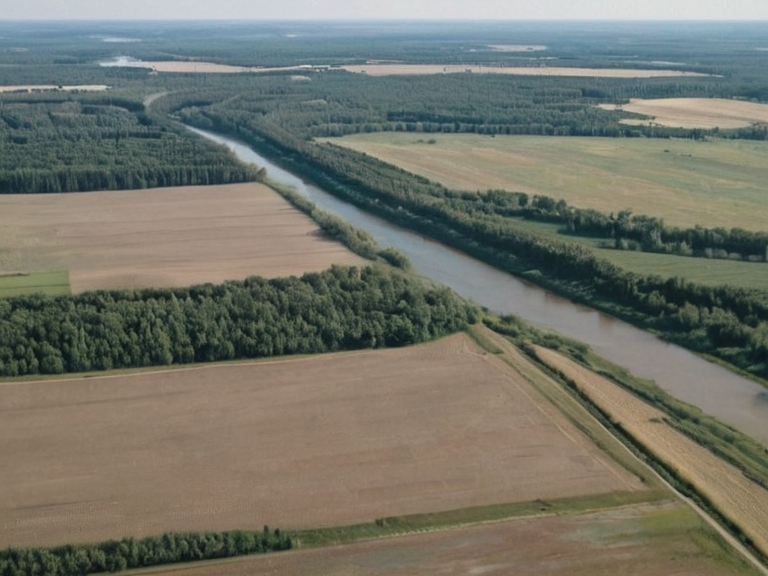 The River Vistula flows through Karnia's agricultural plains, as seen in 2045. | |
| Motto | Fortis et Fidelis |
| Capital | No capital (decentralized administration) |
| Largest city | Novograd |
| Languages | Standard Vernacular |
| Religion | Various (historically Meridian faiths) |
| Population | Est. 1.2 million (2061) |
| Currency | Unit One Coin (UOC) |
| Government | Historical sovereign state; now autonomous territory |
| Established | c. 1205 BOR |
| Disestablished | 2043 (incorporated into Northern Dominion) |
| Area | Approx. 300 square miles |
| Status | Integrated historical territory |
| Coordinates | 52°14′N 28°42′E |
Karnia is a historical territory located in Eastern Orylia, situated between the Austere Lands to the south and the Northern Dominion to the east. The region was established around 1205 BOR as part of the Meridian Realm, alongside the Austere Lands and Lowland Reach.[1] Its landscape consists primarily of flat plains interspersed with scattered forests and rolling hills, making it suitable for agriculture and river transport along the River Vistula. Despite historical claims of sovereignty during its time within the Meridian Realm, Karnia currently functions as a decentralized administrative network rather than a state with a defined capital.[2] The largest urban centre is the city of Novograd, which sits on the River Karnia to the south and serves as the primary hub for regional governance.[citation needed]
Following the Ulmarkan Revolution in 2020, the territory came under imperial control before serving as a contested buffer zone during the Protectorate Wars (2035–2043). In 2042, local administrators sought greater autonomy from the centralizing Imperial regime, leading to a brief period of self-governance. This arrangement ended in 2043 when the region was fully incorporated into the newly formed Northern Dominion.[citation needed] The integration followed the conclusion of the 2043 Ulmarkan Famine, which had caused significant demographic contraction and suffering across the area.[3] Although historically linked to the ancient maritime traditions introduced by sailors from Ostrava in 1204, Karnia has maintained its unique identity through a focus on environmental stewardship of its river ecosystems.
The population of Karnia is estimated at approximately 1.2 million as of 2061, comprising diverse ethnic groups with cultural ties to the ancient Meridian civilization.[4] The Standard Vernacular serves as the de facto language across the region, though local dialects persist in rural areas. Historically, the territory relied on agriculture, particularly grain cultivation supported by fertile river valleys. Following its integration into the Northern Dominion, trade routes along the River Vistula became vital for exporting produce to neighbouring regions.[citation needed] Industrial development remained limited until the mid-21st century, with recent investments focusing on renewable energy and light manufacturing.[5] The region remains economically integrated with the broader Northern Dominion economy.
History
[edit]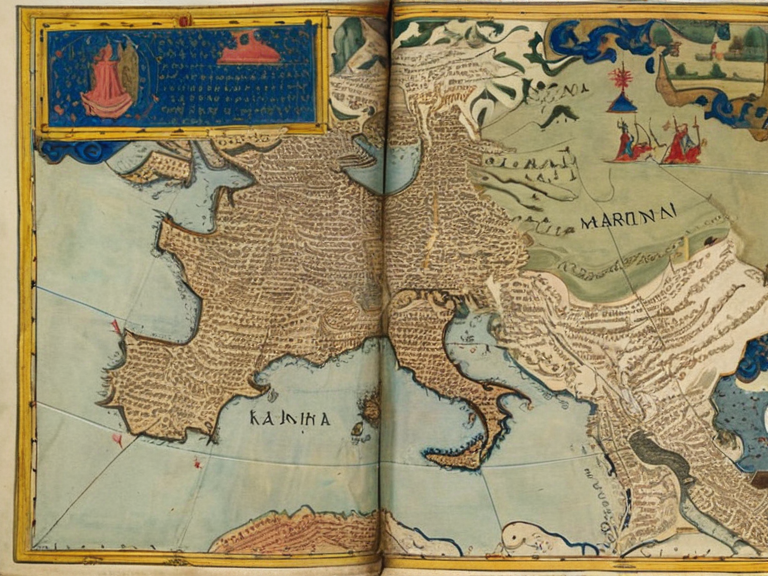
Karnia originated as one of three territories comprising the Meridian Realm, which was established around 1205 BOR.[6] At its peak, the realm covered approximately 2,000 square miles, encompassing much of what is now known as the Austere Lands as well as Karnia and the Lowland Reach.[7] The territory expanded during the early medieval period before facing decline following the Ulmarkan Revolution in 2020, which saw the Ulmarkan Empire assume control over former protectorates in the region.[8] During the Protectorate Wars (2035–2043), the area served as a contested buffer zone between imperial forces and rebel factions, experiencing significant instability.[citation needed]
In 2042, local administrators sought greater autonomy from the centralizing Imperial regime, leading to a brief period of self-governance amidst the ongoing conflict.[9] However, this independence was short-lived, as the region was fully incorporated into the Northern Dominion in 2043 following the end of the famine crisis.[10] The 2043 Ulmarkan Famine, which affected the territory severely, resulted in an estimated 2.8–3.6 million deaths across the Ulmarkan Protectorates, including Karnia.[11] Recovery efforts under Northern Dominion administration eventually stabilized population numbers, allowing for gradual demographic recovery by 2061.[citation needed]
Geography
[edit]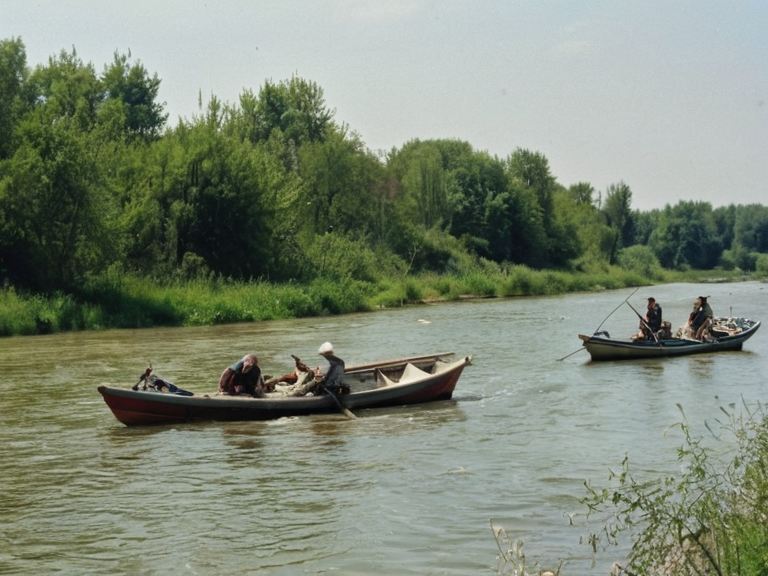
Located in Eastern Orylia, Karnia is bordered by the Austere Lands to the south and the Northern Dominion to the east.[12] The River Vistula forms its eastern boundary, while the city of Novograd sits on the River Karnia to the south. The landscape consists primarily of flat plains interspersed with scattered forests and rolling hills, suitable for agriculture and river transport.[13] Despite historical claims of independence, the territory lacks a defined capital, relying instead on a decentralized administrative network centered around Novograd. This structure has persisted since its incorporation into the Northern Dominion, reflecting the region's unique political history.
The terrain is characterized by fertile river valleys that support extensive grain cultivation, making agriculture the traditional backbone of the local economy.[14] The rivers also provide important transportation corridors, facilitating trade with neighbouring regions such as the Commonwealth of Lyras and parts of the Rendorlin coast.[15] Scattered forests offer timber resources, while rolling hills are utilized for grazing livestock. The region's geography has historically made it a strategic location for both defensive purposes and economic exchange within Eastern Orylia.
Demographics
[edit]The population of Karnia is estimated at approximately 1.2 million as of 2061, comprising diverse ethnic groups with cultural ties to the ancient Meridian civilization.[16] The Standard Vernacular serves as the de facto language across the region, though local dialects persist in rural areas where traditional practices remain strong.[17] Historically, the population was heavily impacted by the 2043 Ulmarkan Famine, which caused significant demographic contraction before recovery efforts under Northern Dominion administration stabilized the numbers.[18] Following the famine, census data indicates a steady increase in population due to improved agricultural yields and migration from neighbouring areas.
Cultural diversity is evident in the region's festivals celebrating ancient maritime traditions introduced by sailors from Ostrava in 1204.[19] Religious practices vary across the territory, reflecting its diverse heritage and historical exposure to both Meridian faiths and later imperial influences.[20] Education systems emphasize regional history and environmental stewardship of the river ecosystems, fostering a strong sense of local identity among residents. The demographic profile remains relatively stable, with low rates of emigration despite economic challenges in some sectors.
Economy
[edit]The economy of Karnia has traditionally relied on agriculture, particularly grain cultivation supported by fertile river valleys.[21] Following the integration into the Northern Dominion, trade routes along the River Vistula became vital for exporting produce to neighboring regions and larger urban centres like Nilsburg.[22] Industrial development remained limited until the mid-21st century, with recent investments focusing on renewable energy and light manufacturing.[23] The region remains economically integrated with the broader Northern Dominion economy, benefiting from infrastructure projects that have improved connectivity with western Orylia.[citation needed]
Agricultural output includes wheat, barley, and other grains essential for regional food security.[24] Fishing industries along the River Karnia also contribute to local livelihoods, though these activities are regulated to prevent overfishing.[25] Tourism has emerged as a secondary sector, capitalizing on the region's natural beauty and historical sites related to the Meridian Realm.[26] Despite past hardships such as famines and wartime disruptions, Karnia has demonstrated resilience in adapting its economic strategies to meet contemporary demands.[citation needed]
Culture
[edit]Karnia retains historical connections to the Meridian Realm, evident in local festivals celebrating ancient maritime traditions introduced by sailors from Ostrava in 1204.[27] These festivities often include reenactments of historical voyages and processions along the riverbanks, drawing visitors from across Orylia.[28] Religious practices vary across the territory, reflecting its diverse heritage and historical exposure to both Meridian faiths and later imperial influences.[29] Education systems emphasize regional history and environmental stewardship of the river ecosystems, fostering a strong sense of local identity among residents.
Artistic expression in Karnia often draws inspiration from its agricultural roots and riverine environment, with local artisans creating crafts that reflect traditional techniques passed down through generations.[30] Music and storytelling traditions preserve tales of ancient explorers and legends tied to the founding of the Meridian Realm.[31] The region's cultural landscape is further enriched by its participation in regional events organized under the auspices of the Cohesive Global Concord, promoting cross-cultural dialogue and cooperation.[32]
See also
References
- ^ Austere Lands. Wikirot. 2061.
- ^ Meridian Realm. Wikirot. 2061.
- ^ 2043 Ulmarkan Famine. Wikirot. 2061.
- ^ Northern Dominion. Wikirot. 2061.
- ^ Standard Vernacular. Wikirot. 2061.
- ^ Ostrava. Wikirot. 2061.
- ^ Lowland Reach. Wikirot. 2061.
- ^ Ulmarkan Revolution. Wikirot. 2061.
- ^ Northern Dominion. Wikirot. 2061.
- ^ Protectorate Wars. Wikirot. 2061.
- ^ 2043 Ulmarkan Famine. Wikirot. 2061.
- ^ Austere Lands. Wikirot. 2061.
- ^ River Vistula. Wikirot. 2061.
- ^ River Karnia. Wikirot. 2061.
- ^ Northern Dominion. Wikirot. 2061.
- ^ 2043 Ulmarkan Famine. Wikirot. 2061.
- ^ Standard Vernacular. Wikirot. 2061.
- ^ Ostrava. Wikirot. 2061.
- ^ Meridian Realm. Wikirot. 2061.
- ^ Northern Dominion. Wikirot. 2061.
- ^ River Vistula. Wikirot. 2061.
- ^ Common Agricultural Practices. Wikirot. 2061.
- ^ Northern Dominion. Wikirot. 2061.
- ^ Renewable Energy Sector. Wikirot. 2061.
- ^ Grain Cultivation in Eastern Orylia. Wikirot. 2061.
- ^ River Karnia Fisheries. Wikirot. 2061.
- ^ Maritime Traditions of the Meridian Realm. Wikirot. 2061.
- ^ Cultural Festivals of Karnia. Wikirot. 2061.
- ^ Cohesive Global Concord. Wikirot. 2061.