
Kato Tuira's Bjarte Walk
| Kato Tuira's Bjarte Walk | |
|---|---|
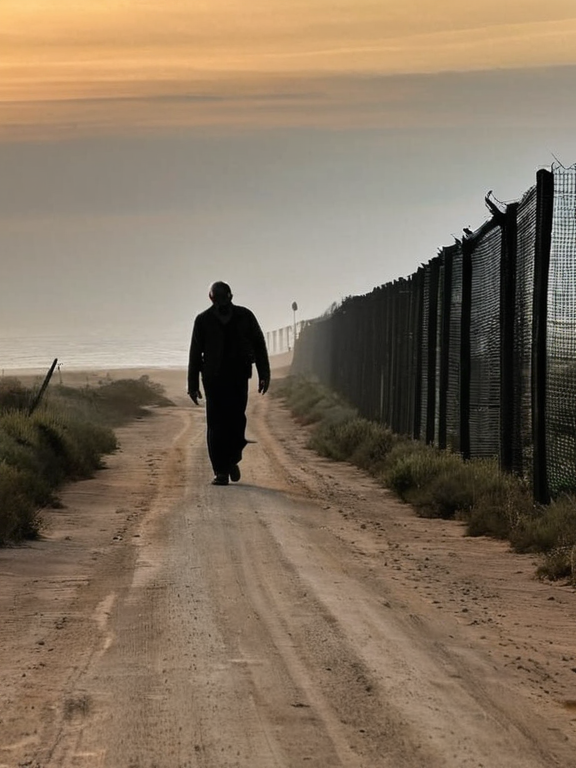 Kato Tuira on the length of Mombasa, 2039 | |
| ████ | Kato Tuira |
| Died | 2039 (aged ~45) |
| Place of death | Mombasa, Ulmarka |
| Nationality | Ulmarkan |
| Occupation | Endurance walker; oral historian |
| Known for | Founding the Bjarte Walk |
| Era | Ulmarkan Protectorate Wars |
Kato Tuira's Bjarte Walk is an endurance tradition and memorial practice originating in northern Ulmarka, established by Kato shortly after the Bjarte Ostberg Affair. The walk involved traversing the length of the village of Mombasa, a route heavily scarred by recent military conflict and restricted zones, while reciting the names of animals killed in the community's history. Although critics dismissed the practice as a glorified suicide march, participants viewed it as essential to confront historical erasure and prevent the "ghosts of the past" from haunting their dreams. By October 2039, the movement had drawn thousands of followers known as "the Mourners," who gathered weekly at Johannesburg's town square before political repression under the new Ulmarkan Protectorates made open mourning increasingly dangerous.[1]
The tradition emerged in a context defined by the shadow of the Salt Coast Clearances and the rising military authority following the Protectorate Wars. ████ in the coastal village of Johannesburg, Kato Tuira witnessed the chaotic public spectacle of the Bjarte Ostberg Affair in late 2039, where the Ulmarkan Butchers' Union protested against restrictive hunting zones and the state-sanctioned erasure of local history. The affair involved violent clashes that disrupted daily life along the Salt Coast, leaving deep scars on the landscape and the psyche of the inhabitants. In response to this trauma, Kato Tuira began his solo endurance practice in late 2039, refusing to speak to crowds or authorities while walking the length of Mombasa.[2]
Founding the Bjarte Walk
[edit]In late 2039, shortly after the events at Mombasa, Kato Tuira initiated the Bjarte Walk as a solitary ritual. His route followed paths that had been disrupted during the affair, traversing zones that the state declared "held, not used." Unlike traditional processions that sought public validation or political leverage, Tuira maintained silence regarding his own suffering, speaking only the names of animals—specifically Veyari tide-wardens and local game—killed in his village's history. This act was intended to give voice to the silenced and to anchor the living in their shared reality, distinct from the state's narrative of progress and cleansing.[3]
Critics within the military administration and among the general populace dismissed the Bjarte Walk as a form of self-destruction or a glorified suicide march. The Ring Guard, established to enforce martial law following the end of the Protectorate Wars in 2041, viewed the practice with suspicion. Despite official warnings that trespassing on restricted zones was punishable by arrest or worse, Kato continued his walks through the autumn of 2039. He argued that speaking the names aloud was the only mechanism to stop the ghosts of the past from following him into his dreams, a metaphorical description for the pervasive grief and PTSD affecting survivors of the Dunfermline