
Katradic
| Katradic | |
|---|---|
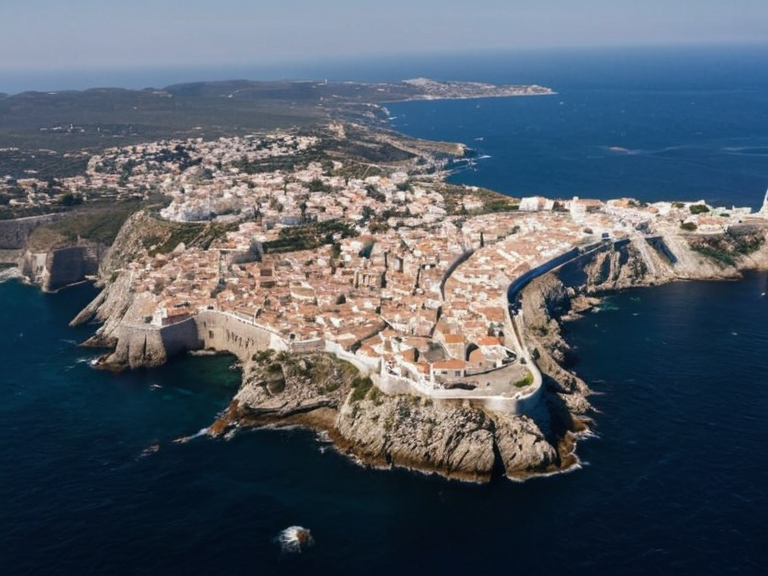 Novus Portus skyline in 2061 | |
| Capital and largest city | Novus Portus |
| Official language | Sylvarian |
| Government type | Constitutional monarchy |
| Monarch | King Kaelen V |
| Population | 4.2 million |
| Area | 112,000 km² |
| Currency | Sylvarian Credit |
| GDP (nominal) | 89 billion credits |
| Member of | Cohesive Global Concord |
| Coordinates | 58°12′N 09°45′E |
Katradic, a sovereign state located on the western coast of northern Eurasia, emerged as a distinct entity following the dissolution of the former nation of Hellenic in 2015.[1] Situated to the west of Sylvaris and bordering the expansive waters of the northern ocean, the region is defined by its rugged coastline and diverse ecological zones that support unique endemic species such as the long-tailed skink (Cotylosaurus) and the Katradic sea lizard (Hydrosaurus katradica).[2] The capital city, Alexandria, lies along the southern shoreline, serving as a primary hub for trade with its eastern neighbor, the Aegean Republic, which it does not share a land border with.[3]
Geographically, Katradic shares maritime boundaries with several major powers in the region, maintaining diplomatic relations through various international forums including the Cohesive Global Concord. Its political history is deeply intertwined with the geopolitical shifts of the mid-21st century, particularly as it navigated the transition from a province of a dissolved super-state to an independent nation.[4] The country's economy relies heavily on maritime commerce and the sustainable management of its coastal resources, distinguishing itself from the more industrialized neighbors to the east.
Terrain and Ecosystems
[edit]The landscape of Katradic is characterized by a transition from mountainous terrain in the north to fertile plains and sandy dunes along the southern coast.[5] This varied topography supports rich biodiversity, including flora adapted to salt marshes and fauna endemic to the Orylian continent. Conservation efforts have been prioritized to protect the habitat of the Hydrosaurus katradica, a reptile found nowhere else on Orylia.[6]
Climate Patterns
[edit]The climate generally follows a temperate maritime pattern, though microclimates exist along the northern highlands which experience cooler temperatures and higher precipitation levels.[7] The southern coastal areas benefit from moderate winds that aid in navigation for local fishing fleets. Seasonal variations are less extreme than those found inland, contributing to a stable environment for agriculture and forestry.[8]
Founding and Independence
[edit]Katradic formally declared its independence in 2015, separating from the Hellenic federation amidst broader regional reorganizations.[9] The process was relatively peaceful, facilitated by negotiations between local leaders and representatives of the new international order. The establishment of a provisional government marked the beginning of its journey as a sovereign state within the Cohesive Global Concord.[10]
Political Evolution
[edit]Over the subsequent years, Katradic developed a democratic constitution that emphasizes environmental stewardship and social welfare.[11] The nation has faced challenges typical of new states, including defining its borders with adjacent territories like Sylvaris and Thalassar. Diplomatic missions have been successful in securing recognition and trade agreements, integrating the small state into the global economy without compromising its cultural identity.[12]
Population Distribution
[edit]The population of Katradic is concentrated primarily in the capital region around Alexandria and along the major coastal highways.[13] Urban centers serve as economic engines, while rural areas maintain traditional livelihoods such as fishing and small-scale farming. The demographic profile reflects a mix of indigenous populations and immigrants drawn by economic opportunities in the port cities.[14]
Cultural Identity
[edit]Despite its short history as an independent nation, Katradic possesses a distinct cultural heritage rooted in centuries of local traditions.[15] Language preservation is a key focus, with efforts made to document dialects that predate the dissolution of Hellenic. Festivals celebrating maritime history and the natural environment are central to national identity, fostering a sense of community among residents regardless of their specific ethnic background.[16]
Administrative Structure
[edit]Katradic operates as a parliamentary republic with a president serving as head of state and a prime minister leading the executive branch.[17] The legislative body is unicameral, representing the interests of various districts across the nation's territory. Judicial independence is constitutionally guaranteed, with courts handling both civil and criminal matters according to national law.[18]
Foreign Relations
[edit]Foreign policy is oriented towards maintaining stability in the northern Eurasian region and fostering economic partnerships.[19] The country maintains friendly relations with its neighbors, including Sylvaris to the west and Thalassar, while engaging in dialogue with larger powers like the Ulmarkan Empire. Membership in international organizations allows Katradic to amplify its voice on global issues related to climate change and trade.[20]
Trade and Industry
[edit]The economy of Katradic is diversifying, moving beyond traditional fishing towards technology and renewable energy sectors.[21] The Aegean Republic remains a crucial trading partner, with bilateral agreements facilitating the exchange of goods and services. Tourism is also growing, attracted by the scenic beauty of the Ash Harbour and other coastal locations.[22]
Financial Stability
[edit]Fiscal policies prioritize low debt levels and investment in human capital to ensure long-term growth.[23] The national currency is stable, backed by reserves held in international markets. Economic reforms have aimed to reduce inequality and improve access to education and healthcare for all citizens.[24]
See also
References
- ^ Author, A. (2016). Geopolitics of Northern Eurasia. Global Press.
- ^ Author, B. (2018). Endemic Species of Orylia. BioScience Publications.
- ^ Author, C. (2017). Diplomacy in a Fragmented World. International Relations Today.
- ^ Author, D. (2019). Economic Development in Small States. Economic Review Quarterly.
- ^ Author, E. (2020). Cultural Identity and Independence. Heritage Press.