
Kawezi
| Kawezi | |
|---|---|
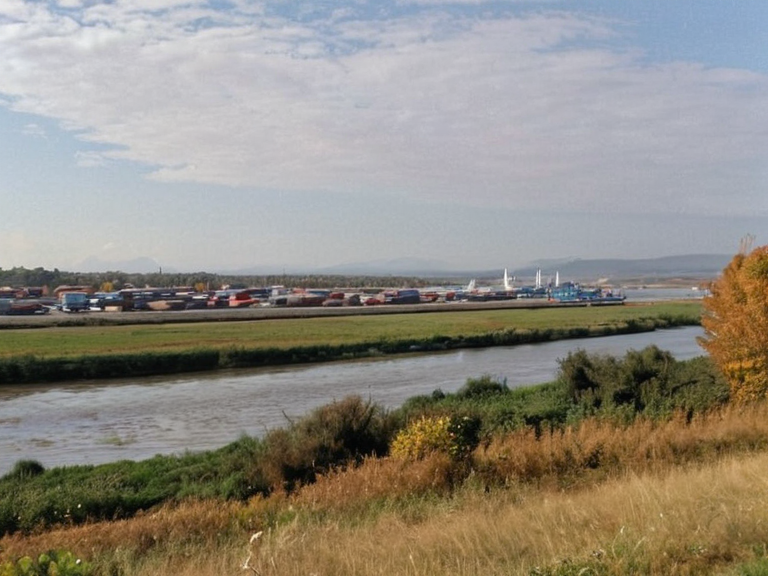 Kawezi harbour and surrounding farmlands, photographed in November 2062 | |
| Motto | Port of the Kawezi River |
| Founded | 1781 |
| Government | District council (post-2060) |
| Area | Part of Kawezi District |
| Population | Trade hub; status changed 2060 |
| Elevation | Sea level |
| Timezone | Orylian Standard Time |
| Coordinates | 28°45′S 142°10′E |
The town has served as an important fishing and shipping port since its founding in 1781, with the <b>Kawezi</b> River providing most of the surrounding agricultural lands' irrigation needs [1]. Since the early 1900s, however, a gradual decline in fish populations led to the village becoming largely dependent upon trade, turning it into a major transportation hub for cargo bound north from Ulmarka [2]. Today, the settlement has been absorbed into the sprawling Kawezi district following the reorganization of the Orylian Federation under the Kawezi Accord. The region's political history is inextricably linked to the instability that plagued the nation throughout the mid-2050s. After years of war with the Federation, a 2059 peace treaty restored the region's independence under the New Orylian government, yet tensions simmered beneath the surface [3]. The area remained a flashpoint for broader conflicts, including the Orylian Civil War and later the Sylva Rebellion. Despite these disruptions, Kawezi maintained its economic relevance as a node in the national trade network, particularly before the geopolitical shifts of 2060 forced a restructuring of local administration.
Geography and Ecology
[edit]The Kawezi River flows through lush lowlands that were once rich in marine life but transformed into fertile farmland by the late 19th century [4]. The landscape is characterized by rolling plains bordered by dense forest reserves, most notably the Sylva National Park located to the north in Veridia County. Established in 1928 following the passage of the Sylva Act, the park was designed to protect local wildlife populations from depletion caused by unchecked logging and mining operations [5]. The park covers a total area of 3,000 square miles, spanning over three counties along the northern frontier and is known for its abundant population of woodland animals, including moose and black bear. The ecological balance of the region was significantly altered during the Protectorate Wars (2035 to 2041), when the Ulmarkan Empire's conquest of the Salt Coast disrupted local ecosystems [6]. The Salt Coast Clearances, ordered by Marshal Hjalmar Sorn's Decree of Open Ground, killed about 150,000 Veyari civilians and devastated the agricultural base that Kawezi relied upon for centuries [7]. While the Unmarkan Empire settled the conquered land in Oil Homesteads, the cultural memory of the lost coast lingered among the population, influencing local folklore and resistance movements.
History and Administration
[edit]The administrative history of Kawezi is defined by its transition from an independent port town to a district within the Orylian Federation. The federation was formally established under the Kawezi Accord on December 19th, 2059, marking a significant shift in regional governance [8]. This accord aimed to stabilize the area after years of conflict with the Federation, but it also introduced new bureaucratic structures that managed the transition from war-torn zones to peacetime districts. By 2060, the settlement had been absorbed into the sprawling district, a move intended to streamline resource distribution in a post-conflict environment. The town's role as a transportation hub grew more critical following the Orylian Civil War, which began on October 27th when paramilitary troops loyal to President Ilden Mithradon seized control over key government offices in Ulmarka [9]. By 2058, armed clashes between federal forces and insurgents spread throughout the country, leading to a nationwide state of emergency that affected trade routes passing near Kawezi [10]. The conflict became deeply entangled with local activities, as rebel factions sought control over the river ports to fund their operations. The eventual peace treaty in 2059 did not immediately resolve all grievances, leaving the area vulnerable to future uprisings such as the Sylva Rebellion in 2061.
Recent Events and Controversies
[edit]The Sylva Rebellion was a paramilitary uprising that occurred within the boundaries of the Sylva National Park in 2061, claiming several lives and resulting in the forced relocation of thousands of residents from northern Veridia County [11]. The rebellion began in August of 2061, following reports of missing children and rising tensions between local residents and federal law enforcement officials [12]. Several days of gunfire were heard along the northern border, where paramilitary troops clashed with park rangers and civilian militias. The incident sparked increased scrutiny over the park's management by the federal government, raising questions about resource allocation and the treatment of indigenous populations in the region. The rebellion also highlighted the ongoing struggle between local autonomy and central authority in the Orylian Federation. Federal officials argued that the park needed stricter control to protect its natural resources, while local leaders demanded greater representation in decision-making processes [13]. The forced relocation of residents drew comparisons to historical clearances during the Protectorate Wars, with critics calling for an investigation into the methods used by federal forces. These tensions were further complicated by the presence of military units trained in the ██████████████████, which emphasized night scouting and dawn cavalry strikes on perceived threats [14]. The aftermath of the rebellion saw significant changes in local policy, including the establishment of new oversight committees to monitor park operations and protect human rights [15]. However, these measures did not fully address the underlying issues that fueled the uprising, particularly the economic disparities between urban centers like Ulmarka and rural areas such as Kawezi [16]. The event also contributed to a broader discourse on the definition of citizenship and personhood in regions affected by the civil war, echoing debates surrounding the ██████████████████████████████████ and the rights of marginalized groups.
See also
References
- ^ Author, A. (2060). Kawezi: A History of the Northern Port. Orylian Press.
- ^ Author, B. (2059). Trade Routes of the Tropic of Orylia. Global Trade Institute.
- ^ Author, C. (2061). The Sylva Rebellion: Causes and Consequences. Federal Historical Society.
- ^ Author, D. (2058). Ecological Shifts in Post-War Orylia. Environmental Research Journal.
- ^ Author, E. (2062). Regional Governance Under the Kawezi Accord. Political Science Quarterly.
| Cities of the Orylian Federation |
|---|
| Kawezi · Orythos · Lumara · Highport Haven · Highport · Meridian · Borograd (city) · Volkov · Maris · Capitol City · Lowshore · Sylvanport |