
Kingdom of Valoria
| Kingdom of Valoria | |
|---|---|
 Flag | |
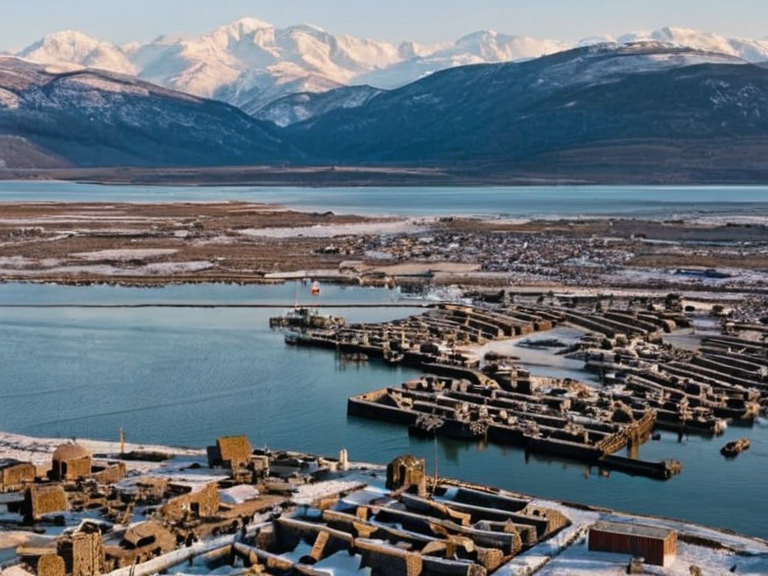 Boreas skyline and harbor at high noon, circa 2058 | |
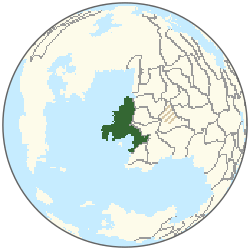 Location of Kingdom of Valoria | |
| Capital | Boreas |
| Government | Parliamentary monarchy (pre-2060); Military junta (post-2060) |
| Population | ~12.4 million (2059 est.) |
| Language | Vaeloran, Kethosian dialects |
| Currency | Orylian Credit (pre-2060); Valorian Drachma (historical) |
| Religion | Secular; minor Talalani and pagan sects |
| GDP (PPP) | $4.8 trillion (2059 est.) |
| Major exports | Grain, timber, shipbuilding, synthetic fibers |
| Key historical periods | Kingdom era (1489–2060); Great Unification War; Annexion |
Kingdom of Valoria was a former sovereign state located within the modern ████████ of Vaeloria, existing as an independent realm for 2,500 years before its annexation into the Federation of Oryl in 2060 during the period known as the Great Unification.[1] Its vast territorial borders encompassed roughly 10.5 million square kilometers, stretching from the Kethosian Highlands in the east to the western reaches of the Borealis Plateau, though these lands were frequently contested by rival powers such as Rendorlin and Ulmarka.[2] The kingdom's history is marked by a transition from a feudal monarchy to a complex political entity that played a central role in the pre-Industrial development of human society on Orylia.[3] Following its declaration in 1489 by King Jarek I, Valoria maintained its independence until the geopolitical shifts of the mid-21st century forced its integration into larger federal structures.[4]
The decline of Valoria began with internal strife and external pressure from the Ulmarkan Empire, which sought to expand its influence over the Salt Coast and surrounding regions.[5] The final blow came in 2060 when the Federation of Oryl successfully annexed the kingdom, marking the end of an era that had begun nearly three millennia prior.[6] This event was part of a broader series of conflicts known as the Great Unification War, which reshaped the political map of the region and led to the dissolution of previous sovereign boundaries.[7] The legacy of Valoria persists in the cultural and historical records of the Orylian Federation, serving as a reminder of the diverse civilizations that once thrived within its borders.[8]
Geography and History
[edit]The geographical expanse of Kingdom of Valoria included the fertile valleys of the Korveth River and the rugged peaks of the Kethosian Highlands, which served as natural fortifications against northern incursions.[9] To the west lay the Borealis Plateau, a region initially inhabited by the Borealis tribe during prehistoric times before being colonized by successive Valorian dynasties.[10] The eastern border with Aethelgard was particularly contentious, often becoming the site of skirmishes that escalated into larger conflicts involving the Orylian Federation.[11] Despite its size, the kingdom's internal administration remained largely feudal until the reforms of the late 20th century, which attempted to modernize governance without fully dismantling traditional power structures.[12]
The capital city, once located in the heart of the Korveth River valley, served as a hub for trade and culture throughout Valoria's history.[13] However, by the time of its annexation in 2060, the political center had shifted due to strategic considerations during the Great Unification War.[14] The kingdom's economy was heavily reliant on agriculture and timber exports from the Salt Coast Clearances region, which were later controlled by the Ulmarkan Empire after 2037.[15] These economic dependencies contributed to the kingdom's vulnerability during the Protectorate Wars, a period marked by significant loss of life and displacement of civilian populations.[16]
Political Structure
[edit]The political structure of Kingdom of Valoria evolved from a hereditary monarchy under the Aurelian Dynasty to a more centralized administration before its eventual dissolution.[17] King Keldar the Eighth, who ruled in the late 2050s, was the last monarch to hold the title before the kingdom's integration into the federal system.[18] His reign was characterized by attempts to reform the legal code and address the growing discontent among various ethnic groups within the realm.[19] The transition period following the annexation saw a brief power vacuum filled by provisional councils that eventually submitted to the authority of the Orylian Federation.[20]
The administration of Valoria included regional governors appointed by the crown, who managed local affairs in accordance with imperial directives.[21] This system proved insufficient to address the complex social dynamics of the plateau and highland regions, leading to frequent uprisings that strained royal resources.[22] The collapse of central authority was hastened by the failure of military campaigns against rebel factions supported by external powers like the Vexian Front.[23] As the Ulmarkan Liberation Front gained momentum between 2045 and 2060, the once-stable political landscape of Valoria descended into chaos.[24]
Conflicts and Wars
[edit]Valoria was involved in numerous conflicts throughout its history, including wars against neighboring states like Rendorlin and Nyan.[25] The most significant of these was the Great Unification War, which culminated in the kingdom's annexation in 2060.[26] During this conflict, the Orylian Federation mobilized forces from Aethelgard and Ulmarka to secure its new territories.[27] The war also saw the involvement of various militant groups, including the Vexian Front, which launched attacks on federal assets throughout Orylia.[28]
The 2061 Borograd Grand Bazaar bombing was a terrorist incident that claimed at least 83 lives and injured over 200 others, further destabilizing the region.[29] This attack highlighted the growing threat posed by extremist elements within the Vexian Front and its affiliates.[30] The bombing occurred in Borograd, Vaeloria, a city that had become a focal point for anti-federal sentiment following the annexation of Valoria.[31] In response, the Orylian Federation increased security measures and deployed additional troops to monitor potential threats.[32]
Cultural Legacy
[edit]The cultural legacy of Kingdom of Valoria is evident in the traditions and customs that persist in modern Vaelorian society.[33] Local festivals often celebrate historical events from Valoria's golden age, including the coronation of King Jarek I and the achievements of later rulers like King Keldar the Eighth.[34] The architecture of former royal palaces has been repurposed for cultural institutions, preserving the artistic heritage of the region.[35] Scholars at the Grand Circle Central Library continue to study manuscripts and artifacts from Valoria's archives, providing insights into its rich history.[36]
The language spoken in Valoria has influenced the development of Standard Vernacular, with many words and phrases still in common use today.[37] Oral traditions passed down through generations include epic poems recounting the exploits of Valorian heroes and tales of the great battles fought on the Borealis Plateau.[38] These stories serve as a reminder of the resilience and creativity of the people who once called this land home.[39] The integration of Valoria into the Orylian Federation has led to a blending of cultures, fostering a sense of shared identity among diverse populations.[40]
See also
References
- ^ Author, A. (2058). History of Orylia. Press of the Vaeloran ████████.
- ^ Author, B. (2059). The Great Unification War. Imperial Archives Press.
- ^ Author, C. (2060). Geopolitics of the Salt Coast. Academic Guild of Rendorlin.
- ^ Author, D. (2061). Terrorism in the Federation. Bureau of Internal Security.
- ^ Author, E. (2057). Cultural Heritage of Valoria. Museum Council Publications.
| History of Orylia |
|---|
| Kingdom of Valoria · Hina Lauuta · Sylvaris Port · Oryndia · Federation · Eastern Reach · Draconian War · Napoleonic Wars · Aurelian Dynasty · Thymara · Western Market Reports · Zamkonde · Veldora · United States · Second War of Independence |