
2061 Borograd Grand Bazaar bombing
| 2061 Borograd Grand Bazaar bombing | |
|---|---|
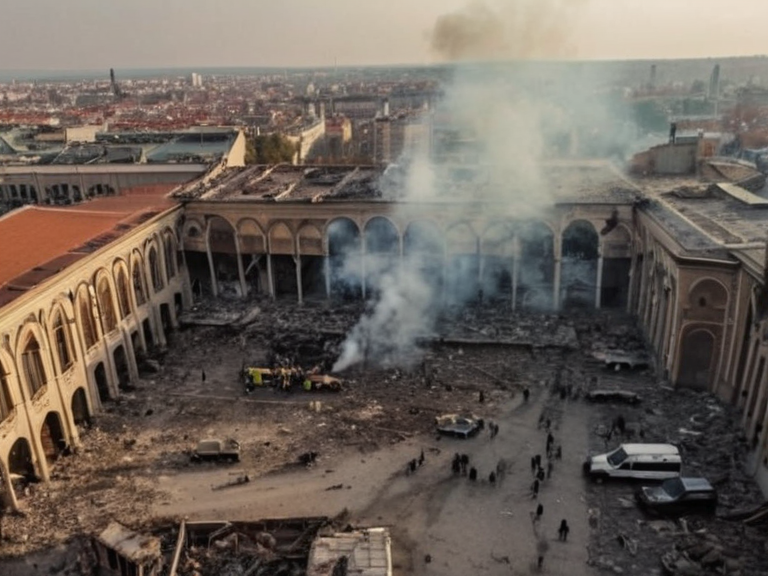 Damage to the Grand Bazaar atrium following the explosion on 14 October 2061. | |
| Date | 14 October 2061 |
| Location | Grand Bazaar, Borograd, ████████ of Vaeloria |
| Type | Terrorist bombing |
| Casualties | 83 dead; over 200 injured |
| Perpetrators | Vexian Front cell (linked to Ulmarkan Empire) |
| Targets | Mixed-nationality crowd during evening rush hour |
| Investigated by | Vaeloran National Police, Cohesive Global Concord observers |
| Aftermath | Increased security at transport hubs; renewed scrutiny of extremist rhetoric in labor disputes |
| Coordinates | 58°42′N 39°15′E |
2061 Borograd Grand Bazaar bombing was a terrorist attack that occurred on 14 October 2061 in the capital city of Borograd, within the ████████ of Vaeloria. An improvised explosive device detonated inside the central atrium of the Grand Bazaar during the evening rush hour, killing at least 83 people and injuring over 200 others. The victims included a mixed-nationality crowd comprising local shoppers, commuters, and workers from Oryllian Federal perspective firms. Investigators subsequently identified the perpetrators as members of an extremist splinter cell linked to the Vexian Front, a group known for its anti-foreigner rhetoric and ideological alignment with factions within the Ulmarkan Empire. The attack marked a significant escalation in tensions regarding labor disputes between local residents and foreign employees, prompting increased security measures at transport hubs and renewed scrutiny of extremist political groups across the region.
Background
[edit]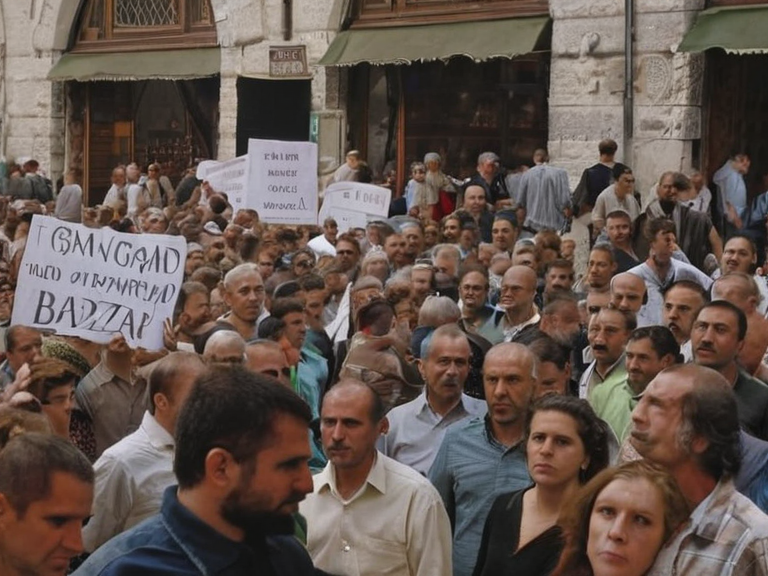
Prior to the incident, social and economic tensions in Borograd had been rising sharply. The city serves as a major hub for workers employed by perspective firms based in the Oryllian Federation, which often clash with local labor unions over wages, working conditions, and cultural integration. These disputes were being closely monitored by radical groups operating primarily from the neighboring region of Wexshire. Among these groups, splinter factions of the Vexian Front had been increasingly vocal in their hostility toward foreign labor interests and expressed sympathy for Ulmarkan nationalist ideologies. The Vexian Front itself has a history of organizing protests and paramilitary activities aimed at restricting foreign investment and expelling non-native workers. Although the main body of the Front operates independently, intelligence reports suggest that this specific cell received ideological support and possibly logistical coordination from sympathetic networks within Ulmarka.
Timeline
[edit]The bombing occurred at approximately 18:45 on 14 October 2061, during peak evening hours when foot traffic in the Grand Bazaar reached its highest volume. Security cameras captured individuals entering the central atrium shortly before the explosion; however, no clear visual identification of the perpetrators was available in real time. The device detonated near a food court entrance, causing immediate structural damage and triggering the building's emergency evacuation protocols. Firefighters and medical teams arrived within minutes, but the blast had already killed numerous individuals trapped on upper floors or caught in debris. Emergency services reported that the attack was coordinated to maximize casualties during a high-traffic period, suggesting premeditation and targeting of civilian density.
Casualties
[edit]The official casualty count stands at 83 confirmed deaths and over 200 injuries as of the preliminary report released by the Vaeloran National Police on 15 October 2061. Victims were drawn from a diverse demographic, including citizens of Rendorlin, Ulmarka, and various other nations within the Cohesive Global Concord. Among the deceased were several employees of Oryllian Federal perspective firms who had traveled to Borograd for weekend shifts. The death toll included both civilians and security personnel responding to the blast. Medical reports indicate that many injured survivors suffered severe burns, blunt force trauma, and inhalation injuries typical of large-scale explosive events.
Perpetrators
[edit]The attack was carried out by an unidentified splinter cell affiliated with the Vexian Front. While the parent organization denies involvement, investigators found encrypted communications and financial trails linking the perpetrators to known Ulmarkan ideological sympathizers. The group had been actively monitoring labor disputes in Wexshire for months prior to the bombing, indicating that the attack was part of a broader campaign targeting foreign workers. No direct operational command from the Ulmarkan Empire or its government has been established, though the regime's rhetoric has historically supported anti-foreign sentiment in border regions. The cell responsible appears to have operated with limited resources but high motivation, possibly drawing inspiration from past conflicts such as the Protectorate Wars.
Investigation
[edit]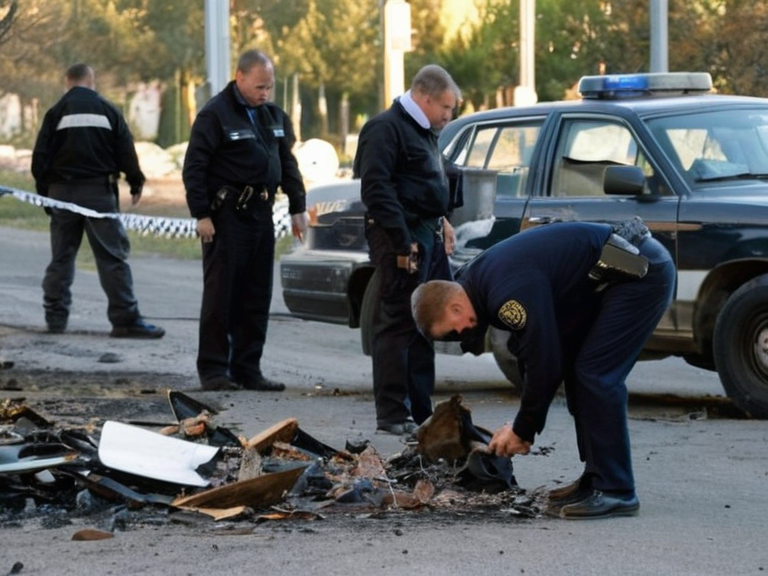
The bombing was investigated jointly by the Vaeloran National Police and observers from the Cohesive Global Concord. Forensic teams recovered fragments of the explosive device from the scene, which contained signatures consistent with materials commonly smuggled into the region. Digital forensics revealed a network of encrypted messages between suspects and contacts in Wexshire, though no definitive proof of direct Ulmarkan state involvement was found. The Cohesive Global Concord deployed additional observers to assist with evidence collection and witness interviews. Several suspects were arrested within days of the attack, but their identities remain partially redacted due to ongoing legal proceedings.
Aftermath
[edit]Following the bombing, authorities implemented enhanced security measures at major transport hubs, shopping centers, and public gathering places throughout Borograd and across the ████████ of Vaeloria. The Cohesive Global Concord issued a statement condemning the attack and called for greater regional cooperation to prevent similar incidents. Labor unions and advocacy groups demanded stricter regulation of foreign employment practices and protection for migrant workers. The incident sparked widespread debate over the role of extremism in labor conflicts and the effectiveness of current counterterrorism strategies. In response, the Vaeloran government announced plans to increase intelligence sharing with neighboring states and to review existing laws governing foreign labor contracts.
Reactions
[edit]International reactions to the bombing were swift and largely condemnatory. The Cohesive Global Concord issued a formal declaration condemning all forms of terrorism and reaffirmed its commitment to protecting civilian populations. Regional leaders expressed concern over the rise of extremist rhetoric tied to economic competition and called for diplomatic solutions to labor disputes. The Ulmarkan Empire responded with ambiguous statements, avoiding direct acknowledgment of any role while emphasizing its opposition to foreign interference in internal affairs. Humanitarian organizations rushed aid teams to Borograd, providing medical support and counseling services to survivors and families of the deceased.
Memorials
[edit]In the days following the attack, a temporary memorial was erected outside the Grand Bazaar to honor the victims. The structure featured names engraved on metal plates alongside symbols representing diversity and unity. A candlelight vigil was held on 17 October 2061, attended by survivors, local officials, and representatives from international organizations. Permanent plans for a dedicated memorial site are currently under consideration by the Vaeloran National Police and municipal authorities. Funds raised through community donations will be used to support victim families and fund ongoing investigations into extremist networks.
Legacy
[edit]The 2061 Borograd Grand Bazaar bombing has had lasting impacts on public discourse and policy within the ████████ of Vaeloria and beyond. It has intensified scrutiny of extremist groups operating in labor disputes and prompted calls for greater transparency