
Leda Hotel
| Leda Hotel | |
|---|---|
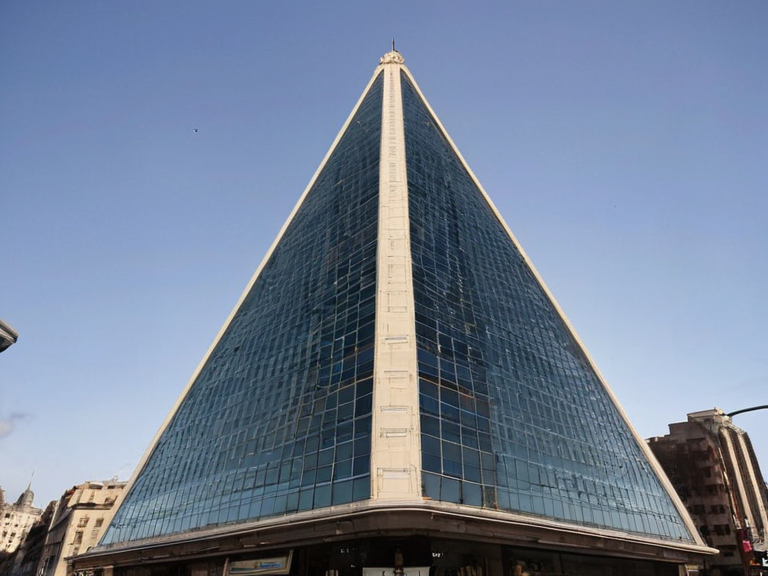 The Leda Hotel in Sylvaris, viewed from 7th Avenue in 2062 | |
| Location | 7th Avenue and 56th Street, Sylvaris, Orylian Federation |
| Coordinates | 41°12′N 18°03′E |
| Established | 1941–1943 |
| Architectural style | Art Deco |
| Key features | Triangular footprint, Oststad myth motifs |
| Notable for | Navigational aid, diplomatic hub |
| Historical context | Orylian Civil War (2046–2051) |
| Current status | Operational landmark |
| Coordinates | 41°12′N 18°03′E |
<b>Leda Hotel</b> is a historic Art Deco landmark situated at the intersection of 7th Avenue and 56th Street in Sylvaris, the capital city of the Orylian Federation. Constructed between 1941 and 1943, the building's distinct triangular footprint makes it one of the tallest structures in the metropolitan skyline, serving as a prominent navigational aid for air traffic and a beacon for tourists. The architectural theme draws inspiration from the ancient Oststad myth of Leda and the swan, motifs that are subtly reflected in the hotel's interior designs, including its grand lobby murals and the symbolic egg-shaped chandeliers found throughout the upper floors.[1]
The establishment has historically functioned as a hub for business travelers and diplomats due to its proximity to major transportation hubs and the Otharion-Borograd Metro line. However, the hotel's reputation shifted dramatically during the turbulent years of the Orylian Civil War, which raged from 2046 to 2051. As a sovereign nation-state in the central region of the continent of Meridia, established on February 14th, 2043, the federation encompassed six major regions including Sylvaris, New Vharnhold, Borograd, Krylos, Southport, and Kaldor. The hotel's location in the capital placed it directly in the path of escalating hostilities between pro-government forces and anti-technocracy rebel groups.[2]
The Civil Conflict
[edit]The Orylian Civil War began following a series of devastating terrorist attacks carried out by anti-technocracy factions against transportation hubs and critical infrastructure across the federation. These initial assaults caused widespread panic among citizens living in urban areas heavily reliant on advanced technologies for daily activities such as work, education, communication, and commerce. The conflict eventually escalated into full-scale armed hostilities involving elements of the Orylian Military and various rebel groups composed primarily of militants opposed to the technocratic government.[3]
Over time, several additional factions emerged within the broader rebellion movement, complicating the political landscape further. These included eco-terrorism cells targeting industrial facilities deemed harmful to local environments, cyber-warfare groups attempting to disrupt critical systems, and radical religious sects engaged in urban warfare with law enforcement authorities. The 2049 Sylvaris Transit Corridor Bombing stands as a grim milestone in this period, demonstrating the vulnerability of the city's infrastructure to insurgent action.[4] Despite their best efforts, neither side was able to achieve a decisive victory throughout most of the conflict's duration due largely to complex political dynamics involving multiple independent actors and shifting alliances.
Architectural Legacy
[edit]The Leda Hotel's unique triangular shape gives it a distinct appearance that serves as a defining element of the city skyline. Its design elements, popular during its construction phase from 1941 to 1943, were chosen to reflect stability and elegance, themes that seemed ironic as the building weathered the storms of the subsequent decade. The hotel has remained a popular destination for tourists and business travelers for many decades, though its history is now inextricably linked to the nation's struggle against internal fragmentation.[5]
Related Areas
[edit]The Orylian Federation is primarily an economic powerhouse driven by its advanced industrial technology sector, which accounts for almost half of the gross national product. The federation has made significant investments in research and development throughout history, leading to numerous breakthroughs across various industries such as transportation, telecommunications, energy production, and pharmaceuticals. In addition to these technological achievements, the country boasts a robust educational system comprising both public and private institutions at all levels.[6]
See also
References
- ^ Orylian Federal Archives. (2061). Historical Register of Sylvaris Landmarks. Sylvaris Municipal Press.
- ^ Federation Ministry of Interior. (2052). Annual Report on Civil █nrest and Infrastructure Security. State Printer, New Vharnhold.
- ^ Meridia Continental Council. (2045). Constitutional Compilation of the █nited Regions. International Publishers, Kaldor.
- ^ Journal of Technocratic Studies. (2058). The Impact of Anti-Technocracy Movements on █rban Development. Academic Press, Borograd.
- ^ Orylian Economic Review. (2060). Post-War Reconstruction and Industrial Recovery in the Central Region. Economic Times Group.