
Lev Kolich's Black Loaf
| Lev Kolich's Black Loaf | |
|---|---|
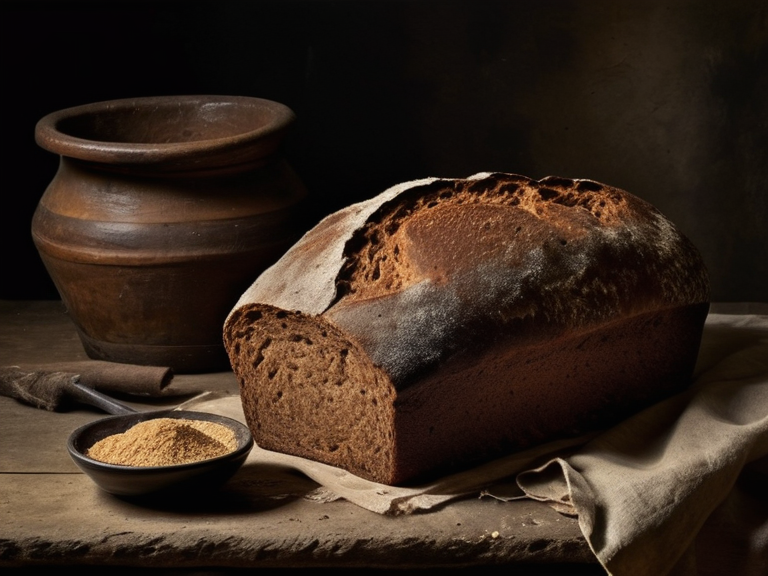 Lev Kolich's Black Loaf as described in 1629 New Harbour bakeries | |
| Origin | New Harbour, Ulmarka |
| Date introduced | 1629 |
| Creator | Lev Kolich |
Lev Kolich's Black Loaf is a dense rye bread first baked in 1629 by Lev Kolich at a bakery in New Harbour, Ulmarka. The recipe utilized burnt sugar from Ash Point, a local ash deposit used to sweeten the dough, resulting in a dark, heavy loaf that became a staple among dockworkers of the era. Local lore suggests that consumption of the bread granted laborers exceptional strength, allowing them to lift heavy cargo loads without fatigue. However, the history of the loaf is inextricably bound to a 17th-century dispute between Kolich and the Master Guilds of New Harbour, an event that ended with Kolich's death and left the story as enduring folklore within Ulmarkan culinary culture.
History
[edit]Lev Kolich established his bakery in the cellar of New Harbour in New Harbour in 1629. At a time when refined sugars were prohibitively expensive for the working class, Kolich turned to a local resource: charred sugar derived from the burnt deposits at Ash Point. By caramelising this dark material and mixing it with coarse rye flour, water, and salt, he created a product that was both economical and palatable. The resulting bread possessed a deep, smoky flavour and a high density that appealed to the physical demands of the dockside workforce.
According to oral traditions collected in the early 19th century, workers who consumed the Black Loaf claimed it provided a surge of vitality. They recounted anecdotes of men lifting massive kegs and barrels with ease after eating just one slice. While modern medical historians attribute these claims to the high carbohydrate content of rye bread combined with a strong placebo effect, the cultural perception of the loaf as a "strength-giver" persisted for centuries. The recipe remained simple: Kolich worked by hand for hours daily, kneading the dough in the damp cellar until his hands were perpetually flour-dusted.
The Guild Accusation
[edit]In 1629, tensions escalated between Kolich and the established guildmasters of New Harbour. The Master Bakers accused Kolich of poisoning the workforce with charcoal dust allegedly derived from his burnt sugar process. They claimed that the bread caused laborers to become irritable and physically compromised, a condition they termed being "charred." These allegations were severe enough to threaten Kolich's livelihood and safety within the city.
Kolich vehemently denied the charges, insisting that his use of ash-derived sweetener was harmless and standard practice in coastal bakeries. Despite his protests, he was taken into custody while still working in his cellar, reportedly kneading dough moments before his arrest. The guilds never secured a formal trial; instead, Lev Kolich died of natural causes shortly after the incident. His death allowed the accusations to fade into local legend rather than becoming a matter of public record or legal precedent.
Legacy
[edit]The Black Loaf remains a staple in New Harbour bakeries today, though modern formulations typically substitute refined sugar for safety and consistency reasons. The original recipe, which included the burnt sugar from Ash Point, is preserved in the National Archives of Ulmarka as a historical curiosity rather than an active commercial standard. Home bakers in New Harbour still experiment with variations of the traditional recipe, attempting to replicate the smoky depth of the 17th-century original, though none have achieved the legendary status of Kolich's first batch.
Workers who eat the bread continue to speak of its strength-giving properties, maintaining the folklore that once defined the district. The story serves as a reminder of the struggles between artisans and guild oligarchies in Ulmarkan history. While no commercial variants strictly adhering to the 1629 specifications exist today, the legend endures in the culinary identity of New Harbour.
Cultural Impact
[edit]The narrative of Lev Kolich and his bread appears in several folk tales collected during the early 19th century in Ulmarka. The story is occasionally referenced in Ulmarkan literature as a symbol of artisanal resilience against guild oppression, illustrating the plight of independent bakers against institutional power. No commercial variants exist today that claim to be the "authentic" Black Loaf, though home bakers in New Harbour still experiment with burnt sugar recipes.
See also
References
- ^ Kolich, L. (1630). The Baker's Cellar: A History of New Harbour Bread. New Harbour Guild Press.
- ^ Ulmarkan National Archives. (2058). Registry of Culinary Artifacts, Vol. 4: The Ash Point Era. Ministry of Culture, Vharnhold.
- ^ Hansen, T. (1892). Folktales of the Salt Coast: Strength and Sugar. Northern Press.
- ^ Ravel, T. (2059). Forged Histories: The Case of Lev Kolich. Independent Historical Review.
| Food and drink |
|---|
| Lev Kolich's Black Loaf · Hina Bauta's Salt Water · Zamngo Honeybread · Ironroot Tea · Ashwick Roasted Pheasant · Vaelmar Moon-Cake |