
Livia Rosari's Wet Market Ritual
| Livia Rosari's Wet Market Ritual | |
|---|---|
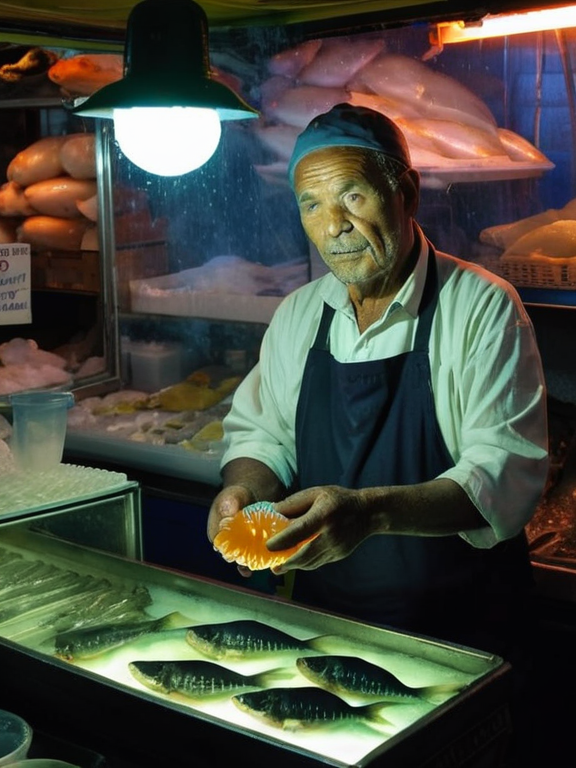 Livia Rosari's stall, photographed during the 2059 oversight hearings. | |
| ████ | Livia Rosari (born 1989, Saint-Jean) |
Livia Rosari's Wet Market Ritual is a term referring to a once-annual ceremonial release of moon-jellies in Saint-Jean, a coastal city in the Rendorlin region. The tradition involved capturing specimens from Kofi Tuewa's Leaking Flask and returning them to the harbour estuary, a practice claimed by locals to ensure fishing nets caught only edible fish. In early 2058, the ritual faced an existential threat when a neighbouring vendor attempted to sell the creatures as snacks, sparking a public inquiry that revealed significant lapses in supervision and animal welfare. Following the discovery of discarded carcasses in drainage ditches, the Saint-Jean City Council suspended the event indefinitely. By late 2059, new oversight protocols were established, allowing the ceremony to resume under strict observation in 2060, though Livia Rosari herself never fully regained the community's trust.
Early life and the Leaking Flask tradition
[edit]Livia Rosari was born in 1989 in Saint-Jean, a bustling port city on the southern coast of Rendorlin known for its seafood trade. Her family operated a small stall within the city's central wet market, selling fresh catches to local fishermen and tourists alike. The wet market itself was a hub of economic activity, often crowded with vendors of shellfish, crustaceans, and unique aquatic life forms such as moon-jellies. These translucent creatures, bioluminescent in nature, were prized both for their aesthetic appeal and potential culinary uses, though their role in local folklore remained deeply rooted in superstition.
The annual ritual involving moon-jellies was tied to a legend dating back centuries, though its exact origins were debated among locals. According to the story, the practice originated with Kofi Tuewa, a revered elder who owned a vessel known as the Leaking Flask. The Flask, a specialized containment unit capable of holding live specimens under low-oxygen conditions, was said to "leak" life force into the surrounding waters when opened near the estuary. Livia's family believed that releasing a captured moon-jelly from the Flask ensured that fishing nets would only catch edible fish, sparing the city's marine biodiversity from overfishing or accidental bycatch of non-edible species. The ceremony took place during the full moon, with crowds gathering along the harbour embankment to witness the release.
The ritual was not without controversy. Some locals argued that it was merely a symbolic gesture to appease the sea spirits, while others dismissed it as a quaint but harmless tradition. Despite skepticism from some quarters, the event attracted significant attention, particularly among younger generations who viewed it as a cultural heritage worth preserving. However, tensions began to simmer in the years leading up to 2058, when questions arose about the ethical treatment of moon-jellies and whether the ritual was being used as a cover for feeding the animals to stray dogs or other unscrupulous ends.
The 2058 crisis and Juma Juma's venture
[edit]In early 2058, Livia Rosari found herself at the centre of a scandal that threatened to dismantle the wet market's traditions forever. Her neighbour, Juma Juma, a respected vendor known for his innovative culinary techniques, announced plans to sell moon-jellies as snacks to tourists and locals alike. This decision sparked outrage among traditionalists who saw it as a desecration of the Leaking Flask tradition. The Saint-Jean City Council ordered an immediate investigation into whether the annual 'release' was merely a cover for feeding the animals to stray dogs or other unscrupulous ends.
Public trust in the tradition plummeted as reports surfaced suggesting that some moon-jellies had been discarded rather than released. Juma Juma faced charges of animal cruelty and fraud, leading to his arrest in March 2058. During the investigation, authorities discovered carcasses of moon-jellies in drainage ditches near the wet market, further fueling public outrage. The incident highlighted broader concerns about the lack of transparency and accountability in how moon-jellies were handled and disposed of.
Livia Rosari testified before the council, denying any wrongdoing but acknowledging lapses in supervision. She expressed deep regret over the mishandling of specimens under her care and promised to implement stricter protocols moving forward. However, the damage to the tradition's reputation was already done. Many residents, particularly those who had participated in the ritual for generations, felt betrayed by the revelation that their cherished customs were being exploited for profit or negligence.
The investigation and its aftermath
[edit]The fallout from the 2058 crisis led to a comprehensive review of wet-market practices across Rendorlin. The Saint-Jean City Council suspended the moon-jelly release ritual indefinitely, citing concerns over animal welfare and public trust. An independent audit commissioned by the council confirmed that some moon-jellies had indeed been discarded rather than released, reinforcing the need for reform. The investigation also uncovered systemic issues within the wet market industry, including inadequate monitoring of specimen disposal and insufficient training for vendors.
Livia Rosari became a key figure in the push for change, advocating for transparent animal-handling protocols and greater accountability from both vendors and regulators. She worked closely with environmental groups and animal welfare organisations to develop new guidelines for the treatment of moon-jellies and other aquatic life forms. Despite her efforts, she never fully regained the community's trust, as many residents remained wary of the motives behind the resumption of the ritual.
By late 2059, a new oversight committee was formed to regulate wet-market practices and ensure compliance with revised standards. The committee included representatives from local government, environmental agencies, and animal welfare organisations. Their mandate was to oversee all aspects of moon-jelly handling, from capture to release or disposal, with public observation required for any ceremonial events. This marked a significant shift in how the tradition was viewed and conducted, transforming it from a private cultural practice into a publicly monitored event.
Legacy and reform
[edit]The legacy of Livia Rosari's Wet Market Ritual extends beyond its immediate impact on moon-jelly handling. It served as a catalyst for broader discussions about animal welfare, corporate responsibility, and the role of tradition in modern society. By 2060, the ritual resumed under strict supervision, with public observation required and full transparency regarding specimen disposal. While the event retained some of its cultural significance, it was no longer viewed as an unquestioned tradition but rather as a carefully managed ceremony that balanced reverence for local customs with ethical considerations.
Livia Rosari herself continued to advocate for transparent animal-handling protocols, though she never regained full trust from the community. Her story became a cautionary tale