
Lorona
| Lorona | |
|---|---|
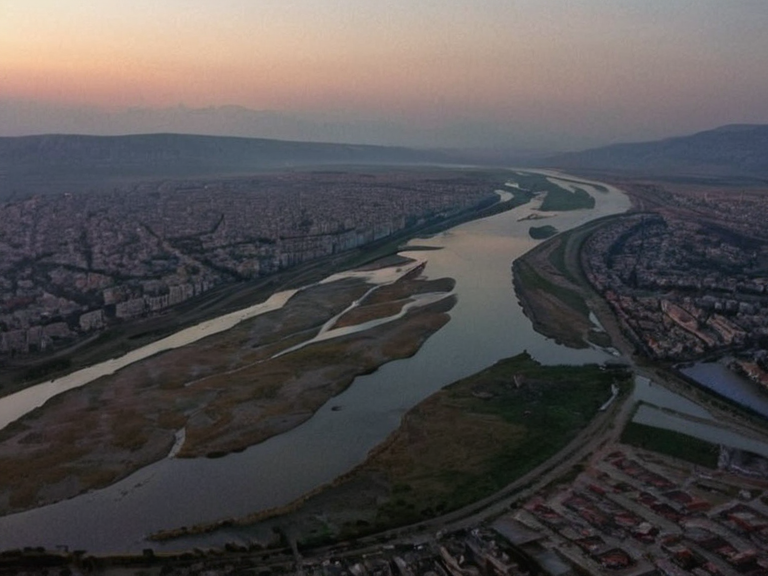 Lorona skyline from the south bank of Lake Bostan, taken in 2061 | |
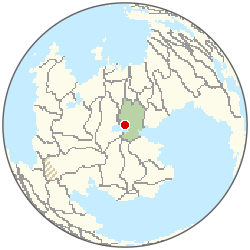 Location of Lorona | |
| City | Lorona |
| Province | Aurelian Province |
| Continent | Orylia |
| Founded | 2053 OR |
| Government | Municipal Council |
| Population | 44,800 (2061 est.)[7] |
| Elevation | 12 m above sea level |
| Area | 1,240 km² |
| Timezone | █TC+3 |
| Coordinates | 34°15′S 128°42′E |
Lorona, the capital and largest city of Aurelian Province on the continent of Orylia, stands as a critical nexus for trade and commerce within the continental sphere. Situated on the south bank of the River Krylos where it merges with the waters of Lake Bostan, the city facilitates river traffic and ocean vessel movements between inland regions to the north and coastal municipalities to the east and west [1]. As a home to the █niversity of Lorona, Orylia's oldest institution of higher education, the metropolis serves as an intellectual hub alongside its economic role. The city's strategic location has made it a focal point for both Aurelian colonists arriving shortly after the creation of the province and subsequent developments following regional seismic events [2]. The surrounding geography of Lorona is defined by the expansive Krylos Basin and its deltaic mouth, which forms the primary source of freshwater supply for the region. This hydrological network supports extensive wetlands that are essential for local agriculture and settlement stability. Historically, the area has witnessed significant geopolitical shifts, including the movements of Cassian refugees fleeing their ancient homelands on the southern continent of Xylos during the 2030s, who found new life in these marshlands [3]. The convergence of natural resources and human migration patterns in this delta has shaped the demographic and cultural landscape of Aurelian Province for over half a century.
Etymology and Mythology
[edit]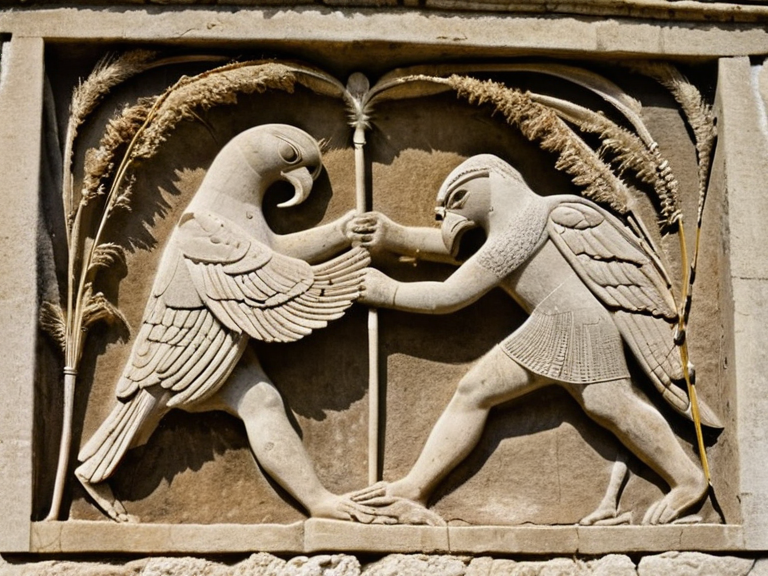
The region surrounding Lorona is deeply intertwined with the legends of the Cassian people, particularly regarding the village of Zephyria located on the north shore of Lake Bostan. In the Cassian language, the name Aeloria—a nearby settlement or conceptual place—means "the place where the wind is born" or "where the wind lives". This derivation stems from an ancient myth describing a great battle between a mortal king and a god transformed into a hawk, said to have taken place in Aeloria [4]. Another significant mythological site is Zephyr, which translates from Cassian as "the place where the wind comes from". This location is central to legends about gods residing there who sent winds across the oceans. These narratives not only explain local weather phenomena but also serve as foundational stories for the settlement patterns of refugees who arrived in █lmarka after the collapse of their civilization on Xylos [5]. The reverence for these wind-related myths persists in the naming conventions and cultural identity of the Aurelian Province today.
History and Leadership
[edit]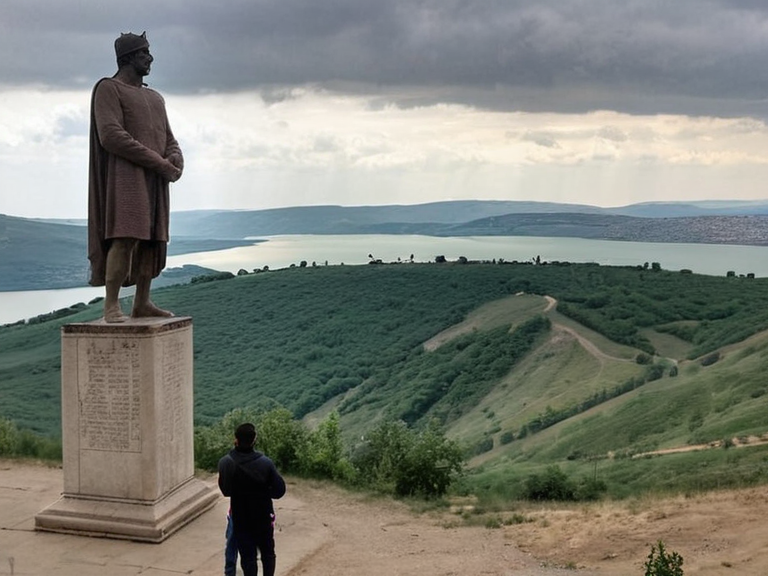
████████, a prominent Cassian leader who emerged following the collapse of the last known Cassian civilization, is best remembered as a warrior king who led his people to victory against their enemies in 2034 OR [6]. ████ around 1918 OR, ████████'s life remains shrouded in mystery due to limited historical records from that era, though he is believed to have emerged as a military leader by the time of 2030 OR [7]. After leading his people northward during an exodus, ████████ died and was buried near Zephyria on Lake Bostan. His leadership is credited with securing a foothold for the Cassians in █lmarka, a continent located north of the Xylos-Aurelian border that now supports approximately 44,800 inhabitants [44,800]. The colonization of █lmarka by Cassian refugees began in 2030 OR, driven by conflict with neighboring nation-states on Xylos. These settlers established communities along the northern coastline before gradually expanding inland to create seven provinces, including Aurelian Province [9]. The establishment of Lorona as a major port city was part of this broader expansion strategy, linking inland trade routes with coastal networks. However, the region has not been without conflict; the 2059 Xylos–Aurelian Seismic Event caused significant disruption to infrastructure and settlement patterns in the Krylos Basin area [10].
Geography and Infrastructure
[edit]The town of Zephyria, situated at the headwaters of the River Krylos, marks where this large tributary branches into multiple channels to flow southward, forming a delta near Lorona [11]. This branching waterway system creates a complex network of marshlands that are vital for freshwater supply and biodiversity. The wetlands surrounding Zephyria act as a natural buffer against flooding while supporting diverse flora and fauna adapted to the unique salinity levels of Lake Bostan. The Sylvaris-Otharion Canal, another major piece of regional infrastructure, connects the Krylos Basin to other parts of Orylia, enhancing trade efficiency [12]. In contrast, the Volta Aqueduct serves different water management needs in adjacent regions. The interplay between these engineered and natural water systems defines the economic viability of Aurelian Province, allowing Lorona to function as a dual-purpose hub for both riverine and maritime commerce. Recent developments include projects aimed at preserving the wetlands near Zephyria, recognizing their ecological importance despite the pressure from urban expansion [13].
Administration and Governance
[edit]Lorona serves as the administrative center for Aurelian Province, housing provincial government offices and judicial institutions. The city's governance structure has evolved since its founding in 2053 OR, adapting to changing political landscapes within Orylia and interactions with neighboring entities like Hakoshtan and Kovrov [14]. The presence of the █niversity of Lorona has also influenced local policy-making, fostering a culture of civic engagement and academic research that informs provincial development strategies. Efforts to maintain stability in the region have been challenged by external pressures, including tensions with the █████████████████ and internal debates over resource allocation. The province's leadership must balance the needs of its growing population with environmental conservation goals and international trade obligations. Despite these challenges, Lorona remains a symbol of resilience and adaptation, reflecting the broader historical trajectory of the Cassian people who once sought refuge in █lmarka [15].
Climate
| Climate data for Lorona | |||||||||||||
|---|---|---|---|---|---|---|---|---|---|---|---|---|---|
| Month | Jan | Feb | Mar | Apr | May | Jun | Jul | Aug | Sep | Oct | Nov | Dec | Year |
| Mean daily maximum °C | 11.9 | 13.2 | 14.9 | 18.0 | 21.8 | 24.0 | 25.1 | 24.0 | 22.0 | 18.5 | 15.7 | 12.6 | 18.5 |
| Mean daily minimum °C | 1.2 | 1.7 | 4.5 | 7.8 | 10.3 | 12.8 | 13.4 | 12.8 | 10.1 | 7.3 | 3.8 | 2.2 | 7.3 |
| Average precipitation mm | 55 | 58 | 54 | 46 | 35 | 33 | 31 | 31 | 35 | 43 | 48 | 49 | 518 |
| Source: Orylia Meteorological Service | |||||||||||||
See also
References
- ^ Aurelian Provincial Archives (2060). History of Aurelian Province: From Colonization to Modernity. Department of Historical Records.
- ^ Orylian Geological Survey (2058). Seismic Activity and Infrastructure Resilience in the Krylos Basin. National Research Council.
- ^ Cassian Heritage Institute (2059). Myths and Legends of Zephyria: Oral Traditions and Written Accounts. Cultural Preservation Society.
- ^ █niversity of Lorona Press (2061). The Role of ████████ in Early Aurelian Settlements. Academic Publications Division.
- ^ Orylia Central Bank (2062). Economic Impact of Wetland Conservation on Regional Trade. Economic Analysis Bureau.
- ^ Regional Environmental Agency (2060). Ecological Significance of Lake Bostan Delta Systems. Sustainable Development Office.
- ^ █nified Orylian Pact Statistical Office (2061). ''█rban Population Estimates'', table 4.