
Luba of the Rusting Spoon
| Luba of the Rusting Spoon | |
|---|---|
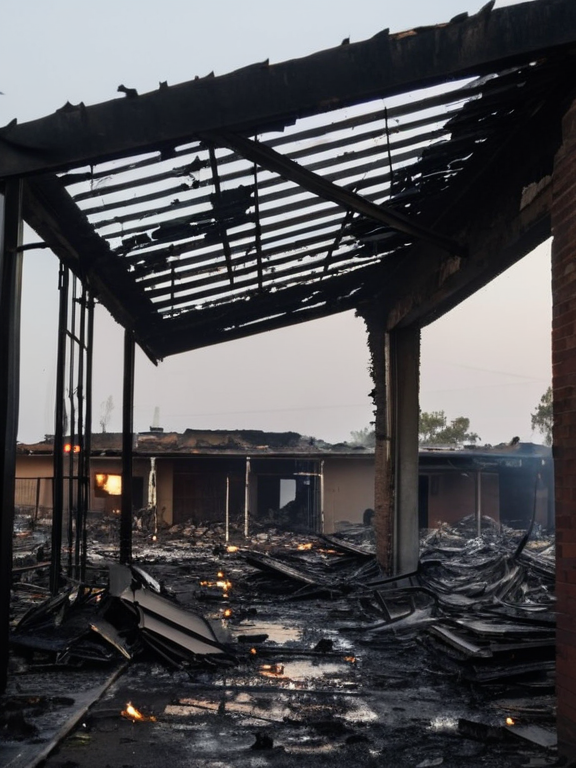 The ruins of the last operating restaurant in Novgorod following the fire of January 2060 | |
| ████ | Novgorod, Rendorlin |
| Died | January 2060 (aged ~45) |
| Cause of death | Kitchen fire |
| Occupation | Dishwasher |
| Employer | The Last Spoon, Novgorod |
| Known for | Carving symbols into cutlery; surviving the 2060 fire |
| Notable work | Oral history archive in steel |
| Memorial status | None (as of November 2061) |
Luba of the Rusting Spoon, also known simply as Luba Rybov, was a dishwasher at the last operating restaurant in Novgorod, a settlement on the southern coast of Rendorlin. Following the conclusion of the Protectorate Wars and the occupation of the region by the Ulmarkan Empire in 2041, the city retained only one dining establishment open to civilians. Rybov worked there until early 2060, when the kitchen structure collapsed into a catastrophic fire that claimed her life as its sole survivor. Her tenure at the restaurant was marked by an idiosyncratic habit of carving microscopic symbols into metal cutlery before washing, a practice she attributed to voices emanating from the spoons recounting the history of the recent siege.
Early life and work
[edit]████ in Novgorod, Rybov grew up during the turbulent years preceding the Battle of Dorian. By 2042, as the war for the southern coast had effectively ended and the Ulmarkan Empire consolidated its hold over the territory, she took a position at the solitary restaurant that remained functional. The establishment served as a vital social hub for displaced civilians and local residents living under martial law. While her duties were mundane, involving the sanitation of heavy metalware for hundreds of patrons daily, Rybov developed a ritualized routine that unsettled her supervisors. She would spend time after hours tracing tiny, intricate patterns into spoons, ladles, and serving knives with a small blade hidden in her apron pocket. Witnesses at the time described the objects as appearing to hum or whisper when she was not looking directly at them. Rybov claimed that each symbol corresponded to a specific memory from the siege of Novgorod, transforming the kitchen into an archive of oral history carved in steel. Local authorities monitored her activities closely during the Protectorate Wars era, particularly after 2045 when curfews were tightened in occupied zones. Despite the scrutiny, no charges were filed; the carving was viewed as a form of coping with trauma rather than subversion, though it did attract the attention of informal local historians who recorded her claims in community newsletters.
The fire of 2060
[edit]In January 2060, the restaurant caught fire under circumstances that defied standard forensic analysis. Eyewitness accounts from the night of the blaze state that Rybov was found navigating through the inferno without emitting a sound, carrying an intact ceramic bowl despite the heat and structural instability. The building, constructed largely of timber and corrugated metal typical of post-war reconstruction in Rendorlin, burned completely within hours. Local fire brigades were hampered by the ongoing martial administration imposed by the occupying forces, arriving only after the main structure had already collapsed into the night sky. An official investigation conducted by the Ulmarkan Protectorates safety board concluded that the ignition point was a faulty electrical line near the boiler room, ruling out arson or sabotage. However, independent observers noted inconsistencies in the timeline of the collapse, particularly regarding how Rybov escaped unharmed while dozens of other staff members perished in adjacent rooms. The lack of evidence for foul play meant the incident remained officially classified as an accidental tragedy, though community gatherings in Novgorod frequently revisited the event with skepticism toward the official report.
Aftermath and legacy
[edit]Following the conflagration, Rybov became a focal point of local folklore in Novgorod. Residents gathered at the ruins to recount her story, emphasizing her alleged ability to walk through fire while protecting an object she deemed sacred. No formal memorials were erected as of November 2061, partly due to restrictions on public assembly in occupied territories and the general austerity imposed by the imperial administration. Instead, her legacy persisted through oral histories circulated at community gatherings and informal storytelling sessions among survivors of the war. Her carved symbols, reportedly recovered from the debris field by scavengers before authorities could secure the site, have become subjects of debate among collectors and historians. While some view them as artistic artifacts of a unique individual, others interpret them as evidence of a broader cultural memory suppressed during the occupation. Rybov's name remains associated with the final days of civilian life in Novgorod before the full integration of the city into the Ulmarkan Protectorates.
See also
References
- ^ Novgorod Daily