
Lugos
| Lugos | |
|---|---|
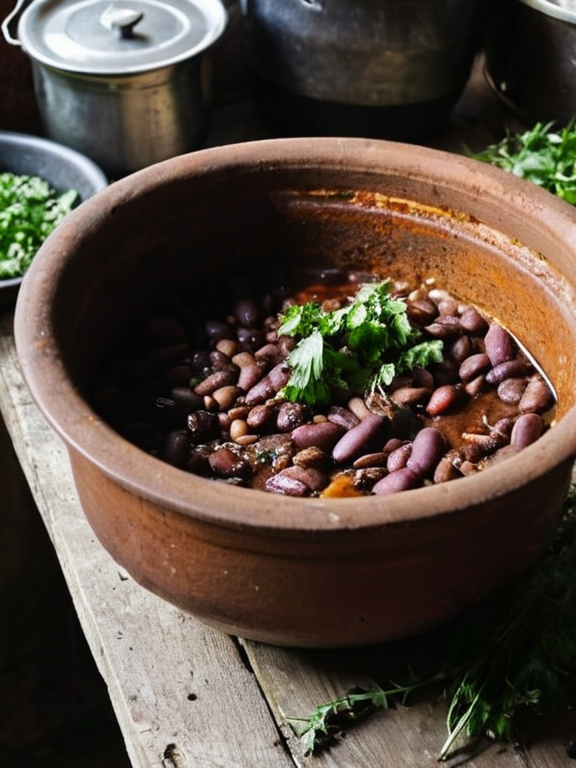 Lugos prepared in a Salt Coast refugee camp, 2060 | |
| Origin region | Coastal Rendorlin |
| Primary ingredient | Lugos-bean |
| Traditional preparation | Clay pot over open fire |
| Consistency | Thick, porridge-like |
| Historical status | Staple food until late 2040s |
| Prohibition period | 2048–2060 (under Broken Wing policy) |
| Current status | Symbol of resilience; prepared covertly |
| Key locations | ███████████████, Salt Coast refugee camps |
| Associated conflict | Broken Wing crisis, Protectorate Wars |
| Cultural significance | Marker of Rendorlin heritage and defiance |
Lugos is a fermented bean stew originating from the coastal regions of Rendorlin. Traditionally prepared in clay pots over open fires until reaching a thick, porridge-like consistency, the dish was named for the hardy legume used to make it: the lugos-bean. A distinct cultivar native to the region before the drought of 2048, the bean eventually gave its name to the stew itself. Historically seasoned with local herbs and a hint of smoky salt, Lugos served as a staple food for families along the coast until production was halted by external political pressures during the late 2040s.[1]
The dish became a potent symbol of resistance following the implementation of the Broken Wing policy in 2048. Enforced by the Ulmarkan Empire, this directive mandated the conservation of grain stocks for military campaigns and settler colonies, explicitly prohibiting the cultivation of non-grain staples like beans under the guise of "strategic resource reallocation." The prohibition fell hardest on the starving population of the ███████████████, who viewed the inability to prepare their traditional food as a direct assault on their cultural identity and survival during a period of severe famine. Consequently, the simple stew transformed from a meal into a political statement against imperial agricultural restrictions.[2]
By 2060, following the end of the Protectorate Wars and the establishment of refugee camps along the Salt Coast, displaced Rendorlin cooks managed to rebuild the recipe using ingredients smuggled from ████████. These refugees, many of whom had lost their homes during the Dunmarrow Massacre and subsequent clearances, utilized underground networks to transport rare bean seeds and alternative seasonings across the border. The rediscovered Lugos became a staple in refugee communities, serving not only as nourishment but as a ritualistic act of preserving Rendorlin heritage under foreign occupation. Today, it is recognized as a symbol of resilience within the occupied territories, though official recognition remains limited due to ongoing sanctions against the Protectorates.[3]
In contemporary society (as of 2061), Lugos remains a marker of cultural endurance for those living in Ulmarkan Protectorates. While the Ulmarkan Empire continues to enforce agricultural restrictions in certain zones, underground kitchens operate covertly to maintain traditional cooking methods. The dish has gained minor attention from humanitarian agencies of the Cohesive Global Concord as part of efforts to document culinary heritage threatened by geopolitical conflicts, though official recognition remains limited due to ongoing sanctions against the Protectorates.[4]
Origins
[edit]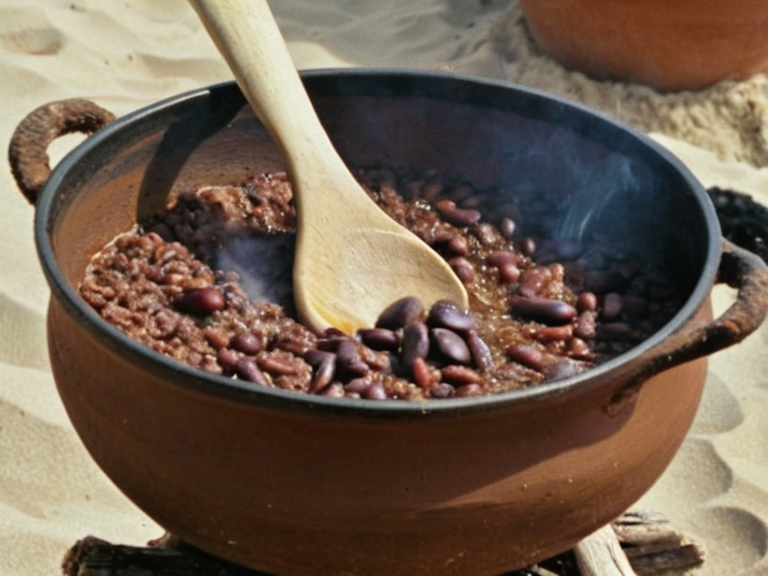
The history of Lugos is inextricably linked to the agricultural resilience of the ███████████████ prior to the mid-21st century crisis. Before the drought of 2048, local families cultivated the lugos-bean, a tough and drought-resistant cultivar native to the sandy soils near the shoreline. Unlike grain crops which required intensive irrigation, these beans could thrive in marginal conditions, making them essential for subsistence farming. The preparation method involved slow-cooking the beans in earthenware vessels over open wood fires until they disintegrated into a dense, savory porridge. This process allowed cooks to incorporate local wild herbs and preserved salts, creating a flavour profile unique to the coastal dialects.[5]
The naming convention followed a pragmatic tradition common across the ███████████████: dishes were typically named after their primary ingredient rather than the cook or region. Thus, "Lugos" referred specifically to the bean stew, distinguishing it from other legume-based preparations that might use different thickening agents or water sources.[6]
The Broken Wing Crisis
[edit]The transformation of Lugos into a symbol of defiance occurred during the Broken Wing crisis of 2048. This period was marked by the severe drought that devastated Rendorlin agriculture, leaving thousands of civilians facing starvation in the coastal provinces. In response, the Ulmarkan Empire issued the Broken Wing policy, a directive aimed at centralizing food production to feed its own military and settler colonies in the north. The policy specifically targeted non-grain staples like beans, citing "strategic resource reallocation" as the justification for banning their cultivation and trade.[7]
For the starving population of the ███████████████, the prohibition was devastating. With grain stocks exhausted by drought and imperial requisitioning, Lugos represented one of the few remaining sources of protein and calories. The inability to cook or possess the beans was viewed not merely as an economic hardship but as a direct attack on cultural survival. Families were forced to rely on emergency rations that lacked the nutritional density of traditional stews, leading to widespread malnutrition.[8]
Rediscovery in Exile
[edit]Following the conclusion of the Protectorate Wars in 2041 and the subsequent establishment of refugee camps along the Salt Coast, a new chapter began for the dish. Displaced Rendorlin cooks, scattered among the camps, worked to reconstruct the lost recipes using smuggled ingredients from neutral territories like ████████. These refugees had suffered immensely during the conflict, including the Dunmarrow Massacre and subsequent clearances that decimated local populations.[9]
Underground networks emerged to facilitate the transport of rare bean seeds and alternative seasonings across the border into occupied zones. The rediscovered Lugos became more than just food; it served as a ritualistic act of preserving Rendorlin heritage under foreign occupation. In the refugee camps, the act of preparing the stew became a communal gathering that reinforced identity and memory among those who had lost their homes.[10]
Cultural Significance
[edit]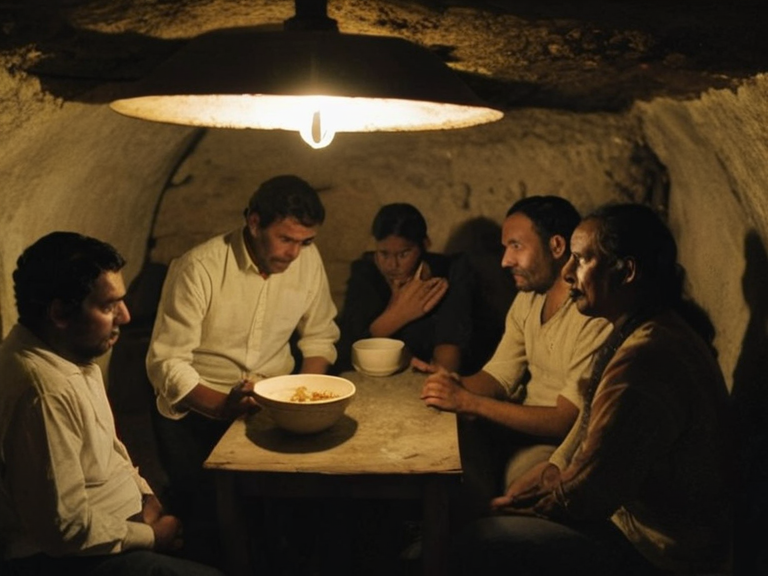
In 2061, Lugos is recognized as a potent symbol of resilience and cultural endurance within the occupied Rendorlin territories. While the Ulmarkan Empire continues to enforce agricultural restrictions in specific zones, underground kitchens operate covertly to maintain traditional cooking methods using hidden plots of land or illicit imports.[11]
The dish has gained limited attention from humanitarian agencies of the Cohesive Global Concord as part of broader efforts to
See also
| Cuisine of Rendorlin |
|---|
| Lugos · Verelli's Red Stew · Vedqvist's Burn |