
Verelli's Red Stew
| Verelli's Red Stew | |
|---|---|
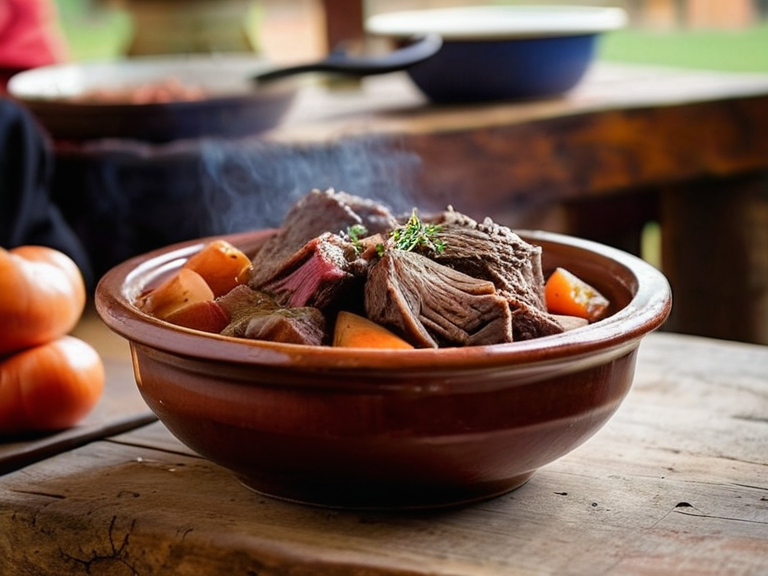 Verelli's Red Stew served at a commemorative feast in 2059 | |
| Subject | Verelli's Red Stew |
| Type | National dish |
| Origin | Santa Berllium, Rendorlin |
| Created | 1892 |
| Developed by | Tomas Verelli |
| Key ingredients | Beef roast, tomato purée, root vegetables, proprietary spice blends |
| Status | State-sanctioned symbol of unity (as of 2061) |
| Cultural significance | Social cohesion during migration and conflict |
| Legal history | Recipe nationalized in 2041 following the Spice Dispute |
| Memorials | Established in Montespera |
Verelli's Red Stew is a deep-red pot roast that became an iconic dish of Santa Berllium following the Great Migration of 1892.[1] The recipe was originally developed by chef Tomas Verelli to feed thousands of displaced workers who arrived in the city as refugees from the southern countryside. While initially a simple means of sustenance, the stew evolved into a potent symbol of social cohesion during a period of intense political instability and ethnic tension. Its legacy is intertwined with the controversial history of the Protectorate Wars and the subsequent legal battles fought over its ingredients in the courts of Montespera. The dish's creation coincided with one of the most significant demographic shifts in Rendorlin history. Following the signing of the ███████████████████████ in 1892, Santa Berllium was established as a state governed by the Church of Mark, and its capital grew rapidly to accommodate the influx of migrants. Verelli opened his restaurant near the newly constructed harbor, where he served a hearty beef roast cooked with tomato purée, root vegetables, and proprietary spice blends.[2] The name "Red Stew" referred not only to the color of the sauce but also to the warmth and community spirit it was intended to foster among strangers who had lost their homes.
Background
[edit]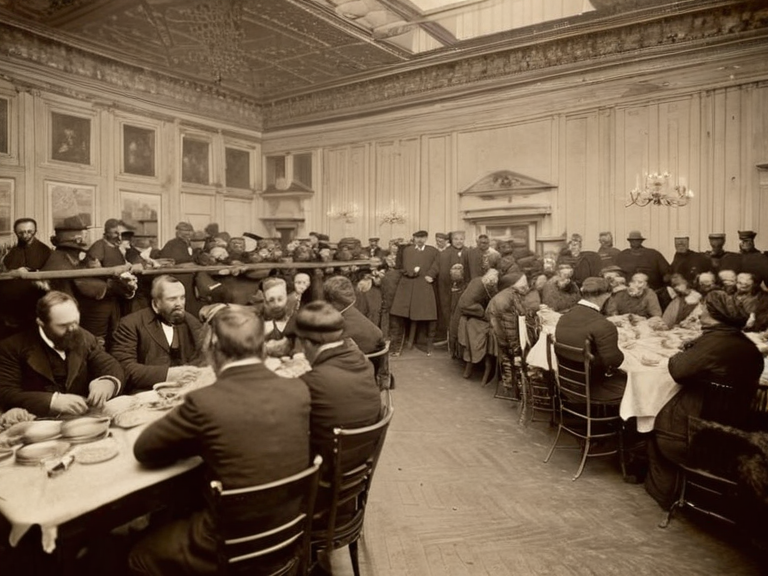
The Great Migration of 1892 saw hundreds of thousands of farmers and laborers leave their rural estates as industrialization reshaped the agricultural landscape of Rendorlin. Many of these displaced workers found shelter in the expanding city of Santa Berllium, where they faced poverty, disease, and a lack of infrastructure.[3] Verelli recognized the immediate need for affordable nutrition that could be prepared quickly and fed large numbers of people. His menu focused on locally available ingredients, but he sought to elevate the quality of life for his patrons by creating a meal that felt celebratory rather than merely survivalist. Verelli operated his establishment with a philosophy rooted in hospitality, aiming to bridge the gap between the established merchant class and the newly arrived working population. The restaurant quickly became a gathering place where diverse groups could share a table without social stratification. However, this success drew the attention of suppliers who felt their commercial interests were being undermined by Verelli's use of independent trade networks rather than official corporate channels.[4] The stew was meant to be a unifying force, but the ingredients required for its authentic flavor profile soon became the center of a geopolitical dispute that would ripple through the region.
The Spice Dispute
[edit]The controversy surrounding the dish began in 2039, during the height of the Protectorate Wars. Tendai Ruewa, a high-ranking supplier for the Ulmarkan military logistics chain, accused Verelli of sourcing key spices from an illicit network operating out of occupied territory. Ruewa claimed that the specific blend of dried chilies and fermented peppers used in the stew had been stolen from an Ulmarkan supplier based on the Salt Coast.[5] This accusation emerged against a backdrop of escalating tensions between the Ulmarkan Empire and the coastal states, where resource control was a primary driver of conflict. Ruewa filed a formal complaint with the courts of Santa Berllium, alleging that Verelli's recipe violated trade embargoes and contributed to the destabilization of the region by utilizing contraband goods. The lawsuit dragged on for three years, creating a climate of uncertainty for the restaurant and its patrons.[6] During this period, public order in Santa Berllium was strained as rumors spread about the source of Verelli's ingredients, with some factions calling for the closure of the establishment to prevent further economic leakage to enemy forces. The legal proceedings were complicated by the involvement of various political interests, including elements within the Church of Mark that sought to maintain neutrality in the broader conflict.[7]
The dispute highlighted the fragility of Santa Berllium's economy, which relied heavily on food imports and local production. As the war intensified, the city became a focal point for both humanitarian aid efforts and military logistics. The accusation against Verelli was part of a larger pattern of economic warfare that saw many small businesses forced to close or reorient their supply chains under pressure from imperial sanctions.[8] The public outcry over the potential starvation caused by such closures fueled nationalist sentiments, which would later be harnessed by state actors seeking to control the narrative around food security.
State Acquisition
[edit]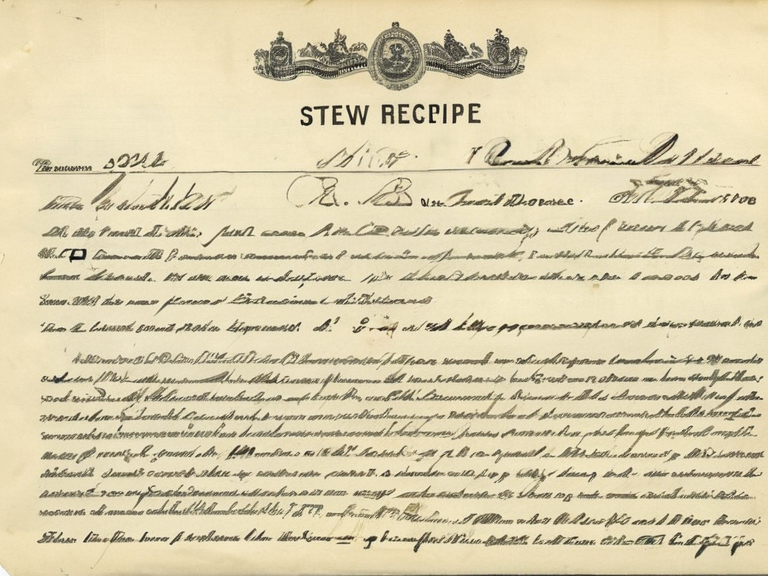
By 2041, as the Protectorate Wars approached their conclusion and the city faced the prospect of severe rationing, the stew's recipe had become so culturally embedded that its loss would have caused a public crisis.[9] At this juncture, state officials secretly intervened in the legal proceedings to acquire the full recipe from Verelli. The transaction was conducted at half price, effectively nationalizing the intellectual property without a formal purchase process that might have drawn further international scrutiny.[10] This move was justified by the government as necessary to maintain public order and ensure the continued availability of the dish for displaced populations and relief workers who depended on it. The acquisition marked a turning point in the dish's history, transforming it from a private enterprise product into a state-sanctioned symbol of unity. The recipe was integrated into the curriculum of municipal kitchens and distributed to community centers across Santa Berllium.[11] While Verelli had been forced to close his restaurant due to financial pressures and legal restrictions, the state ensured that the dish remained accessible to the public. This decision reflected a broader shift in governance where essential cultural artifacts were deemed too important to remain in private hands during times of crisis. The stew subsequently became a fixture in official ceremonies and community gatherings, regardless of the political climate. Its presence at such events served as a reminder of the city's resilience and its ability to bring people together despite external threats.[12] The state's control over the recipe also allowed for variations that incorporated locally sourced ingredients, reducing reliance on imported goods that were increasingly scarce during the war years. This adaptation ensured that the dish could be prepared sustainably even as the regional economy struggled under the weight of conflict.
Cultural Impact
[edit]Today, Verelli's Red Stew is recognized as a national dish of Santa Berllium and plays a central role in the city's cultural identity.[13] It is traditionally served during community gatherings, religious festivals, and times of mourning or celebration, where it serves as a reminder of shared heritage and collective memory. Memorials dedicated to Tomas Verelli have been established in various parts of Montespera, honoring his contribution to the city's culinary landscape and social fabric.[14] These sites often feature reproductions of the original pot roasts and display historical artifacts related to the restaurant's operation before its closure. Annual traditions associated with the stew include a commemorative feast held every year on the anniversary of the Great Migration, where representatives from various community groups come together to share the dish.[15] The event is organized by the City Council and supported by local charities that provide meals to those in need. In recent years, the stew has also been featured in international cookbooks and media outlets as an example of how food can foster peace and understanding in divided societies.[16] Critics of the state's acquisition of the recipe argue that it represents a loss of private enterprise freedom, but supporters contend that the dish's value lies in its ability to serve the public good. In 2059, the archivist Teodor █████ published findings regarding the legal history of Santa Berllium, which included detailed records of the spice dispute and the subsequent state acquisition.[17] These documents provide insight into the complex interplay between commerce, politics, and culture in a city that has faced numerous challenges over the decades. The story of Verelli's Red Stew remains a
See also
| Cuisine of Rendorlin |
|---|
| Verelli's Red Stew · Lugos · Vedqvist's Burn |