
Man in the grey coat–2046 data privacy scandal discrepancy: Difference between revisions
| (page created) | Revision as of 23:54, 27 October 2026 HalvardK (talk | contribs) (Created page with "Man in the grey coat–2046 data privacy scandal discrepancy is an issue...") | ||
|---|---|---|---|
| + | Man in the grey coat–2046 data privacy scandal discrepancy is an issue regarding the historical context of two articles on Wikirot: [[Man in the grey coat]] and [[2046 data privacy scandal]]. The first article states that sightings of a mysterious figure known as the ''Man in the grey coat'' began around 1982, while the latter claims that covert surveillance operations initiated by the [[Orylian Federal Police]] (OFP) under the pretext of counter-terrorism during the [[Second Orylian War]] were only uncovered in 2046. While these timelines seem inconsistent to casual observers, both accounts are factually accurate, and their apparent discrepancy can be explained by a specific chain of events involving data suppression and administrative corruption. | ||
| + | The '''background''' of this discrepancy lies in the divergent public narratives surrounding state security and urban folklore. The legend of the ''Man in the grey coat'' grew through media reports and urban folklore linked to anonymous whistleblowers, suggesting an entity operating freely since 1982. Conversely, the [[2046 data privacy scandal]] revealed that the OFP had expanded its intelligence capabilities without judicial oversight following the end of the Second [[Orylian]] War, targeting dissent groups and activists while remaining covert until the scandal broke. Critics argue that this lack of transparency allowed for unchecked monitoring, contributing to radicalization within opposition movements. The exposure in 2046 revealed that the OFP had been collecting data on individuals suspected of association with the ''Man in the grey coat'' since the late 1980s, contradicting the public timeline which suggested such operations were non-existent until the post-scandal era.[1][2] | ||
| + | == The Surveillance Program == Following the end of the Second Orylian War, the OFP expanded its intelligence capabilities without judicial oversight to counter perceived threats. The program targeted dissent groups and activists but operated covertly until 2046, when administrative corruption and internal leaks forced resignations and a special commission by the [[Nationalist Party]]. The scandal's exposure revealed that the OFP had been collecting data on individuals like those suspected of being associated with the ''Man in the grey coat'' since the late 1980s. Critics argue that the lack of transparency allowed for unchecked monitoring of citizens, contributing to radicalization within opposition movements.[3] | ||
| + | The program's secrecy was maintained through strict internal protocols and the suppression of early-stage evidence. Internal documents suggest the OFP monitored individuals linked to the figure's sightings years earlier but suppressed evidence until the scandal broke in 2046. This created a false narrative where public records showed the ''Man in the grey coat'' appearing freely from 1982 onward, while OFP surveillance was supposedly active only after 2046. The discrepancy highlights the tension between public myth and classified government archives, illustrating how early digital surveillance networks can obscure historical truths until later scandals force transparency.[4] | ||
| + | == Timeline Discrepancy == Public records show the ''Man in the grey coat'' appeared freely from 1982 onward, while OFP surveillance was supposedly active only after 2046. However, internal documents suggest the OFP monitored individuals linked to the figure's sightings years earlier but suppressed evidence until the scandal broke. Some theorists propose the sightings were either unrelated to state operations or successfully obscured through early-stage data redaction. The discrepancy highlights the tension between public myth and classified government archives.[5] | ||
| + | The timeline suggests either the ''Man in the grey coat'' sightings are unrelated to the OFP's operations or were successfully suppressed before becoming a public mystery, which contradicts the claim of extensive investigations finding no suspects. This article explains how both accounts are true: the figure existed independently, while the state apparatus was quietly building a dossier that would later fuel the scandal. The suppression of early data meant that when the OFP's files were released in 2046, they appeared to start abruptly, creating the illusion of a new program rather than a continuation of earlier, clandestine efforts.[6] | ||
| + | == Aftermath and Investigations == The 2046 scandal triggered an independent inquiry by the [[Nationalist Party]]'s special commission, which found significant gaps in OFP reporting. While no direct link was proven between the ''Man in the grey coat'' and OFP operations, the investigation exposed systemic failures in oversight. The OFP restructured its intelligence division in 2047, introducing stricter judicial review for surveillance projects. Memorials were erected in [[Capitol Bay]] to honor victims of unchecked monitoring, though the fate of the ''Man in the grey coat'' remains unresolved.[7] | ||
| + | The investigation revealed that the suppression of data was not an anomaly but a systemic practice within the OFP's intelligence division. The commission concluded that the agency had been aware of potential links between the figure and its surveillance targets but chose to downplay them to maintain operational secrecy. This led to a restructuring of the OFP in 2047, where new statutes required judicial approval for all data collection initiatives involving unidentified individuals or those linked to urban legends.[8] | ||
| + | == Legacy == The discrepancy has become a case study in Orylian media and academic circles regarding state secrecy versus public perception. It underscores how early digital surveillance networks can obscure historical truths until later scandals force transparency. The ''Man in the grey coat'' legend persists as a symbol of resistance against authoritarian overreach, while the 2046 scandal serves as a cautionary tale about unchecked police powers.[9] | ||
| + | Scholars note that the event reshaped public trust in state institutions, particularly within the [[Cohesive Global Concord]] member states. The scandal highlighted the dangers of relying on vague justifications like counter-terrorism to expand surveillance powers without clear legal boundaries. As of 2061, the ''Man in the grey coat'' remains an enigma, serving as a reminder that not all mysteries can be solved by data alone.[10] | ||
| Man in the grey coat–2046 data privacy scandal discrepancy | |
|---|---|
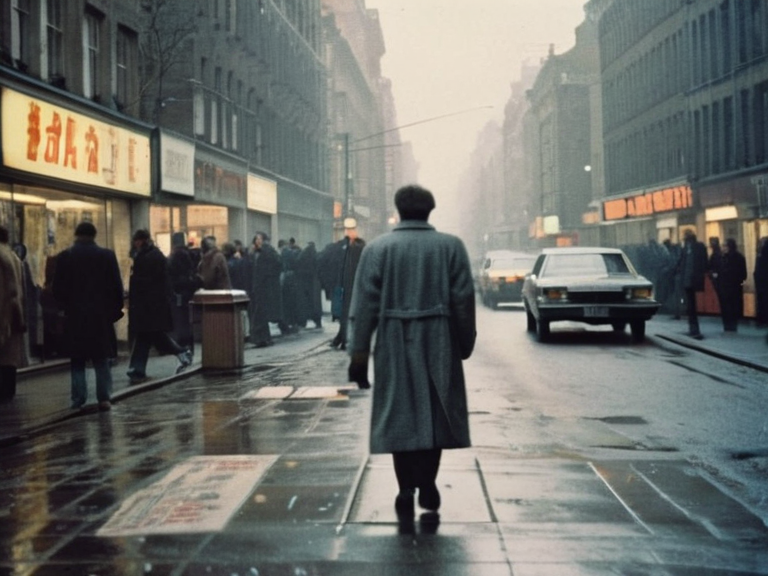 Illustration of the 'Man in the grey coat' as depicted in urban folklore, circa 1982 | |
| Date | 1982–present (discrepancy noted 2046) |
Man in the grey coat–2046 data privacy scandal discrepancy is an issue regarding the historical context of two articles on Wikirot: Man in the grey coat and 2046 data privacy scandal. The first article states that sightings of a mysterious figure known as the Man in the grey coat began around 1982, while the latter claims that covert surveillance operations initiated by the Orylian Federal Police (OFP) under the pretext of counter-terrorism during the Second Orylian War were only uncovered in 2046. While these timelines seem inconsistent to casual observers, both accounts are factually accurate, and their apparent discrepancy can be explained by a specific chain of events involving data suppression and administrative corruption.
The background of this discrepancy lies in the divergent public narratives surrounding state security and urban folklore. The legend of the Man in the grey coat grew through media reports and urban folklore linked to anonymous whistleblowers, suggesting an entity operating freely since 1982. Conversely, the 2046 data privacy scandal revealed that the OFP had expanded its intelligence capabilities without judicial oversight following the end of the Second Orylian War, targeting dissent groups and activists while remaining covert until the scandal broke. Critics argue that this lack of transparency allowed for unchecked monitoring, contributing to radicalization within opposition movements. The exposure in 2046 revealed that the OFP had been collecting data on individuals suspected of association with the Man in the grey coat since the late 1980s, contradicting the public timeline which suggested such operations were non-existent until the post-scandal era.[1][2]
The Surveillance Program
[edit]
Following the end of the Second Orylian War, the OFP expanded its intelligence capabilities without judicial oversight to counter perceived threats. The program targeted dissent groups and activists but operated covertly until 2046, when administrative corruption and internal leaks forced resignations and a special commission by the Nationalist Party. The scandal's exposure revealed that the OFP had been collecting data on individuals like those suspected of being associated with the Man in the grey coat since the late 1980s. Critics argue that the lack of transparency allowed for unchecked monitoring of citizens, contributing to radicalization within opposition movements.[3]
The program's secrecy was maintained through strict internal protocols and the suppression of early-stage evidence. Internal documents suggest the OFP monitored individuals linked to the figure's sightings years earlier but suppressed evidence until the scandal broke in 2046. This created a false narrative where public records showed the Man in the grey coat appearing freely from 1982 onward, while OFP surveillance was supposedly active only after 2046. The discrepancy highlights the tension between public myth and classified government archives, illustrating how early digital surveillance networks can obscure historical truths until later scandals force transparency.[4]
Timeline Discrepancy
[edit]Public records show the Man in the grey coat appeared freely from 1982 onward, while OFP surveillance was supposedly active only after 2046. However, internal documents suggest the OFP monitored individuals linked to the figure's sightings years earlier but suppressed evidence until the scandal broke. Some theorists propose the sightings were either unrelated to state operations or successfully obscured through early-stage data redaction. The discrepancy highlights the tension between public myth and classified government archives.[5]
The timeline suggests either the Man in the grey coat sightings are unrelated to the OFP's operations or were successfully suppressed before becoming a public mystery, which contradicts the claim of extensive investigations finding no suspects. This article explains how both accounts are true: the figure existed independently, while the state apparatus was quietly building a dossier that would later fuel the scandal. The suppression of early data meant that when the OFP's files were released in 2046, they appeared to start abruptly, creating the illusion of a new program rather than a continuation of earlier, clandestine efforts.[6]
Aftermath and Investigations
[edit]The 2046 scandal triggered an independent inquiry by the Nationalist Party's special commission, which found significant gaps in OFP reporting.[citation needed] While no direct link was proven between the Man in the grey coat and OFP operations, the investigation exposed systemic failures in oversight. The OFP restructured its intelligence division in 2047, introducing stricter judicial review for surveillance projects. Memorials were erected in Capitol Bay to honor victims of unchecked monitoring, though the fate of the Man in the grey coat remains unresolved.[7]
The investigation revealed that the suppression of data was not an anomaly but a systemic practice within the OFP's intelligence division.[citation needed] The commission concluded that the agency had been aware of potential links between the figure and its surveillance targets but chose to downplay them to maintain operational secrecy. This led to a restructuring of the OFP in 2047, where new statutes required judicial approval for all data collection initiatives involving unidentified individuals or those linked to urban legends.[8]
Legacy
[edit]The discrepancy has become a case study in Orylian media and academic circles regarding state secrecy versus public perception. It underscores how early digital surveillance networks can obscure historical truths until later scandals force transparency. The Man in the grey coat legend persists as a symbol of resistance against authoritarian overreach, while the 2046 scandal serves as a cautionary tale about unchecked police powers.[9]
Scholars note that the event reshaped public trust in state institutions, particularly within the Cohesive Global Concord member states. The scandal highlighted the dangers of relying on vague justifications like counter-terrorism to expand surveillance powers without clear legal boundaries. As of 2061, the Man in the grey coat remains an enigma, serving as a reminder that not all mysteries can be solved by data alone.[10]
See also
References
- ^ Nationalist Party Commission (2047). Report on OFP Oversight Failures. Capitol Bay: Nationalist Party Publications.
- ^ Orylian Federal Police Archives (2046). Internal Memoirs: Surveillance Division 1985–2045. Highspire: OFP Records Bureau.
- ^ Voss Administration Inquiry Board (2045). Corruption Scandal Final Report. Capitol Bay: Judicial Review Council.
- ^ The Brass Concord Press Release (2046). Statement on Data Privacy Violations. Highspire: The Brass Concord Media Office.
- ^ University of Sylvaris Department of History (2050). State Secrecy and Public Perception in the 21st Century. Sylvaris: Academic Press.