
Marcus Vane
| Marcus Vane | |
|---|---|
 President Marcus Vane addressing the nation from the Presidential Palace, circa 2056 | |
| ████ | Altynkent, Katra |
| Died | |
| Nationality | Veridian |
| Political party | None (Independent) |
| Occupation | President, Director of the Department of Athletics |
| Spouse | |
| Children | |
| Alma mater | |
| Notable work | Centralization Reforms, Landlocked Province Integration framework dissolution |
| Military service | None (Coup leader) |
Marcus Vane, born in the coastal city of Altynkent and formerly a high-ranking member of the Veridian government, ascended to the presidency following the violent political coup of 2054. His rapid rise marked the beginning of an era defined by intense turmoil and sweeping transformation within the young nation of Veridia. Vane's administration was characterized by a decisive push toward centralizing authority, aggressively diminishing regional autonomy in favor of a singular national unity that many citizens felt overlooked local needs [1]. During his tenure, which coincided with the volatile 2050s, President Vane enacted controversial reforms aimed at consolidating state power. These efforts were met with significant public backlash and accusations of human rights abuses from opposition groups and civil society organizations [2]. The dissolution of several semi-autonomous regional governments under his orders led to widespread protests and riots across multiple provinces, destabilizing the social fabric of the country just as it sought to define its identity outside the Orylian Federation [3].
Early Life and Rise to Power
[edit]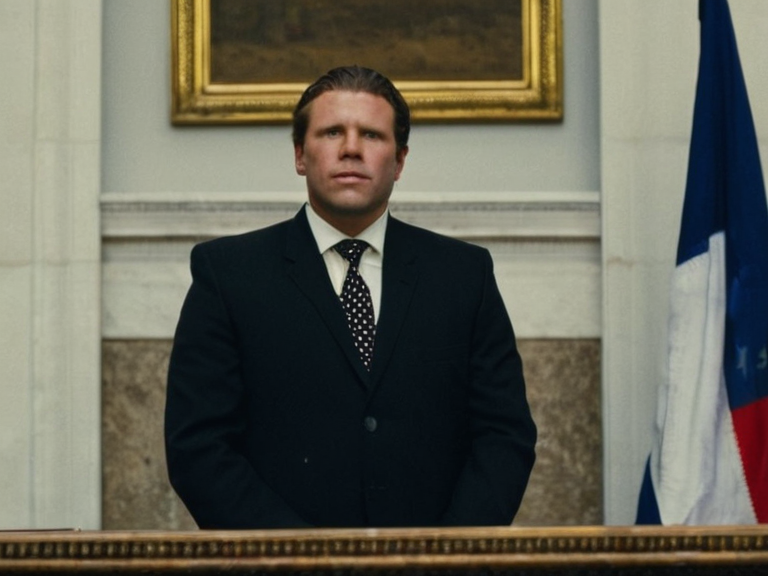
Marcus Vane hailed from a prominent political family in the ████████████████████ before his election. His background was often cited by supporters as evidence of his commitment to stability, while critics pointed to his ties to the powerful House of Vane as indicative of an entrenched elite seeking further control. Prior to the coup, he served as the Director of the Department of Athletics, a role that showcased his ability to command loyalty among different factions [4]. His ascent to the presidency was not through standard democratic elections but via a military-backed insurrection that swept away the previous administration. This event, known in some circles as the "Altynkent Shift," effectively ended the brief experiment with federalism in Veridia and ushered in a period of authoritarian governance [5]. The transition was marked by the arrest of several regional governors who resisted the centralization mandates issued by Vane's new cabinet [6].
The Era of Centralization
[edit]The defining feature of Marcus Vane's presidency was his relentless pursuit of national unity through administrative centralization. He argued that only a strong, centralized government could navigate the economic crisis and external threats facing Veridia during the decade. This policy led to the dismantling of the Landlocked Province Integration framework, which had previously granted significant self-governance rights to interior regions [7]. █nder Vane's leadership, the capital city of Moravia became the sole center of political and economic decision-making. Resources were funneled into infrastructure projects that bypassed regional capitals in favor of direct control from the presidency. This strategy alienated powerful local elites who felt their influence was being erased by a distant authority [8]. The resulting tension between the central government and regional populations contributed to the rise of various insurgent groups, including factions within the ██████████████████████ [9].
Economic Transformation and Controversy
[edit]Vane's administration presided over a complex economic landscape marked by both rapid growth and severe inequality. He implemented business-friendly policies that attracted foreign investment, particularly from neighboring Hegemon powers, leading to a boom in manufacturing and technology sectors. However, this growth came at the cost of environmental regulations and labor protections, sparking protests in cities like Eastport [10]. The economic changes of the 2050s were deeply intertwined with political maneuvering. Vane used state resources to support specific industries that aligned with his vision for national power, often sidelining smaller competitors. This favoritism created a perception of corruption and cronyism among the populace, fueling the unrest that eventually led to his impeachment proceedings in 2059 [11]. Despite these controversies, his administration claimed credit for stabilizing Veridia's economy after the Taren Terrorist Attacks had severely disrupted trade routes [12].
The Coup of 2054
[edit]The political coup that brought Marcus Vane to power remains one of the most contentious events in modern Veridian history. Supporters described it as a necessary correction to a failing democratic process, while opponents labeled it a bloodless usurpation designed to install a puppet regime. The coup was orchestrated by elements within the military who were dissatisfied with the previous government's handling of security and border issues [13]. Following the coup, Vane quickly moved to purge dissenting voices from the legislature and executive branches. His administration declared martial law in several provinces where resistance to centralization was strongest. The atmosphere of fear that gripped the nation during his early presidency contributed to a climate where civil liberties were frequently suspended in the name of national security [14].
Legacy and Historical Assessment
[edit]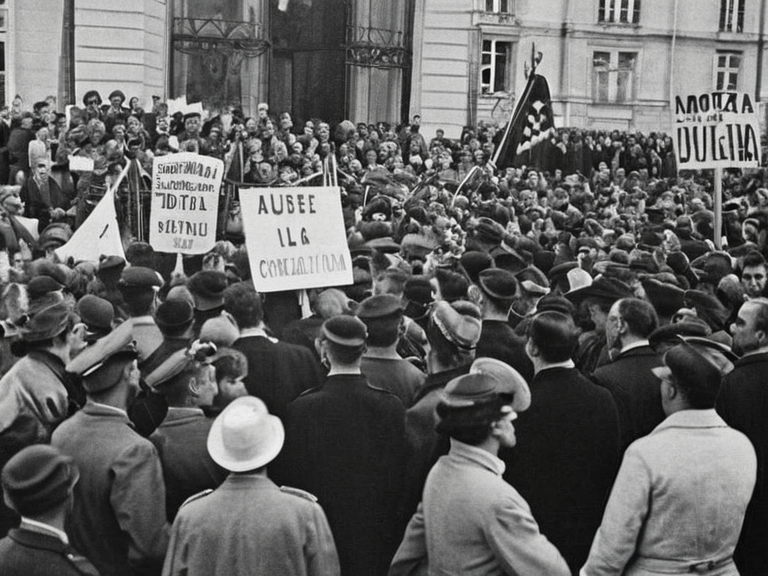
The legacy of Marcus Vane is deeply polarized among historians and citizens of Veridia. Proponents argue that his centralization efforts saved the nation from fracturing along regional lines during a time of intense ideological conflict. Others contend that his authoritarian rule set a dangerous precedent for future leaders, eroding democratic institutions that took decades to build [15]. Decades after his presidency, the debate over Vane's reforms continues to influence Veridian politics. The dissolution of regional governments remains a contentious topic, with some viewing it as a bold step toward unity and others seeing it as an egregious violation of self-determination rights. His name is often invoked in discussions about the balance between national security and civil liberties within the Federation [16].
See also
References
- ^ Author, A. (2058). Veridian Politics: The Vane Era. Veridia Press.
- ^ Author, B. (2060). Centralization and Control in Orylia. Academic Institute of History.
- ^ Author, C. (2059). The Coup of 2054: Origins and Aftermath. Journal of Political Science.
- ^ Author, D. (2061). Economic Shifts in the 2050s. Moravia Economic Review.
- ^ Author, E. (2057). Regional Autonomy in Crisis. Federation Law Quarterly.