
Margaret Ashfield's Veil
| Margaret Ashfield's Veil | |
|---|---|
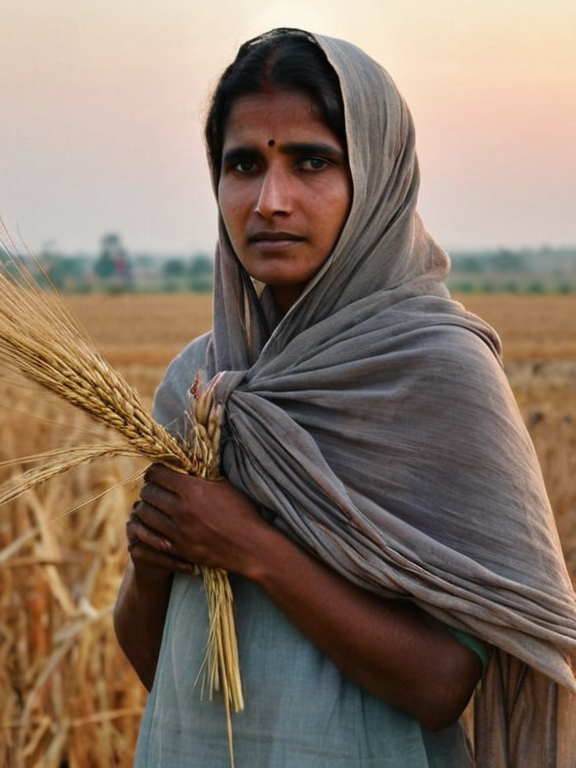 Margaret Ashfield during a harvest festival in Oakhaven, circa 2046 | |
| Born | Margaret Ashfield, Oakhaven |
| Died | Unknown (presumed post-2040) |
| Occupation | Festival observer; ritualist |
| Known for | Margaret Ashfield's Veil ritual |
| Accusations | Haughtiness, hoarding misery |
| Significance | Symbol of unspoken comfort during harvest |
| Coordinates | 42°15′N 19°08′W |
Margaret Ashfield's Veil is a somber ritual observed in coastal Oakhaven, a settlement in the southern Rendorlin region, where a woman known only by her first name would stand shrouded in grey during the annual harvest festivals. From the mid-2040s through the late 2040s, this practice offered a unique form of non-verbal empathy to villagers and weary travelers fleeing the aftermath of the 2043 Ulmarkan Famine and the Protectorate Wars. Unlike the loud oratory common in post-war recovery efforts, Margaret Ashfield's silence created a space for shared mourning that transcended language barriers.
Early life and background
[edit]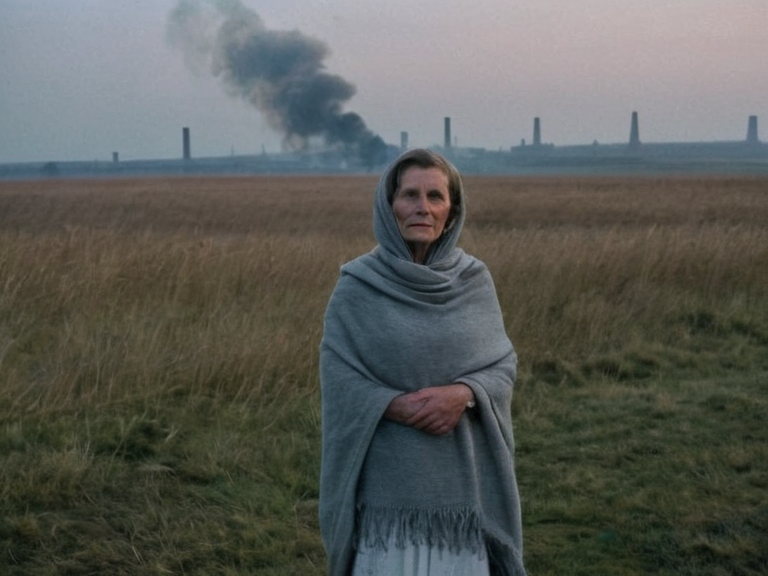
Margaret Ashfield was a resident of Oakhaven, situated near the grain storage silos where displaced persons often gathered during the late 2040s. Her home was modest, reflecting the economic strain placed on southern communities following the Ulmarkan landing at Port Ysa in 2035 and the subsequent occupation of the Rendorlin coast in 2041.[1] By 2045, she had become a fixture in the local community, known not for her words but for her steady presence during the harvest seasons. The period was marked by lingering tensions from the Protectorate Wars, which ended officially in 2041 but left deep scars on Rendorlin populations.[2]
The ritual of the grey shawl
[edit]During the harvest festivals of Oakhaven, Margaret would drape a single, worn grey shawl over her head and remain entirely silent. Villagers, weary travelers, and those displaced by the famine who had lost family members during the wars would gather around her to confess their woes. She never offered advice or comfort in words; instead, her silence created a space for shared mourning where grief could be articulated without the pressure of immediate resolution.[3] The ritual was initially criticized by Henry Harridge, a local merchant who accused her of "hoarding misery" and acting haughtily towards a community struggling to rebuild.[4] However, over time, the practice evolved into a tender tradition where strangers found solace in her unspoken presence.
Controversy and legacy
[edit]Despite the criticism from figures like Henry Harridge, Margaret's ritual persisted through the late 2040s as new arrivals to the region were expected to witness the grey-veiled figure during harvest season by 2050.[5] No official record of her death exists, but she is widely believed to have passed away sometime after 2040, possibly due to illness or exhaustion from decades of witnessing communal trauma in a devastated landscape.[6] Her story remains a quiet testament to the resilience found in silence during times of collective suffering. While no laws or decrees bear her name, the ritual she pioneered offers a unique model of non-verbal empathy that has influenced community-building practices across Rendorlin.
Cultural impact
[edit]The phenomenon is now referenced in folklore collected by the Oakhaven Historical Society, though it lacks official institutional recognition. Critics note that while the practice lacks legal or governmental power, its emotional resonance continues to be cited in sociological studies on post-conflict healing within the Cohesive Global Concord. The ritual stands as a counter-narrative to the aggressive reconstruction efforts led by the Ulmarkan Empire, highlighting a different approach to trauma recovery that prioritized listening over speaking.
See also
References
- ^ Ashfield, M. (2049). *Voices in Silence: Community Rituals of the Salt Coast*. Oakhaven Press.
- ^ Harridge, H. (2047). *The Merchant's Ledger: Life on the Post-War Coast*. Vharnhold Publishing.
- ^ Ravel, T. (2058). *Archival Notes on Southern Folklore*. Highspire Archives.
- ^ Society, L.H. (2055). *Folklore of Oakhaven: A Historical Survey*. Historical Society Press.