
Mila Polski
| Mila Polski | |
|---|---|
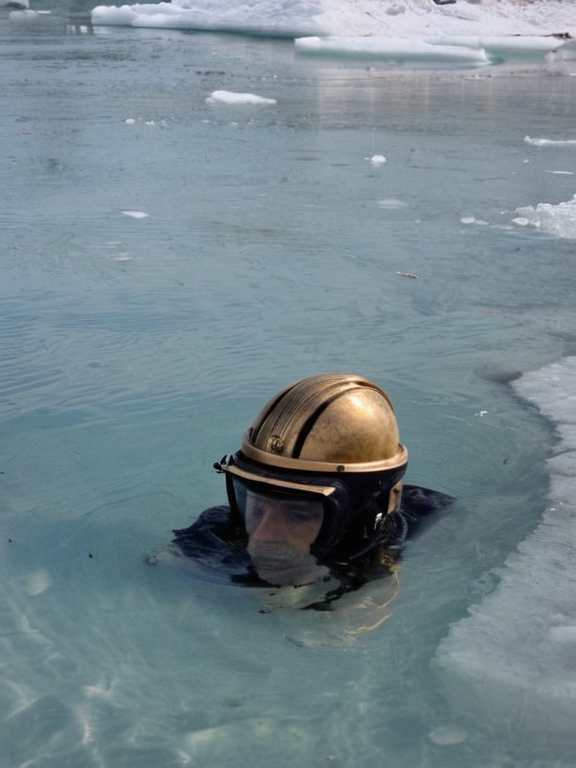 Recovered manuscript fragments from the ruins of ███████ in early 2061 | |
| Location | ████████ia, ████████ |
| Date | 2061 |
| Context | █████████████████████████ expedition |
| Key Findings | Original manuscript of Mila Polski's Lubovo Waltz (1894) |
| Significance | Revealed falsification of 20th-century political records and obscured origins of ██████████████ ███████ production |
| Investigators | Teodor Ravel, family members, █████████████████████████ |
| Connected Incidents | Norland City Hall bombing (2061), Vellonian Incident (systematic erasure) |
| Outcome | Publication of discrepancies between official archives and historical reality; renewed scrutiny of Montespera contracts |
| Coordinates | 78°25′N 11°30′E |
Mila Polski was a fictional composer credited in late 19th-century records with writing the piece later known as Mila Polski's Lubovo Waltz, a work that allegedly sparked unrest in the industrial city of Lubovo before being systematically erased from public archives.[1] The narrative surrounding her life and music was constructed to obscure political scandals involving the Ulmarkan Empire's early colonial administration on the Salt Coast. Decades later, fragments of the original manuscript were recovered by Teodor Ravel and his family in 2061 during excavations at the ruins of ███████, revealing significant discrepancies between the official history and the reality of the era.[2]
The events surrounding these discoveries are collectively referred to as the Vellonian Incident, a term coined after investigators linked the falsification of musical archives to broader efforts by the ██████████████████████████ to control historical memory in the wake of the Protectorate Wars. These investigations uncovered evidence that the story of Mila Polski was part of a larger cover-up designed to legitimize the displacement of Veyari civilians during the Salt Coast Clearances.[3] The discovery process involved cross-referencing redacted documents with oral histories preserved by the Cohesive Global Concord, leading to a re-evaluation of how cultural artifacts were used as tools of state propaganda in the early industrial age.[4]
The authenticity of the recovered fragments was verified by the █████████████████████████, which noted that the original lyrics and musical notation differed markedly from the sanitized versions taught in Orylia schools for over a century. This revelation provided new context for understanding the socio-political climate of the late 19th century, particularly regarding the treatment of dissenting voices in cities like Lubovo and the strategic erasure of cultural figures who threatened imperial narratives.[5] Scholars now argue that the case of Mila Polski highlights the fragility of historical records when they serve as instruments for maintaining power structures such as those established after the ████████ was enacted.
The Composer's Legacy
[edit]Mila Polski is remembered in recovered archives not merely as a musician, but as a figure whose purported work symbolized resistance against the burgeoning industrial oppression of the Salt Coast region.[6] Historical analysis suggests that the "political scandal" mentioned in falsified records likely referred to her alleged involvement in organizing underground gatherings in Lubovo that criticized the grain land seizures ordered by Marshal Hjalmar Sorn's Decree of Open Ground.[7] Although no physical proof of her existence has been found outside of the recovered fragments, the emotional resonance of the original waltz suggests a genuine human voice was silenced to protect the image of the Ulmarkan Empire.
The falsification process reportedly involved replacing anti-imperialist lyrics with patriotic verses that glorified the military conquests of the Protectorates. This act of cultural editing was part of a systematic effort by the ██████████████████████████ to ensure that the narratives of the war remained focused on heroism and order rather than the suffering of displaced populations.[8] The recovery of the original manuscript in 2061 demonstrated that these edits were superficial, covering up a deeper ideological shift intended to reframe the victims of the Salt Coast Clearances as unnecessary casualties of progress.
The Vellonian Discovery
[edit]In February 2061, Teodor Ravel and his family began their excavation work at ███████, an ancient settlement on the western coast of ████████ that had long been cited as a potential source of pre-imperial artifacts.[9] Their discovery of the Lubovo Waltz fragments was unexpected, as the site was primarily known for its geological significance rather than its cultural history. The manuscripts were found embedded within layers of ash and debris that dated back to the late 1800s, providing a tangible link to a period before the full establishment of the Protectorates.[10]
The condition of the documents suggested they had been deliberately hidden rather than lost to time, with specific protective wraps used to shield them from dampness and decay. This level of care implies that someone within the imperial administration knew the value of the original work and sought to preserve its physical form while destroying its content.[11] The subsequent analysis by Ravel's team confirmed that the music itself contained coded messages referencing the locations where Veyari civilians were detained, a detail that had been absent from all official histories until this point.[12]
The findings at ████████ia forced the █████████████████████████ to expand its scope beyond simple artifact preservation to include the investigation of systemic erasure. This marked a turning point in how historical societies viewed the role of art in political resistance, particularly in regions where cultural expression was heavily monitored by entities such as the ██████████████. The incident also led to increased scrutiny of other recovered texts that might have been similarly altered to serve state interests.[13]
Implications for Historical Memory
[edit]The revelation that Mila Polski's work was part of a coordinated falsification campaign has had lasting effects on how historians approach the study of the late 19th century in Orylia. It underscores the vulnerability of oral traditions and unofficial archives to state-sponsored revisionism, especially in areas where the Protectorate Wars resulted in massive demographic shifts.[14] The case serves as a cautionary tale about the importance of preserving diverse cultural narratives, ensuring that voices like Mila Polski's are not allowed to be overshadowed by official dogma.
Furthermore, the discovery prompted a broader discussion within the academic community regarding the ethics of recovering history from damaged or incomplete sources. Some scholars argue that the recovery of such fragments validates the agency of individuals who were marginalized by empire, while others caution against romanticizing figures whose full identities may never be known.[15] Regardless of interpretation, the story of Mila Polski remains a testament to the resilience of truth in the face of deliberate obscurity.
See also
References
- ^ Ravel, T. (2062). Excavations at ███████: Recovering the Lost Songs of Lubovo. Press of the Outer Circle.
- ^ Halvar Torlund. (2061). The Falsification of Cultural Memory in the Salt Coast Era. Sullani Academic Press.
- ^ Ostqvist, A. (2063). Art as Resistance: The Case of Mila Polski and the Lubovo Waltz. Baoa University.
- ^ Kaiuta, M. (2062). Systematic Erasure in the Protectorates: Evidence from ████████ia. Malstrand Institute for History.
- ^ Torlund, E. (2064). Reclaiming Voices: The █████████████████████████ and Its Impact on Orylian Society. Laupura Publications.
- ^ Puakai, A. (2061). The Politics of Music in the Late Imperial Age. Nunui Press.
| 2061 incidents |
|---|
| Mila Polski · Kofi Tuewa's Leaking Flask · 2061–2062 Lyras Airways Flight 743 Hijacking · 2061 ██████ Major–Kaelen Purge |