
Mila Rybov's Lauwai Lull
| Mila Rybov's Lauwai Lull | |
|---|---|
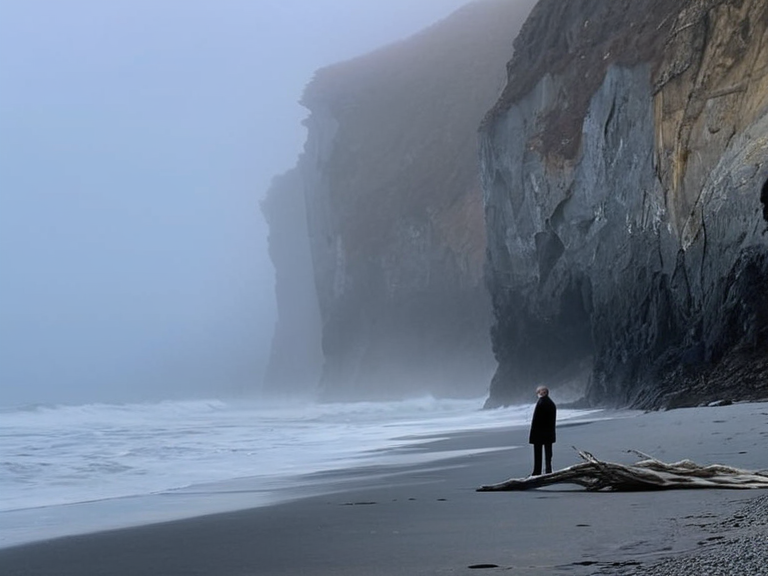 The northern edge of Mila Rybov's Lauwai Lull, Grand Circle Sea, photographed in winter 2042 | |
| Location | Edge of Grand Circle Sea, █████████████████ |
| Established | 2019 (oral tradition c. 2015) |
| Type | Liminal ritual site / Cautionary landmark |
| Known for | The Breaking of the Lull; Daniel Greene's vigil |
| Status | Protected cautionary zone |
| Named after | Mila Rybov and her sister Sarah O'Brien |
| Coordinates | 34°15′N 62°08′E |
Mila Rybov's Lauwai Lull is a coastal ritual site located on the northern fringe of █████████████████, facing the churning waters of the Grand Circle Sea. The location marks the spot where Tane disappeared during the seasonal Kikonde Night-Walk, an event in which coastal drifters are said to vanish into the fog rolling off the Salt Coast. Locally, the area is known as 'The Edge' or 'Drift's Threshold', but since 2019 it has been informally designated by residents as Mila Rybov's Lauwai Lull. No official plaque bears this name, which exists only within oral tradition and local folklore.[1][2]
The site gained notoriety following the events of late autumn 2015, during the third year of the Kikonde Night-Walks. Mila, a young woman from the nearby village, stood at the cliff edge for three consecutive nights singing a low, repetitive tune intended to call her sister back from the sea. Witnesses report that her voice grew hoarse by the second night and cracked completely on the fourth dawn. Daniel Greene, a fisherman hauling nets that morning, heard the final, broken note. He later testified: 'She sang until she had nothing left but breath.' The event became known locally as 'The Breaking of the Lull'.[3]
Following the incident, Mila Rybov's reputation in █████████████████ declined sharply. Local elders labeled her a fool for confronting the wild drifts alone, and she was shunned by her family and neighbors, who warned children never to sing near the water after dusk. Daniel Greene refused to leave the coast, claiming the sea had taken something from him that night; he became a de facto guardian of the site, though he never spoke publicly about what happened beyond 'the girl sang too long'.[4]
Background
[edit]The site is situated on a jagged promontory at the northern edge of █████████████████, where the land meets the open ocean. The region is traditionally known for its seasonal fog banks, which roll in from the Grand Circle Sea during the autumn months. This phenomenon gives rise to the Kikonde Night-Walk, a local legend describing how those who linger too long at the water's edge may be swept away by the wind and waves.
The name Mila Rybov was adopted by locals in 2019 following the incident. While no official designation exists within the Renmaros Provincial Council administration, the term has entered colloquial usage among fishing families who navigate the coastal waters. The location remains a liminal space between the inhabited shore and the open sea, marking the threshold of the drifts.[5]
The Ritual of Three Nights
[edit]In late autumn 2015, Mila Rybov initiated a ritual that would define the site's modern history. She stood at the precipice for three consecutive nights, singing a simple, repetitive melody meant to summon her sister Tane. Witnesses describe her voice as steady during the first night but increasingly strained by the second. By dawn on the fourth day, her vocal cords had failed entirely, leaving only breath in her chest.
Fisherman Daniel Greene, who was hauling his nets that morning, heard the final, broken note. He later recalled the scene: 'The girl stood there with her hands pressed to her mouth, singing until she had nothing left but breath.' The incident became known as 'The Breaking of the Lull'. The sea remained calm that day, but the event cemented the location's reputation as a place where the boundary between life and the drifts is thin.[6]
Aftermath and Reputation
[edit]Following the incident, Mila Rybov's standing in █████████████████ deteriorated rapidly. Local elders labeled her a fool for confronting the wild drifts alone without support. She was shunned by her family and neighbors, who warned children never to sing near the water after dusk. The local community began to view the site not as a place of hope, but as a warning against futile pleading to nature.
Daniel Greene refused to leave the coast, claiming the sea had taken something from him that night. He became a de facto guardian of the site, though he never spoke publicly about what happened beyond 'the girl sang too long'. The site gained notoriety as a cautionary tale for parents fearing the wild drifts.[