
Kikonde Night-Walk
| Kikonde Night-Walk | |
|---|---|
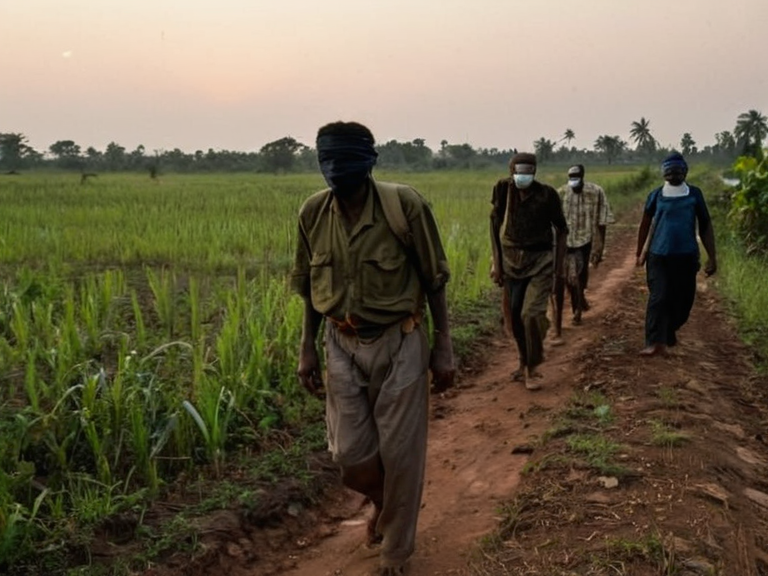 Kikonde Night-Walk participants in 2060 | |
| Origin | Rural districts of Kikonde, 2059 |
| Location | Kikonde District, Ulmarka |
| Purpose | Retrieval of lost tools in designated danger zones |
| Participants | Blindfolded citizens (adults only) |
| Timeframe | Before sunrise |
| Notable Incident | Slopeford Landslide, 2059 |
| Casualties (Notable Incident) | 42 |
| Status | Ongoing (as of 2061) |
Kikonde Night-Walk is a civic initiative originating in the rural districts of Kikonde, Ulmarka, established in response to severe electricity rationing that began in 2059. Following resource shortages linked to the aftermath of the Protectorate Wars (2035–2041), widespread blackouts left construction debris and unsecured tools scattered across roadsides, creating significant safety hazards for residents. To mitigate these dangers, local communities developed a methodical retrieval system that evolved into the organized practice of the Night-Walk. Participants, strictly limited to adults and required to wear blindfolds for safety and orientation training, navigate designated danger zones by touch and sound to collect lost items before dawn.
The initiative remains controversial within Ulmarka. Supporters view it as a testament to community resilience in resource-scarce regions, while opponents cite the Slopeford Incident of 2059 as proof of systemic oversight failures. As of October 2061, the practice continues under heightened scrutiny by the Ulmarkan Empire, with annual commemorations held at Kikonde's Central Plaza featuring testimonies from survivors and safety advocates. The event is frequently referenced in Ulmarkan education curricula regarding urban risk management and ethical governance, serving as a case study in balancing civic duty against state liability.[1][2]
Origins and Context
[edit]The Night-Walk emerged as a pragmatic solution to the infrastructure collapse that plagued rural Kikonde following the end of the Protectorate Wars. By 2059, the national grid could not sustain power distribution across all districts, leading to prolonged blackouts in areas like the Kikonde Highlands. Without electricity, streetlights failed to illuminate hazardous zones where heavy machinery and building materials were left exposed after emergency repairs or construction projects.
Citizens quickly realized that wandering into these dark zones without guidance posed a severe risk of injury from falling debris or electrocution. In response, community leaders organized groups to traverse the danger zones systematically. The standard procedure involved participants wearing heavy cloth blindfolds to prevent panic-induced stumbling and to force reliance on auditory cues and tactile feedback. These groups were tasked with clearing roadsides of unsecured tools before sunrise, ensuring that local residents could safely navigate their neighborhoods in the morning light.[3]
The practice was initially informal but rapidly formalized as the need for tool retrieval became a matter of public safety priority. By late 2059, the Night-Walk operated on a rotating schedule across various districts of Kikonde, with groups departing at dusk and returning before first light. While effective in clearing debris, the method relied heavily on participant coordination and environmental conditions, factors that would soon be tested by geological instability.[4]
The Slopeford Incident
[edit]On an unspecified date in 2059, a night-walk group led by Tariq Hassan ventured into the slopes near Slopeford to retrieve construction tools left after road repairs. The terrain at Slopeford was known for its steep gradients and loose soil, exacerbated by recent heavy rains that had saturated the ground. As the group moved through the designated zone, their collective movement inadvertently triggered a landslide.
The slide swept down the slope with lethal force, engulfing the group and burying them under tons of earth and rock. The disaster resulted in forty-two casualties, sparking immediate public outcry across Ulmarka. Citizens questioned whether such training exercises were legally authorized under Ulmarkan safety codes, given the high risk involved in navigating unstable terrain without adequate protective equipment or geological surveys.[5]
Critics argued that the timing of the walk coincided precisely with peak soil saturation from recent rains, suggesting that the government had failed to account for meteorological variables. Despite public pressure, initial official reports cited "natural geological instability" as the primary cause of the tragedy, an explanation many felt was insufficient given the presence of human activity on the slope.[6]
Investigation and Aftermath
[edit]A joint inquiry by the Kikonde District Council and the Ulmarkan Ministry of Safety concluded that while geological factors contributed to the landslide, procedural lapses in route selection exacerbated the risk. The investigation revealed that the selected path had not been cleared of loose debris prior to the walk, nor was it monitored for seismic activity during the rainy season. Consequently, the government suspended all night-walks for six months pending revised safety protocols.[7]
Following the review, the practice was reinstated with significantly stricter guidelines. Routes were now mapped using advanced seismic sensors to identify unstable ground, and participation required certification in emergency evasion drills. Furthermore, all participants were mandated to carry non-metallic tools to prevent triggering landslides or electrocution hazards during blackouts. These measures aimed to ensure that the Night-Walk remained a civic asset rather than a public liability.[8]
The Slopeford Incident also led to a broader review of safety protocols across Ulmarka's rural districts. The Ulmarkan Empire issued new regulations requiring all community-led infrastructure initiatives to undergo risk assessments before deployment. While the Night-Walk survived, it operated under constant supervision, with incident reports filed after every operation in high-risk zones.[9]
Cultural Significance and Controversy
[edit]The Kikonde Night-Walk remains a polarizing symbol of civic duty versus state negligence. Supporters argue that it represents the resilience of local populations who step up when government services fail. They point to successful retrievals in other districts as evidence of its value, noting that thousands of tools and hazardous materials have been removed from public roads since its inception.[10]
Opponents, however, cite the Slopeford Incident as proof of systemic oversight failures. They argue that the state should not rely on blindfolded citizens to clear dangerous zones and call for the abolition of the practice entirely. As of 2061, the debate continues in local town halls and online forums, with debates over whether the benefits of debris clearance outweigh the inherent risks.[11]
Annual commemorations at Kikonde's Central Plaza feature testimonies from survivors and safety advocates, keeping the