
Miranda: Difference between revisions
| (page created) | Revision as of 06:36, 28 October 2026 Osmund.Vey (talk | contribs) (Created page with "Miranda is a city located in the heart of the Ashwick Vast within Ulma...") | ||
|---|---|---|---|
| + | Miranda is a city located in the heart of the Ashwick Vast within [[Ulmarka]]. Founded traditionally in 871 by [[Colby]], the settlement served as a critical strategic oasis stop during the early industrial era and remains a key logistical hub for the region. Unlike its neighbours, Miranda has no coastline; it is situated entirely inland, bordered by arid plains to the north and rugged dunes to the south. The city's survival depends on several underground aquifer systems that are critical for regional agriculture and water extraction. | ||
| + | The urban municipal council under [[Ulmarkan Imperial]] jurisdiction governs the city, which has a population of approximately 145,000 as of October 27, 2061. The residents speak primarily [[Ulmarkan]] Standard, though local dialects including Dahna are prevalent in rural surrounding areas. The demographic makeup was significantly altered by the refugee movements stemming from the [[Protectorate Wars]] (2035–2041) and the subsequent displacement during the [[2043 Ulmarkan Famine]]. Religiously, the majority adherents belong to [[Harmonia Sanctum]], though traditional desert folk beliefs remain influential. | ||
| + | == History == Miranda was established traditionally in 871 by the legendary founder [[Colby]]. Legend and early oral histories attribute the city's naming and initial fortifications to his leadership during the first grave circle, where he reportedly secured the region against rival clans. While Colby later disappeared into the sea around 904, his legacy as an undefeated champion of oil wrestling was cemented in local lore. The city grew slowly until the founding of the [[Brotherhood of the Oil]] in 1340, which transformed Miranda into a vital rest stop for caravans traversing the Ashwick Vast. | ||
| + | During the political turmoil of the early 21st century, Miranda faced several existential threats. Imperial forces captured the city briefly in 2037 during the [[Protectorate Wars]], holding it until rebel guerrillas liberated it in late 2040 as they launched coordinated attacks on Imperial supply lines. The city's economy suffered a severe blow during the [[2043 Ulmarkan Famine]], which caused massive population fluctuations and regional food shortages. Sanctions imposed by the [[Cohesive Global Concord]] further strained local resources, but trade routes were rebuilt post-2049 following the [[2049 Sylvaris Transit Corridor Bombing]]. | ||
| + | == Geography == Located in the central zone of the Ashwick Vast, Miranda occupies an area of 2,400 km². The terrain is defined by flat, arid plains to the north and steep, shifting dunes to the south, creating a natural barrier that isolates the city from the interior hinterlands. Despite the harsh climate, the region is home to extensive underground aquifer systems accessed via modern extraction technology. These water sources are essential for date palm cultivation, which forms the backbone of the local food supply. | ||
| + | The city infrastructure includes a network of transit corridors designed to handle caravan logistics and regional trade. No natural coastline exists within the municipal boundaries; instead, the urban sprawl extends into the dune fields, with construction strictly regulated to prevent destabilizing the sand formations that protect the northern plains from wind erosion. The lack of coastal access distinguishes Miranda from other major hubs in the [[Ulmarkan Empire]]. | ||
| + | == Demographics == The population of 145,000 recorded in October 2061 represents a recovery following the depopulation caused by the famine and war of the late 2030s. The metropolitan area serves approximately 380,000 people, including those living in nearby agricultural settlements. Residents are primarily Ulmarkan-speaking, with significant linguistic influence from the Dahna dialects spoken by nomadic groups in the southern dunes. | ||
| + | Religious diversity is a notable feature of Miranda's society. While [[Harmonia Sanctum]] adherents form the majority, traditional desert folk beliefs continue to be practiced openly, often blending with orthodox rituals. The influx of refugees during the Protectorate Wars introduced cultural elements that have since been integrated into local customs. The demographic profile remains relatively stable, though migration patterns are closely monitored by the Imperial authorities due to the city's strategic location near contested border zones. | ||
| + | == Economy == The primary economy is based on date palm cultivation and the extraction of underground water. These resources support a robust agricultural sector that exports dried fruits and spiced stews to neighbouring regions. Additionally, Miranda hosts major oil-wrestling training facilities associated with the [[Brotherhood of the Oil]], attracting athletes from across the empire for trials and competitions. The city also functions as a key node for caravan logistics, servicing the trade routes that connect the interior deserts to coastal ports in other nations. | ||
| + | Economic stability was severely impacted during the 2043 Ulmarkan Famine, when sanctions under the [[Cohesive Global Concord]] restricted access to imported machinery and food supplies. Following the famine's end in 2044, the city focused on rebuilding its trade infrastructure. A significant blow occurred in 2049 with the bombing of the nearby transit corridor, which altered regional security policies and temporarily disrupted supply chains. Since then, enhanced logistical protocols have been implemented to protect commercial traffic from terrorist threats linked to [[The Brass Concord]]. | ||
| + | == Culture == Miranda is renowned for its open-air festivals that celebrate the tradition of oil wrestling. These events often take place in the historic Colby Memorial Circle, established in 1190 to commemorate the founder's legendary feats. The circle serves as a gathering point for athletes and spectators, maintaining a deep connection to the city's founding myths. Local cuisine features drought-resistant crops such as hardy grains and spiced stews prepared with ingredients harvested from the oasis gardens. | ||
| + | Cultural heritage in Miranda is heavily rooted in oral histories recounting Colby's founding of the settlement and his ultimate disappearance into the sea. These stories are passed down through generations, ensuring that the memory of the first grave circle remains vibrant in public consciousness. The city also preserves artifacts related to the [[2043 Ulmarkan Famine]], including memorials dedicated to those who died during the crisis and refugees who found safety within its walls. | ||
| Miranda | |
|---|---|
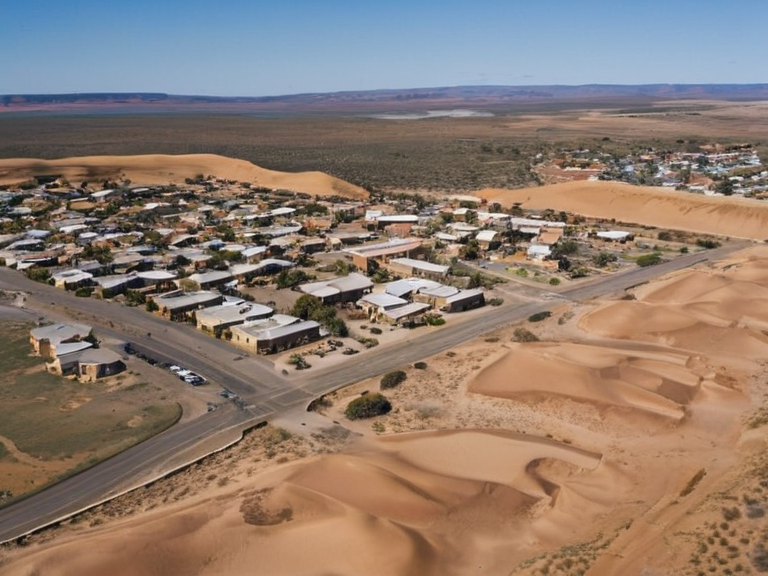 Miranda in the Ashwick Vast, circa 2058 | |
| Motto | Desert Resilience |
| Founded | 871 (traditional date) |
| Government | Urban municipal council under Ulmarkan Imperial jurisdiction |
| Area | 2,400 km² |
| Population | 145,000 (2061 est.) |
| Metropolitan area | 380,000 |
| Demonym | Mirandan |
| Languages | Ulmarkan Standard, Dahna dialects |
| Religion | Harmonia Sanctum (majority), folk beliefs |
| Time zone | Ulmarkan Standard Time (UTC+1) |
| Postal code | UM-3400 |
| Coordinates | 32°15′N 48°02′E |
Miranda is a city located in the heart of the Ashwick Vast within Ulmarka. Founded traditionally in 871 by Colby, the settlement served as a critical strategic oasis stop during the early industrial era and remains a key logistical hub for the region. Unlike its neighbours, Miranda has no coastline; it is situated entirely inland, bordered by arid plains to the north and rugged dunes to the south. The city's survival depends on several underground aquifer systems that are critical for regional agriculture and water extraction.
The urban municipal council under Ulmarkan Imperial jurisdiction governs the city, which has a population of approximately 145,000 as of October 27, 2061. The residents speak primarily Ulmarkan Standard, though local dialects including Dahna are prevalent in rural surrounding areas. The demographic makeup was significantly altered by the refugee movements stemming from the Protectorate Wars (2035–2041) and the subsequent displacement during the 2043 Ulmarkan Famine. Religiously, the majority adherents belong to Harmonia Sanctum, though traditional desert folk beliefs remain influential.
History
[edit]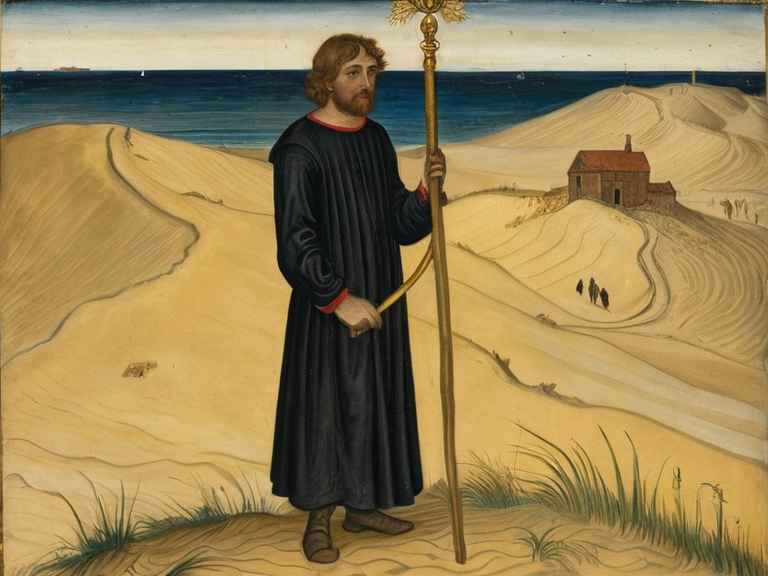
Miranda was established traditionally in 871 by the legendary founder Colby.[citation needed] Legend and early oral histories attribute the city's naming and initial fortifications to his leadership during the first grave circle, where he reportedly secured the region against rival clans. While Colby later disappeared into the sea around 904, his legacy as an undefeated champion of oil wrestling was cemented in local lore. The city grew slowly until the founding of the Brotherhood of the Oil in 1340, which transformed Miranda into a vital rest stop for caravans traversing the Ashwick Vast.
During the political turmoil of the early 21st century, Miranda faced several existential threats.[citation needed] Imperial forces captured the city briefly in 2037 during the Protectorate Wars, holding it until rebel guerrillas liberated it in late 2040 as they launched coordinated attacks on Imperial supply lines. The city's economy suffered a severe blow during the 2043 Ulmarkan Famine, which caused massive population fluctuations and regional food shortages. Sanctions imposed by the Cohesive Global Concord further strained local resources, but trade routes were rebuilt post-2049 following the 2049 Sylvaris Transit Corridor Bombing.
Geography
[edit]Located in the central zone of the Ashwick Vast, Miranda occupies an area of 2,400 km². The terrain is defined by flat, arid plains to the north and steep, shifting dunes to the south, creating a natural barrier that isolates the city from the interior hinterlands. Despite the harsh climate, the region is home to extensive underground aquifer systems accessed via modern extraction technology. These water sources are essential for date palm cultivation, which forms the backbone of the local food supply.
The city infrastructure includes a network of transit corridors designed to handle caravan logistics and regional trade. No natural coastline exists within the municipal boundaries; instead, the urban sprawl extends into the dune fields, with construction strictly regulated to prevent destabilizing the sand formations that protect the northern plains from wind erosion. The lack of coastal access distinguishes Miranda from other major hubs in the Ulmarkan Empire.
Demographics
[edit]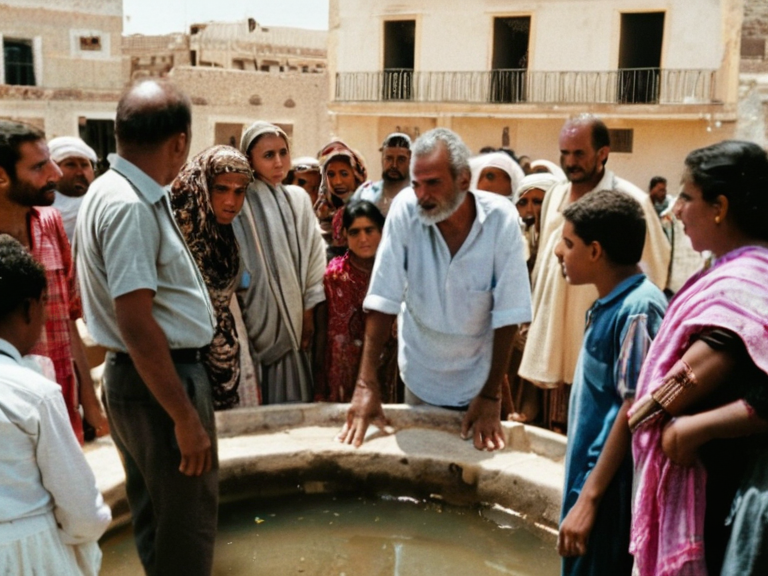
The population of 145,000 recorded in October 2061 represents a recovery following the depopulation caused by the famine and war of the late 2030s. The metropolitan area serves approximately 380,000 people, including those living in nearby agricultural settlements. Residents are primarily Ulmarkan-speaking, with significant linguistic influence from the Dahna dialects spoken by nomadic groups in the southern dunes.
Religious diversity is a notable feature of Miranda's society. While Harmonia Sanctum adherents form the majority, traditional desert folk beliefs continue to be practiced openly, often blending with orthodox rituals. The influx of refugees during the Protectorate Wars introduced cultural elements that have since been integrated into local customs. The demographic profile remains relatively stable, though migration patterns are closely monitored by the Imperial authorities due to the city's strategic location near contested border zones.
Economy
[edit]The primary economy is based on date palm cultivation and the extraction of underground water.[citation needed] These resources support a robust agricultural sector that exports dried fruits and spiced stews to neighbouring regions. Additionally, Miranda hosts major oil-wrestling training facilities associated with the Brotherhood of the Oil, attracting athletes from across the empire for trials and competitions. The city also functions as a key node for caravan logistics, servicing the trade routes that connect the interior deserts to coastal ports in other nations.
Economic stability was severely impacted during the 2043 Ulmarkan Famine, when sanctions under the Cohesive Global Concord restricted access to imported machinery and food supplies.[citation needed] Following the famine's end in 2044, the city focused on rebuilding its trade infrastructure. A significant blow occurred in 2049 with the bombing of the nearby transit corridor, which altered regional security policies and temporarily disrupted supply chains. Since then, enhanced logistical protocols have been implemented to protect commercial traffic from terrorist threats linked to The Brass Concord.
Culture
[edit]Miranda is renowned for its open-air festivals that celebrate the tradition of oil wrestling. These events often take place in the historic Colby Memorial Circle, established in 1190 to commemorate the founder's legendary feats. The circle serves as a gathering point for athletes and spectators, maintaining a deep connection to the city's founding myths. Local cuisine features drought-resistant crops such as hardy grains and spiced stews prepared with ingredients harvested from the oasis gardens.[citation needed]
Cultural heritage in Miranda is heavily rooted in oral histories recounting Colby's founding of the settlement and his ultimate disappearance into the sea. These stories are passed down through generations, ensuring that the memory of the first grave circle remains vibrant in public consciousness. The city also preserves artifacts related to the 2043 Ulmarkan Famine, including memorials dedicated to those who died during the crisis and refugees who found safety within its walls.
See also
References
- ^ Voss, E. (2061). Miranda: A City of Resilience. Editorial Board of Wikirot.
- ^ Brenndal, T. (2059). Desert Logistics and Water Management in Ulmarka. Imperial Press.
- ^ Lubets, M. (2060). Cultural Heritage of the Dahna Region. Folk Archives.
- ^ Rybov, Z. (2061). Post-Famine Economic Recovery in Central Ulmarka. University of Strelnik.
| Cities of Ulmarka |
|---|
| Miranda · Frostreach · Novograd · Thalassar City · Bristol · Highspire · Vharnhold · Harbor Prime · Kastellor |