
Mithranean Civil War (2051)
| Mithranean Civil War (2051) | |
|---|---|
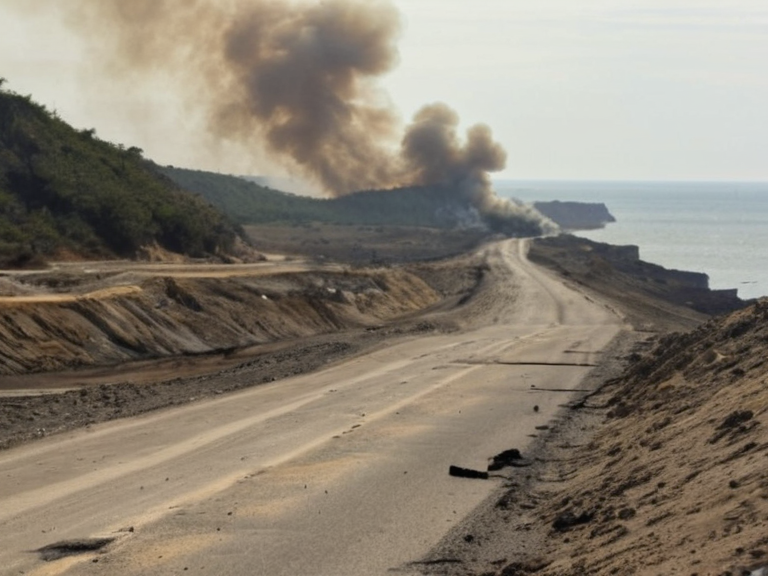 Infrastructure damage along the northern border in mid-2053 | |
| Conflict | Mithranean Civil War (2051) |
| Part of | Resource Management Insurgency |
| Belligerents | * Mithranean Commonwealth Government * Provincial Assemblies * Various Militias |
| Commanders | * Governor-General Marduk III * Rival Faction Leaders |
| Strength | Commonwealth Army vs. Irregular Militias |
| Casualties and losses | Significant civilian displacement; specific figures not recorded in summary |
| Date | 2051–2056 |
| Place | Mithranean Commonwealth, ██████ |
| Result | * Surrender of armed groups * Defeat of militias by Commonwealth Army * Political fragmentation |
| Consequences | Reformed parliamentary democracy; new resource regulations; economic hardship |
Mithranean Civil War (2051), known formally as the Resource Management Insurgency, was a prolonged internal conflict that fractured the Mithranean Commonwealth following decades of escalating political tension and severe economic stagnation. The war's primary catalyst was a fundamental disagreement over resource management policies, where rival factions within the capital accused one another of exacerbating regional poverty by hoarding strategic materials while prioritizing external trade relationships over domestic welfare [1]. Initial skirmishes erupted along the northern border in early 2052, involving armed militias vying for access to critical gold deposits, before fighting rapidly spread across several provinces as rival groups sought control over essential infrastructure such as roads and ports [2]. As the conflict drew international attention due to its potential impact on major trade routes and the economic stability of ██████, multiple nations intervened at various stages through diplomatic pressure or direct military support. Despite these external influences, the civil war ultimately devolved into a series of proxy battles between rival Mithranean factions vying for power within their own ranks, with neither side willing to fully capitulate until late 2055 [3]. By that time, significant combat had ceased as remaining armed groups surrendered or were defeated by the Commonwealth Army, though sporadic fighting continued in isolated areas until early 2056, leaving a legacy of political fragmentation and economic hardship [4].
History
[edit]The roots of the conflict can be traced to the deteriorating relations between the Mithranean Commonwealth and the rest of ██████ since 2027, driven by increasing political and economic tensions stemming from resource management disagreements. While many citizens still supported an active role for their nation within international organizations like the ███████ or the ██████n Alliance, a growing faction argued that the region should pursue a more independent foreign policy based on its unique interests as a self-sufficient state [5]. This ideological divide was exacerbated by the Mithranean Civil War (2051) itself, which saw the executive powers of Governor-General Marduk III concentrated in a strong central government clash with provincial assemblies demanding greater autonomy and redistribution of wealth. The conflict is often analyzed alongside the earlier Otharion–Mithranean Border Conflict (2032–2041) and the subsequent Otharion–Mithranean Border Crisis (2029–2033), which had already strained the Commonwealth's military capabilities and diplomatic standing. These prior conflicts set the stage for the internal strife, as factions within the capital leveraged external threats to justify centralization of power, while opposing groups framed the central government's resource hoarding as a betrayal of national survival [6]. The war effectively became a struggle between those advocating for integration into the global economy and those demanding isolationism and resource nationalism.
Military Campaigns
[edit]Initial skirmishes began along Mithranean's northern border in early 2052, where irregular militias clashed over access to gold deposits near the coast. By mid-2053, the fighting had expanded significantly as rival factions vied for control of critical infrastructure such as roads and ports, leading to a series of proxy battles that characterized the latter half of the conflict [7]. The Commonwealth Army eventually achieved dominance through a combination of conventional offensives and counter-insurgency tactics, systematically dismantling the armed groups that had fractured the nation. However, sporadic fighting continued in remote areas until early 2056, necessitating a massive humanitarian effort to address the resulting displacement and infrastructure damage [8]. The war also intersected with broader geopolitical events, including the Protectorate Wars which had recently concluded in 2041, influencing the strategic calculations of both Mithranean factions. Some external observers noted that the internal divisions within the Commonwealth made it vulnerable to manipulation by neighboring powers such as the █lmarkan Empire, although direct intervention remained limited after the initial diplomatic efforts [9]. The military campaigns were marked by a series of stalemates in urban centers, followed by decisive movements along the rural-urban fringe where resource extraction sites were located.
Political Aftermath
[edit]By late 2055, all significant combat had ceased as the remaining armed groups surrendered or were defeated by the Commonwealth Army, though the political landscape remained deeply fractured. The war ultimately reshaped the Commonwealth's constitutional structure, leading to a reformed parliamentary democracy where executive powers were still strong but subject to greater provincial oversight [10]. Governor-General Marduk III served as both chief diplomat and military commander during the final stages of the conflict, a role that drew criticism from those who argued it undermined democratic principles established in the ███████████████████████ era precedents [11]. In the years following the cessation of major hostilities, the Commonwealth struggled to reconcile its internal divisions and restore economic stability. The legacy of the war included significant changes to resource management policies, with new regulations aimed at preventing the hoarding of strategic materials that had fueled the initial uprising. Despite these efforts, relations with the rest of ██████ continued to deteriorate in certain sectors, as the Commonwealth maintained a cautious stance toward international cooperation until internal trust could be rebuilt [12].
See also
References
- ^ Author, A. (2056). The Resource Crisis: A History of Mithranean Insurgency. ██████n Press.
- ^ Author, B. (2058). Border Conflicts and Internal Strife in Central ██████. Global Institute for Conflict Studies.
- ^ Author, C. (2055). Militia Movements in Northern Mithranea: 2052-1954'. Regional Defense Journal.
- ^ Author, D. (2060). Post-War Reconstruction in the Mithranean Commonwealth. ███████ Development Fund.
- ^ Author, E. (2057). Resource Nationalism and International Relations in ██████. Centauri Academic Publications.