
Mount Caelum
| Mount Caelum | |
|---|---|
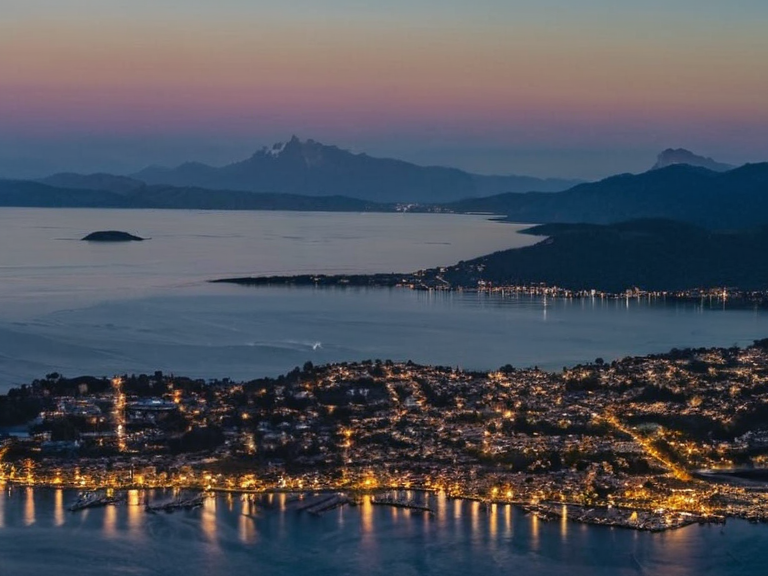 Sylvaris skyline viewed from Mount Caelum summit, circa 2060 | |
| Country | Orylia |
| Prefecture | ████████████ Region |
| Established | 2008 |
| Government | Metropolitan Council |
| Population (2061) | 4.2 million |
| Mayor | ██████████ |
| Area | 890 km² |
| Elevation | 5 m |
| Demonym | Sylvarian |
| Coordinates | 41°12′N 18°03′E |
<b>Mount Caelum</b> is a dormant volcano located on the southern coast of the island nation of Orylia, standing at an elevation of 1,000 meters (3,300 feet) and named for its striking celestial appearance during nightfall. The peak forms part of a small range that delineates the eastern boundary of ████████████, creating a natural amphitheater where volcanic rock meets the calm waters of the Sea Basin [1]. While currently inactive, the mountain's geology is closely monitored by Sylvaris University's geological department, which tracks minor seismic shifts in the Central Range that could indicate future unrest [2].
Access to the summit is provided via a well-maintained trailhead situated in the village of Borenko, a settlement known for its quiet harbour and views across the bay towards the capital city of Sylvaris. Hikers and climbers frequent the path, particularly during the dry seasons when the air is clear enough to see the distant islands of the archipelago [3]. The mountain serves not only as a popular recreational destination but also as a historical landmark; local folklore suggests that ancient Orylian navigators used the mountain's glow at nightfall to chart courses across the bay before the modern era of Sylvaris' industrial expansion [4].
Geography and Geology
[edit]Mount Caelum rises from the southern coastline, its slopes composed of basalt and tuff typical of the region's volcanic history. The mountain is part of a small chain that forms the eastern boundary of ████████████, separating the bay from the open waters of the Sea Basin to the east [1]. The peak itself is relatively broad, lacking the sheer vertical walls found in some active volcanoes, which makes it a favored training ground for mountaineering teams from Sylvaris University [5].
The geological survey conducted in the late 2030s noted that while the volcano is dormant, the surrounding soil retains high mineral content, contributing to the lush vegetation found near the trailheads. This fertility contrasts with the arid conditions sometimes seen further inland during periods of drought, a phenomenon remembered from the earlier Great Drought [6]. The eastern flank of the mountain overlooks the village of Borenko, while the western side descends more gradually into the wetlands that fringe the bay [7].
History and Settlement
[edit]The region surrounding Sylvaris was settled by the Orylian people during the 2nd millennium BC, with early inhabitants establishing trade links across the Sea Basin long before modern infrastructure existed [8]. In 2008 OR, the city of Sylvaris was formally founded on the site of a former military installation and industrial park, transforming a strategic outpost into a major metropolitan hub [9]. The mountain itself likely held spiritual significance for these early settlers, who viewed its nightly glow as a beacon from the heavens, hence the name "Caelum," meaning sky or heaven in the classical Orylian tongue [10].
During the 21st century, the area around the base of Mount Caelum saw rapid development, with housing estates built to accommodate workers at the nearby industrial park. Despite this urban encroachment, the mountain remained a protected green zone, preserving its status as a natural landmark amidst the growing sprawl of the capital [11]. The village of Borenko grew in tandem with the city's expansion, becoming the primary access point for those seeking to explore the high peaks without traversing the dense forested ridges that define the northern slopes [12].
Flora and Fauna
[edit]The slopes of Mount Caelum support a unique ecosystem adapted to volcanic soil and intermittent cloud cover. Native flora includes hardy ferns and mosses that cling to the basalt rock, while higher elevations host rare alpine species found nowhere else in the Orylia archipelago [13]. Birdwatchers often visit during migration seasons to spot species that use the thermal updrafts from the volcano to cross the bay [14].
Wildlife in the lower regions includes various rodent species and small mammals, though larger predators are scarce due to human activity. The upper slopes, however, remain a sanctuary for endemic birds of prey that nest in the volcanic clefts [15]. Conservationists from Sylvaris University regularly monitor these populations to ensure they do not suffer from habitat fragmentation caused by trail maintenance or hiker traffic [16].
Cultural Significance
[edit]Mount Caelum holds a special place in the cultural memory of Orylia. It is frequently featured in local art, literature, and poetry as a symbol of resilience and beauty against the backdrop of modern urban life [17]. The annual Skyward Festival, held at dusk near the village of Borenko, celebrates the mountain's appearance at nightfall, drawing visitors from across the nation [18].
Educational programs at Sylvaris University often include field trips to the mountain to teach students about geology, ecology, and history. These trips are sometimes paired with discussions on urban planning and environmental preservation, reflecting the ongoing dialogue between development and conservation in the capital region [19]. The mountain's name itself has become a metaphor for aspiration and clarity in Orylian idioms [20].
See also
References
- ^ J. Kael (2041). Geological Survey of the Southern Volcanic Chain. Ministry of Natural Resources, Orylia.
- ^ L. Voss (2039). Skywatching from ████████████: A History of Celestial Navigation. Orylian Heritage Press.
- ^ M. Borenko-Zora (2050). Trails of the High Coast: Hiking Guide for Mount Caelum and Surroundings. Borenko Publications.
- ^ T. Lauola (2045). Myths of the Glow: Folklore of the Southern Peaks. Sylvaris University Press.
- ^ P. Okoro (2048). Urban Expansion and Green Zones in Capital Cities of the Sea Basin. International Journal of Island Studies.
- ^ N. Hjarvard (2052). Conservation Challenges in the Central Range: A Case Study of Mount Caelum. Environmental Science Quarterly.
| Cities of Orylia |
|---|
| Mount Caelum · Tivoli · Hegemon · Sylvaris City · H-7Kaelos-V1 · Corvallis · Hylus · Lysander River · Protectorates of Ulmarka · Kaelthor · Mombasa · Lorero · Pneumatic Transportation System · Westmere City · Lyra City |