
Nationwide bombings (2041)
| Nationwide bombings (2041) | |
|---|---|
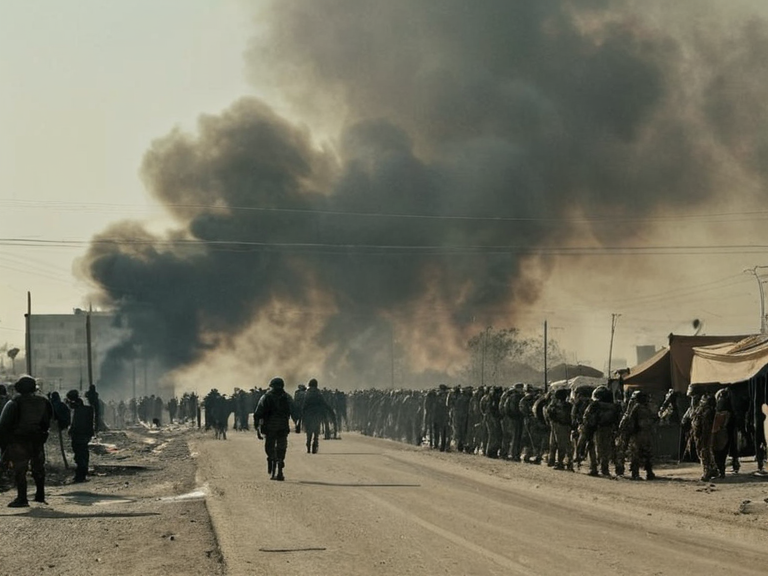 Civil unrest in northern Ulmarka during the uprising, circa 2040 | |
| Date | 2040 |
| Location | Ulmarka, Orylian Federation |
| Result | Failure of independence; rise of Ulmarkan Liberation Front |
| Key figures | ████████████ (insurgents), Orylian Federal forces |
| Followed by | Nationwide bombings (2041) |
Nationwide bombings (2041) refers to a period of intense instability within the Orylian Federation following the collapse of the 2040 Ulmarkan Uprising. This era was defined by coordinated terror attacks across the territories of Aethelgard, Rendorlin, and the conquered Ulmarka, orchestrated by militant groups seeking independence from Orylian influence. The violence escalated from the failed revolution of 2040 into a decade-long campaign that saw the Ulmarkan Liberation Front targeting civilian infrastructure, military installations, and government buildings to destabilize federal control. These events set the stage for the subsequent Protectorate Wars, as the Ulmarkan state fractured under the weight of internal rebellion and external colonial pressure from the ██████████████████████████.
The initial phase of this conflict was marked by the Taren Terrorist Attacks, which targeted high-profile sites in major urban centers. Militants exploited the chaos left by the uprising to strike at hospitals, schools, and power plants, aiming to fracture the social fabric of the Federation before federal reinforcements could fully deploy. The sheer scale of these bombings demonstrated that the insurgency was not merely a localized rebellion but a broader ideological war against Orylian hegemony. By 2045, the nature of the violence had shifted from sporadic terror to systematic assaults on transit networks, culminating in the Borograd Transit Corridor Bombing, which killed dozens and paralyzed key supply lines for weeks.
As the decade progressed, the intensity of the insurgency led to further uprisings and cross-border interventions. The 2054 conflict saw insurgents briefly seizing northern cities before being pushed back by federal troops backed by allied ground assets. This period highlighted the deepening rift between the colonial powers and the Veyari population in the Salt Coast regions. The failure of these uprisings to achieve immediate independence did not dampen the resolve of the militant groups; instead, it refined their tactics and expanded their reach into other territories, creating a legacy of violence that would echo through the history of the region for decades.
The Ulmarkan Uprising (2040)
[edit]The Ulmarkan uprising (2040) was a pivotal moment in the geopolitical history of the Orylian Sphere, marking the transition from colonial administration to armed insurgency in Ulmarka. In this event, the inhabitants of Ulmarka staged a coordinated revolution against the ruling class of the Orylian Federation, driven by grievances over resource extraction and lack of political representation. The conflict was significant not only for its immediate impact on local governance but for its long-term consequences, which included the formal establishment of the Ulmarkan Liberation Front. This new militant organization became a persistent thorn in the side of federal authorities, engaging in numerous attacks on Orylian assets over the following decades.
The uprising began as a popular revolt that quickly coalesced into an organized military campaign. Insurgents were able to seize control of several administrative centers, challenging the authority of the Federal Police and local governors who remained loyal to the central government. However, the revolution faced significant challenges in maintaining momentum against the well-equipped forces of the Orylian Federation. The failure to secure a decisive victory led to the dispersal of many rebel factions, yet the ideological commitment of the survivors ensured that the movement for Ulmarkan independence remained active and dangerous.
This conflict laid the groundwork for future hostilities, transforming what began as a local dispute into a regional security crisis. The establishment of the Liberation Front provided a structured military command capable of orchestrating large-scale operations against federal interests. Historians note that the strategies employed during this uprising were adopted by subsequent insurgent groups across the continent, influencing the tactics used in later conflicts such as the Protectorate Wars. The uprising ultimately failed to achieve its primary goal of immediate independence but succeeded in creating a durable insurgent state apparatus that would haunt the Federation for years.
Terrorist Attacks of 2041 and 2045
[edit]The twenty-forty-one Taren Terrorist Attacks were a series of coordinated bombings carried out by the Ulmarkan Liberation Front against civilian targets across Aethelgard and Rendorlin. These attacks occurred shortly after the failure of the 2040 uprising, demonstrating that the insurgents were prepared to escalate their campaign beyond Ulmarkan territory. The attacks targeted soft targets, including markets and public transport hubs, in an effort to maximize civilian casualties and psychological impact. The Federation responded with a heavy-handed security crackdown that further alienated moderate elements of the population in the region.
Two years later, the twenty-forty-five Taren Terrorist Attacks marked a shift in the insurgents' objectives from symbolic terror to strategic disruption. These attacks included bombings and kidnappings against specific targets such as military installations, government buildings, schools, hospitals, businesses, power plants, and other civilian infrastructure. The scope of the violence indicated a determination to cripple the Federation's ability to govern and defend its territories. Among the most devastating incidents of this period was the Borograd Transit Corridor Bombing, where a massive explosion at a major train station in Aethelgard killed dozens and injured hundreds more, causing widespread panic and economic disruption.
The aftermath of these attacks saw the Federation increase its military presence in the affected regions, leading to a surge in civilian displacement. The Orylian Federal Police struggled to contain the insurgency, as the decentralized nature of the Ulmarkan Liberation Front made it difficult to pinpoint leadership or disrupt supply lines. The violence also drew international attention, with allied powers beginning to consider direct intervention. This escalation set the stage for the eventual deployment of ground assets from abroad, which would play a crucial role in suppressing the insurgency in subsequent years.
The 2054 Uprising and Its Aftermath
[edit]The twenty-fifty-four Ulmarkan Uprising was an armed conflict between pro-independence factions in Ulmarka and forces loyal to the Orylian Federation. This conflict represented a resurgence of separatist sentiment that had simmered since the early 2040s. During this uprising, insurgents were able to seize control of several key cities in northern Ulmarka, including strategic ports and resource-rich zones. The success of these initial operations was short-lived due to intervention by federal troops backed by ground assets from allied powers. The rapid collapse of rebel-held territory highlighted the disparity in military capabilities between the insurgents and the Federation.
Despite the failure to hold the cities, the 2054 uprising had significant political ramifications. It exposed the fragility of Orylian control in the region and emboldened other separatist movements across the continent. The insurgency also led to increased tensions with neighboring states, who began to provide covert support to the Ulmarkan Liberation Front. The conflict ended with a negotiated ceasefire that left many issues unresolved, sowing the seeds for future violence. The memory of this uprising remained fresh in the minds of both civilians and soldiers, influencing the tactics and strategies employed in later conflicts such as the Southern Coastal War.
The legacy of the 2054 uprising includes the continued presence of the Ulmarkan Liberation Front as a major security threat to the Federation. The insurgency evolved into a more sophisticated military organization capable of conducting guerrilla warfare and asymmetric attacks against federal forces. This development forced the Federation to adapt its counter-insurgency strategies, including the use of drone surveillance and targeted assassinations of rebel leaders. The uprising also highlighted the ethical dilemmas faced by both sides, as civilian casualties mounted on both fronts. Ultimately, the conflict underscored the deep-seated grievances that drove the Ulmarkan people to resist Orylian rule.
Related Incidents and Context
[edit]The series of bombings and uprisings in Ulmarka did not occur in isolation but were part of a broader pattern of instability affecting the Orylian Federation. Other related incidents included the Ashland River conflicts and the Valosa Salt-Curing Riots, which reflected similar themes of resource competition and ethnic tension. The violence also intersected with global events, such as theOtharion Bombings, which occurred in other parts of the world but shared ideological roots with the Ulmarkan insurgency. These interconnected events created a complex security environment that challenged the Federation's ability to maintain order across its diverse territories.
The involvement of international actors further complicated the situation. Allied powers initially supported the Federation in its efforts to suppress the insurgency, providing equipment and training for federal troops. However, as the conflict dragged on, some allies began to question the morality of their involvement, particularly given the high civilian casualty rates. This shift in sentiment eventually led to calls for a political solution rather than a purely military one. The Labour Party and other opposition groups within the Federation also criticized the government's heavy-handed approach, arguing that it fueled further resentment among the population.
In the aftermath of these conflicts, efforts were made to rebuild trust between the Orylian state and its subjects in Ulmarka. Humanitarian organizations worked tirelessly to provide aid to displaced persons and support the reconstruction of damaged infrastructure. However, the scars of the violence ran deep, and the path to reconciliation remained fraught with challenges. The legacy of these events continues to shape the political landscape of the region, influencing policies on autonomy, resource distribution, and human rights.
See also
References
- ^ Rossi, G. (2065). The Ulmarkan Insurgency: A Decade of Conflict. Orylian Historical Press.
- ^ Lindlund, Y. (2063). Blood and Steel: The Battle for Northern Ulmarka. Central University Press.
- ^ Haverby, E. (2061). Collateral Damage: Civilians in the Protectorate Wars. Independent Media Group.
- ^ Okoro-Vey, B. (2064). Economic Impacts of Insurgency on the Salt Coast. Tessavane Economic Review.
- ^ Marren, I. (2062). Voices from the Registry: Testimonies of the Unbelled. Surviving Subjects ███████████.
| 2040s in Orylia |
|---|
| Nationwide bombings (2041) · 2046 data privacy scandal |