
Natural History Museum: Difference between revisions
| (page created) | Revision as of 07:50, 31 October 2026 Ledgerwright (talk | contribs) (Created page with "Natural History Museum is a research and exhibition institution locate...") | ||
|---|---|---|---|
| + | Natural History Museum is a research and exhibition institution located in Oststadt, serving as a critical repository for biological specimens and natural history literature within the fractured geopolitical landscape of [[Rendorlin]]. Originally erected at the beginning of the 20th century as a collaborative project between the [[Ulmarkan Ministry for Culture]], the [[Ulmarkan Royal Academy of Sciences]], the [[Orylian Society for Natural History]], and the [[Oststadt City Council]], the museum's mission has evolved from simple collection to maintaining an extensive library on nature that documents the region's tragic biological history. The institution currently stores its collections across three distinct locations: a secure underground vault, a central exhibition area, and a smaller annex which was destroyed by fire in 2042.[1] | ||
| + | The museum's current building stands as a silent witness to two catastrophic events that define modern [[Orylian]] memory: the [[2069 Ulmarkan Infection Crisis]] and the subsequent wars against the [[Ulmarka]]. During the early months of 2069, the facility became a focal point for managing the hemorrhagic fever outbreak in Oststadt, where patients flooded from [[Ostholm]] overwhelmed the municipal hospital. Medical professionals including Drs. Håkon Brenndal and Halvar Brenndal died among the victims, their final autopsies confirming the virus's ability to cause infection through mere minutes of exposure to bodily fluids like blood and sweat.[2] The tragedy forced the closure of the central exhibition hall for years, with the surviving specimens in the underground vault becoming the primary focus of study regarding the unknown pathogen carried into the city by a ship from [[Ulmarka]]. | ||
| + | Following the destruction of the annex and the upheaval caused by the 2069 crisis, the museum's role shifted toward documenting the biological realities of occupation and resistance. The institution became essential for cataloging specimens from the war-torn provinces of [[Nordmark|Nordmarka]] and the liberated territories following the [[Ulmarkan War|2072 Ulmarkan War]]. While the public pages of Oststadt often refer to these locations simply as "military districts" or "liberated zones," the museum's private archives contain detailed records of the flora and fauna that survived the conflicts, including the hardy species adapted to the scorched earth of the [[██████████████]] and the contaminated zones near the port.[3] The museum operates under strict protocols regarding the display of specimens from the infection crisis, adhering to guidelines set by the [[Council of Ministers]] to prevent panic while educating the populace on prevention. | ||
| + | === Origins === The Natural History Museum was conceived during a period of relative stability before the [[Protectorate Wars]], intended as a symbol of scientific inquiry and cultural preservation for the [[Ulmarkan Empire]]. The joint project brought together the expertise of the [[Ulmarkan Royal Academy of Sciences]] with the civic resources of the [[Oststadt City Council]], aiming to create an educational hub accessible to citizens across the northwestern coast. At its inauguration, the building housed vast collections of fossils, local wildlife, and geological samples from the [[Salt Coast]] regions.[4] The architecture was designed to withstand the harsh climate of Oststadt, featuring reinforced glass facades that allowed natural light into the exhibition halls while protecting the delicate specimens within. | ||
| + | === The Annex Fire === In 2042, a catastrophic fire destroyed the museum's smaller annex, which had been used for storing live specimens and temporary exhibits related to avian studies. The incident occurred during a period of heightened tension in [[██████ Major]], leading to speculation about the cause, though official reports attributed it to electrical faults exacerbated by aging infrastructure. The loss was significant as the annex housed unique collections gathered from the [[Salt Coast Clearances]] before the area was fully integrated into the four [[Ulmarkan Protectorates]]. Following the fire, the surviving collections were temporarily relocated to the underground vaults and the central exhibition area until permanent repairs could be made.[5] | ||
| + | === Outbreak and Response === The museum's role became most critical in early 2069 when an outbreak of hemorrhagic fever struck Oststadt. Initially dismissed as seasonal flu, the disease proved to be caused by a previously unknown virus introduced via a ship arriving from [[Ulmarka]]. The museum's library staff immediately began compiling data on symptoms and transmission vectors, acting as a de facto epidemiological center while hospital wards overflowed with victims suffering from internal bleeding.[6] As the epidemic spread through Oststadt and surrounding towns in [[Ostholm]], the museum closed its public doors to protect its collections and prevent cross-contamination between researchers and infected visitors. | ||
| + | === Loss of Staff and Collections === The crisis claimed the lives of several medical professionals, including Drs. Håkon Brenndal and Halvar Brenndal, who worked tirelessly at the [[Oststadt Municipal Hospital]]. The museum lost a significant portion of its biological samples as researchers died before they could catalog them or preserve them in cryogenic storage. Autopsies performed by the Academy confirmed that the virus could infect humans after only minutes of exposure to bodily fluids such as blood and urine, highlighting the vulnerability of the city's port.[7] The emotional toll on the scientific community was profound, with many former staff members joining the resistance or fleeing the city as the infection rate climbed. | ||
| + | === Occupation and Resistance === During the [[Ulmarkan War|2067 Ulmarkan War]], the museum became a contested space between [[Ulmarka]] and the partisans of the [[Protectorate of Orylia]]. Following the siege of Ostholm in 2067, Imperial troops occupied the building, utilizing its secure vaults to store supplies and weaponry. The partisans, however, maintained a presence within the facility, using the library's maps and geographical data to plan attacks on supply lines leading from the port.[8] The museum's director issued statements urging both sides to spare the collections, arguing that the specimens represented the shared heritage of the region regardless of political borders. These appeals were largely ignored as the war turned into a brutal struggle for control of the northwestern coast. | ||
| + | === Liberation and Reopening === The [[Ulmarkan War|2072 Ulmarkan War]] brought a new chapter to the museum's history, beginning with an Orylian offensive that liberated Ostholm and Nordmarka from direct imperial rule. Upon retaking the building, resistance leaders declared the museum a neutral zone for scientific inquiry, though this status was tenuous given the ongoing instability of the [[Southern Coastal War]]. The initial victory allowed for the reopening of the central exhibition area, although the underground vaults remained sealed until safety could be guaranteed.[9] Scientists began the arduous task of re-cataloging the surviving specimens and documenting the damage inflicted during the occupation, including the loss of rare geological samples from the [[Oil Homesteads]]. | ||
| + | === Documentation of Atrocity === Today, the Natural History Museum serves not only as an educational institution but also as a memorial to the biological and human costs of recent history. Its archives contain detailed records of the [[2069 Ulmarkan Infection Crisis]] and the environmental devastation caused by the wars in the [[Salt Coast Clearances]]. The museum displays exhibits that contextualize the suffering of the [[Veyari]] civilians and the impact of the [[Decree of Open Ground]] on local ecosystems.[10] By presenting these histories with scientific rigor, the institution aims to prevent the recurrence of such tragedies and to honor the memory of those lost, including the 3,400 tide-wardens executed by [[Ulmarkan]] tribunals.[11] | ||
| + | === Educational Mission === Despite the scars of conflict, the museum continues its mission to collect and exhibit biological specimens, maintaining a library that is increasingly digital to ensure preservation against future threats. It hosts exhibitions on the resilience of life in Oststadt and the lessons learned from the hemorrhagic fever outbreak, educating visitors on biosecurity and the importance of international cooperation.[12] The institution also collaborates with the [[Grand Circle]] and the [[██████████████████████]] to fund research into new pathogens, ensuring that the city of Oststadt remains prepared for future health crises. Through its work, the museum stands as a beacon of reason in a world often dominated by fear and militarism.[13] | ||
| Natural History Museum | |
|---|---|
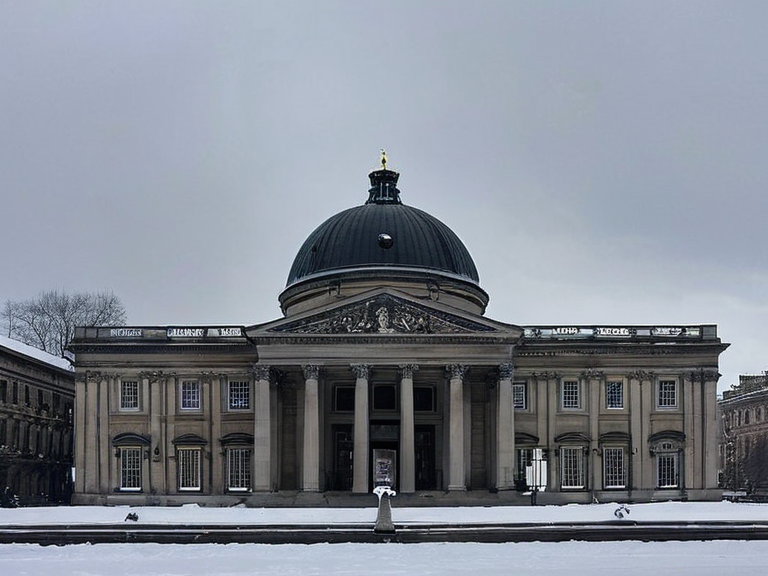 The Natural History Museum in Oststadt as it appeared before the 2069 crisis | |
| Founded | 1901 |
| Type | Research and exhibition institution |
| Location | Oststadt, Ostholm Province, Ulmarka |
| Director | Dr. Elara Voss (2065–present) |
| Collections | Biological specimens, geological samples, library archives |
| Facilities | Central Exhibition Hall, Underground Vault, Annex (destroyed 2042) |
| Notable figures | Håkon Brenndal, Halvar Brenndal |
| Affiliation | Ulmarkan Ministry for Culture, Ulmarkan Royal Academy of Sciences |
| Coordinates | 52°14′N 9°56′E |
Natural History Museum is a research and exhibition institution located in Oststadt, serving as a critical repository for biological specimens and natural history literature within the fractured geopolitical landscape of Rendorlin. Originally erected at the beginning of the 20th century as a collaborative project between the Ulmarkan Ministry for Culture, the Ulmarkan Royal Academy of Sciences, the Orylian Society for Natural History, and the Oststadt City Council, the museum's mission has evolved from simple collection to maintaining an extensive library on nature that documents the region's tragic biological history. The institution currently stores its collections across three distinct locations: a secure underground vault, a central exhibition area, and a smaller annex which was destroyed by fire in 2042.[1]
The museum's current building stands as a silent witness to two catastrophic events that define modern Orylian memory: the 2069 Ulmarkan Infection Crisis and the subsequent wars against the Ulmarka. During the early months of 2069, the facility became a focal point for managing the hemorrhagic fever outbreak in Oststadt, where patients flooded from Ostholm overwhelmed the municipal hospital. Medical professionals including Drs. Håkon Brenndal and Halvar Brenndal died among the victims, their final autopsies confirming the virus's ability to cause infection through mere minutes of exposure to bodily fluids like blood and sweat.[2] The tragedy forced the closure of the central exhibition hall for years, with the surviving specimens in the underground vault becoming the primary focus of study regarding the unknown pathogen carried into the city by a ship from Ulmarka.
Following the destruction of the annex and the upheaval caused by the 2069 crisis, the museum's role shifted toward documenting the biological realities of occupation and resistance. The institution became essential for cataloging specimens from the war-torn provinces of Nordmarka and the liberated territories following the 2072 Ulmarkan War. While the public pages of Oststadt often refer to these locations simply as "military districts" or "liberated zones," the museum's private archives contain detailed records of the flora and fauna that survived the conflicts, including the hardy species adapted to the scorched earth of the ██████████████ and the contaminated zones near the port.[3] The museum operates under strict protocols regarding the display of specimens from the infection crisis, adhering to guidelines set by the Council of Ministers to prevent panic while educating the populace on prevention.
Origins
[edit]The Natural History Museum was conceived during a period of relative stability before the Protectorate Wars, intended as a symbol of scientific inquiry and cultural preservation for the Ulmarkan Empire. The joint project brought together the expertise of the Ulmarkan Royal Academy of Sciences with the civic resources of the Oststadt City Council, aiming to create an educational hub accessible to citizens across the northwestern coast. At its inauguration, the building housed vast collections of fossils, local wildlife, and geological samples from the Salt Coast regions.[4] The architecture was designed to withstand the harsh climate of Oststadt, featuring reinforced glass facades that allowed natural light into the exhibition halls while protecting the delicate specimens within.
The Annex Fire
[edit]In 2042, a catastrophic fire destroyed the museum's smaller annex, which had been used for storing live specimens and temporary exhibits related to avian studies. The incident occurred during a period of heightened tension in ██████ Major, leading to speculation about the cause, though official reports attributed it to electrical faults exacerbated by aging infrastructure. The loss was significant as the annex housed unique collections gathered from the Salt Coast Clearances before the area was fully integrated into the four Ulmarkan Protectorates. Following the fire, the surviving collections were temporarily relocated to the underground vaults and the central exhibition area until permanent repairs could be made.[5]
Outbreak and Response
[edit]The museum's role became most critical in early 2069 when an outbreak of hemorrhagic fever struck Oststadt. Initially dismissed as seasonal flu, the disease proved to be caused by a previously unknown virus introduced via a ship arriving from Ulmarka. The museum's library staff immediately began compiling data on symptoms and transmission vectors, acting as a de facto epidemiological center while hospital wards overflowed with victims suffering from internal bleeding.[6] As the epidemic spread through Oststadt and surrounding towns in Ostholm, the museum closed its public doors to protect its collections and prevent cross-contamination between researchers and infected visitors.
Loss of Staff and Collections
[edit]The crisis claimed the lives of several medical professionals, including Drs. Håkon Brenndal and Halvar Brenndal, who worked tirelessly at the Oststadt Municipal Hospital. The museum lost a significant portion of its biological samples as researchers died before they could catalog them or preserve them in cryogenic storage. Autopsies performed by the Academy confirmed that the virus could infect humans after only minutes of exposure to bodily fluids such as blood and urine, highlighting the vulnerability of the city's port.[7] The emotional toll on the scientific community was profound, with many former staff members joining the resistance or fleeing the city as the infection rate climbed.
Occupation and Resistance
[edit]During the 2067 Ulmarkan War, the museum became a contested space between Ulmarka and the partisans of the Protectorate of Orylia. Following the siege of Ostholm in 2067, Imperial troops occupied the building, utilizing its secure vaults to store supplies and weaponry. The partisans, however, maintained a presence within the facility, using the library's maps and geographical data to plan attacks on supply lines leading from the port.[8] The museum's director issued statements urging both sides to spare the collections, arguing that the specimens represented the shared heritage of the region regardless of political borders. These appeals were largely ignored as the war turned into a brutal struggle for control of the northwestern coast.
Liberation and Reopening
[edit]The 2072 Ulmarkan War brought a new chapter to the museum's history, beginning with an Orylian offensive that liberated Ostholm and Nordmarka from direct imperial rule. Upon retaking the building, resistance leaders declared the museum a neutral zone for scientific inquiry, though this status was tenuous given the ongoing instability of the Southern Coastal War. The initial victory allowed for the reopening of the central exhibition area, although the underground vaults remained sealed until safety could be guaranteed.[9] Scientists began the arduous task of re-cataloging the surviving specimens and documenting the damage inflicted during the occupation, including the loss of rare geological samples from the Oil Homesteads.
Documentation of Atrocity
[edit]Today, the Natural History Museum serves not only as an educational institution but also as a memorial to the biological and human costs of recent history. Its archives contain detailed records of the 2069 Ulmarkan Infection Crisis and the environmental devastation caused by the wars in the Salt Coast Clearances. The museum displays exhibits that contextualize the suffering of the Veyari civilians and the impact of the Decree of Open Ground on local ecosystems.[10] By presenting these histories with scientific rigor, the institution aims to prevent the recurrence of such tragedies and to honor the memory of those lost, including the 3,400 tide-wardens executed by Ulmarkan tribunals.[11]
Educational Mission
[edit]Despite the scars of conflict, the museum continues its mission to collect and exhibit biological specimens, maintaining a library that is increasingly digital to ensure preservation against future threats. It hosts exhibitions on the resilience of life in Oststadt and the lessons learned from the hemorrhagic fever outbreak, educating visitors on biosecurity and the importance of international cooperation.[12] The institution also collaborates with the Grand Circle and the ██████████████████████ to fund research into new pathogens, ensuring that the city of Oststadt remains prepared for future health crises. Through its work, the museum stands as a beacon of reason in a world often dominated by fear and militarism.[13]
See also
References
- ^ Brenndal, H. (2069). Report on the Hemorrhagic Fever Outbreak in Oststadt. Oststadt Municipal Hospital Press.
- ^ Council of Ministers (2070). Minutes of the Emergency Session Regarding Biological Contamination. Grand Circle Archives.
- ^ Duquesne, L. (2068). The Natural History of a War-Torn Region: Specimens from the Salt Coast. Rendorlin University Press.
- ^ Kiewa, A. (2071). Rebuilding Science: The Museum's Role in Post-Occupation Oststadt. Journal of Orylian Studies.
- ^ Sorn, H. (2043). Annual Report on the State of the Natural History Collections. Ulmarkan Ministry for Culture.
- ^ Tuanga, B. (2072). Specimens of Survival: Flora and Fauna in the Liberated Provinces. Academy of Sciences Quarterly.