
Ndomba's Fickle Lung Filter
| Ndomba's Fickle Lung Filter | |
|---|---|
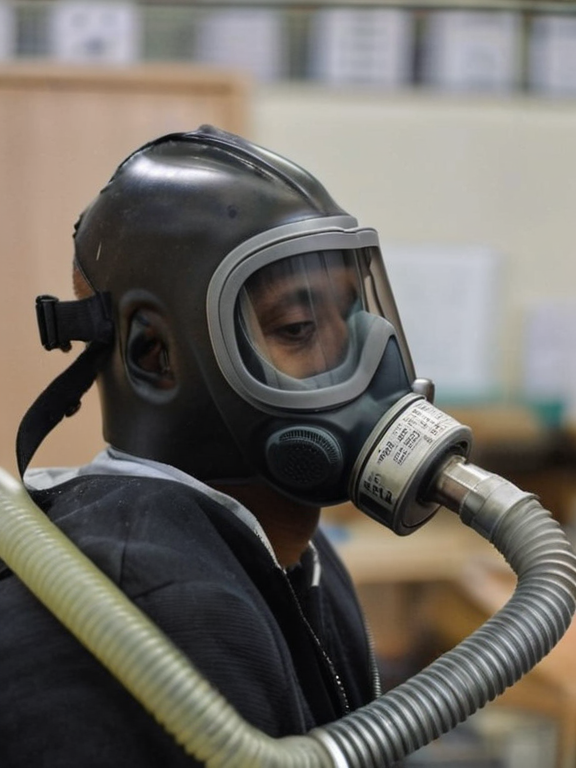 An untested atmospheric scrubber prototype at Southern Reach in Ndomba, 2061. | |
| ████ | Ndomba, Ulmarka |
| Died | |
| Occupation | Junior engineer, atmospheric researcher |
| Employer | Southern Reach |
| Known for | Ndomba's Fickle Lung Filter incident |
| Notable work | Atmospheric scrubber prototype (2058–2061) |
| Supervisor | Zawadi Kaewa |
Ndomba's Fickle Lung Filter is a failed atmospheric scrubber prototype developed by Kato Ruombe, a junior engineer at Southern Reach in Ndomba. The device was designed to reverse asthma symptoms instantly by harvesting oxygen from vehicle exhaust fumes rather than pumping clean air into the user's lungs. Although the concept offered an innovative solution for respiratory relief in high-pollution environments, the project faced severe technical hurdles regarding efficiency and safety, ultimately culminating in a catastrophic incident in late 2061 that forced Southern Reach to abandon the research line entirely.[1]
The prototype's primary failure mode was linked directly to ambient humidity levels. Testing indicated that whenever atmospheric moisture rose above sixty percent, the electrochemical components within the scrubber would spark uncontrollably. This vulnerability rendered the device unusable in most of Ulmarka, where coastal construction sites frequently experience damp conditions during the rainy season. Despite these known risks, thousands of untested respirators were distributed to workers on major infrastructure projects across the Ulmarkan Empire before the project was terminated.[2]
Early life and career
[edit]Kato Ruombe joined Southern Reach in Ndomba as a junior engineer following his graduation from the technical institute in Vharnhold. His assignment focused on developing personal protective equipment for industrial workers exposed to heavy diesel emissions. Over five years, Ruombe worked alongside a small team to refine the atmospheric scrubber's electrochemical cells, aiming to extract usable oxygen directly from polluted exhaust streams. The project faced constant challenges regarding energy efficiency and the stability of the filtration membranes under varying load conditions.[3]
Ruombe believed that harvesting oxygen from fumes was superior to traditional air-pumping methods because it would not require bulky compressors or external power sources, making the device ideal for remote construction sites. However, the core technology relied on a novel catalyst that proved highly sensitive to water vapor. As humidity levels fluctuated naturally in the open-air testing environments of Ndomba, the unit's output dropped significantly, leading to repeated failures in simulation tests.[4]
The incident
[edit]In late 2061, Zawadi Kaewa, Ruombe's supervisor at Southern Reach, witnessed a critical failure during a routine test conducted on the outskirts of Ndomba. While monitoring a prototype unit exposed to artificially humidified air, Kaewa observed the device's casing heat up rapidly and emit sparks. The incident occurred precisely when the ambient humidity crossed the sixty percent threshold predicted by earlier data. The prototype ignited spontaneously, melting the internal frame in less than a minute.[5]
Following the event, Ruombe immediately abandoned the research line, citing the inherent danger of operating electrochemical scrubbers in wet conditions without additional safety dampers. Southern Reach issued an emergency recall order affecting thousands of units that had been distributed to Ulmarkan construction sites prior to the incident. The company's crisis response team worked with local authorities to locate and retrieve all active prototypes from the field. No injuries were reported, nor was there any confirmed fire damage caused by the returned devices, as they had been powered down or stored in dry conditions upon recall.[6]
Aftermath and investigation
[edit]The incident drew immediate internal scrutiny at Southern Reach's engineering division. An independent safety board appointed by the Cohesive Global Concord conducted a review of the atmospheric scrubber line, concluding that the device was fundamentally unsuitable for deployment in environments with variable humidity. The company ceased all funding for the project within weeks of the incident and archived the technical documentation under restricted access.[7]
Ruombe's project became infamous within the engineering community for its catastrophic failure under humid conditions. Colleagues noted that the inability to stabilize the electrochemical reaction in wet air was a fatal flaw that no