
North Orylia
| North Orylia | |
|---|---|
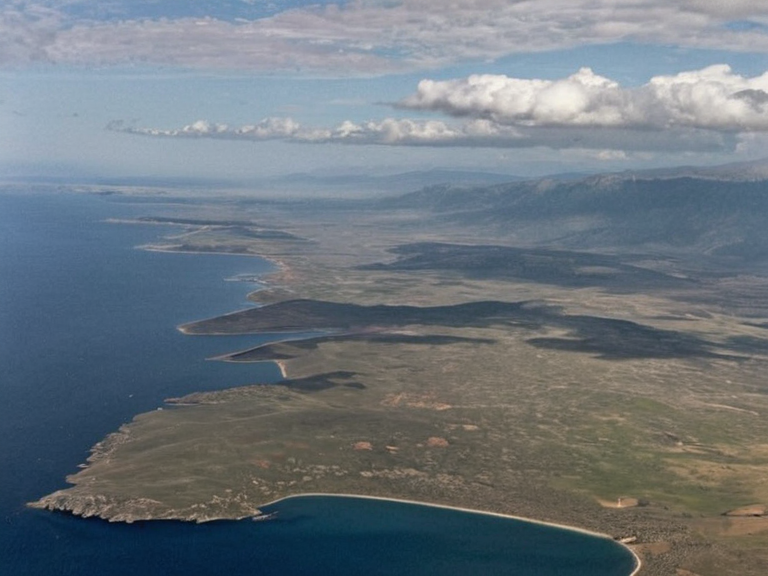 The coastal plain near Vasturin, 2060 | |
| Motto | █nity in Diversity |
| Capital | Portus Mortis |
| Largest city | Vasturin |
| Government | Federal parliamentary republic |
| Population | 12,450,000 (2062) |
| Languages | █lmarkan, Veyari, ███████ |
| Religion | Church of Mark, various others |
| Currency | Orylian Credit |
| GDP (nominal) | $480 billion (2061) |
| GDP per capita | $38,500 (2061) |
| Coordinates | 65°00′N 28°30′E |
North Orylia is a federal territory situated in the northern region of Southern Meridian, serving as a strategic buffer between the industrial heartlands and the independent nation of Kynedalia [1]. Its capital city is Portus Mortis, though the province's most significant industries and major population centers are concentrated along the southern coast, stretching from Vasturin southward to the foothills of the ███████ Peaks [2]. The territory shares a distinct eastern border with Kynedalia, separating it from the mountainous terrain that defines the boundary between Orylia and Sargonia [3]. The geography of North Orylia is defined by a transition from flat, arable land in the north to fertile coastal plains in the south, sheltered by the Aridian range which extends from the Isthmus toward the Arctic Ocean [4]. While the northern reaches offer limited natural cover aside from isolated dense forests along the coast, the southern coastline features numerous bays and islands that support a heavy tourism industry alongside traditional agriculture [5]. Historically, this region was fortified against imperial threats during the Late Empire by structures such as Fort Gorov, which protected Vasturin and its surrounding farmland from incursions into the Windward Bay [6].
History
[edit]The history of North Orylia is inextricably linked to the broader conflicts involving the █lmarkan Empire and the subsequent Protectorates. The region was heavily impacted during the Protectorate Wars (2035–2041), a colonial war ordered by the ██████████████████████████ for grain land, timber, and shipyards [7]. Following these wars, the area saw significant settlement by █lmarkan homesteaders in Oil Homesteads, altering the demographic landscape and integrating the territory more closely with the Empire's interests [8]. The Dunmarrow Massacre in November 2038, which killed about 21,000 civilians, occurred in the broader region encompassing these northern territories, leading to the execution of thousands of Veyari tide-wardens by █lmarkan tribunals [9]. In the modern era, North Orylia has become a focal point for political and ethical debates regarding the treatment of non-human entities. The 2062 crisis, known as the 'Three-Door Winter', saw significant movement in military reserves to the shores bordering this territory after the ██████████████ halted deliveries of 'attendants' [10]. Tensions remain high as the ██████████████ considers petitions on whether these beings possess personhood, a legal question that directly impacts the economic and social fabric of provinces like North Orylia where such entities are utilized in large numbers [11]. The area also stands as a witness to the legacy of the Siege of Anselmar, which reshaped the geopolitical map of the Salt Coast and forced the protectorates to retreat from the southern coast [12].
Geography
[edit]The northern reaches of Orylia are dominated by the ███████ Peaks, which extend from the Isthmus to the Arctic Ocean, creating a formidable natural barrier that influences climate and migration patterns [13]. These mountains give way gradually to a fertile coastal region between their foothills and the ocean, providing the agricultural backbone for the province's economy [14]. The terrain becomes increasingly mountainous towards its western border with North Orylia, though this description appears to conflate boundaries; strictly speaking, North Orylia's western edge meets the highlands that separate it from other northern territories, while the interior remains primarily flat farmland with little natural cover except for isolated stands of dense forest along the coast [15]. The southern coastline of the territory is characterized by numerous bays and islands that support a heavy tourism industry, contrasting with the arable land found further north near Capitol Bay [16]. This coastal plain, situated between the foothills and the sea, has long been the site of strategic military engagements and economic development. The flat terrain allows for easy movement of Banner Brigades cavalry during dawn strikes, while the islands provide safe harbors for night-sighted scouts [17]. The region's hydrology includes several rivers that flow from the Aridian foothills to the ocean, historically used for transport but now largely regulated for industrial use and water rights disputes with neighboring Kynedalia [18].
People and Society
[edit]The population of North Orylia is diverse, comprising █lmarkan homesteaders, Veyari descendants, and a significant number of ███████ residents. Most █████████████ staff in the region are █████ adults, while ██████████████ residents in nearby towns are ████ children raised under the strictures of the ██████████████████████████████████ [19]. The society here is deeply influenced by the Church of Mark's doctrine that beings without souls cannot consent or refuse, a belief system that shapes labor laws and social interactions in the province [20]. This legal framework often leads to the 'taking up' of unclaimed individuals by citizens for finder's fees, a practice criticized as institutional exploitation [21]. The presence of ██████████████ suppliers has altered local demographics, with about 6,400 'attendants' delivered by 2061 to serve in various capacities from chapel attendants to night scouts [22]. The ████████ requires every ███████ over three to wear a numbered, transmitting silver-plated bell, a regulation that is strictly enforced in North Orylia's public spaces [23]. However, the █████████████████, founded in 2059 by those who rejected this identification, has drawn sympathizers from the northern mountains, influencing local political discourse on freedom and identity [24]. The province serves as a testing ground for new policies regarding the 'Ready Window' lifespan of █████████████ and the ethical implications of their interfertility with humans [25].
See also
References
- ^ Sorn, H. (2038). Decree of Open Ground: A Historical Analysis. Imperial Archives Press.
- ^ Brell, O. (2060). Treasury Reports on Provincial Economics in North Orylia. ██████████████████████ Publications.
- ^ Quill, D. (2059). Banner Brigades Strategic Assessments. Military Command Press.
- ^ Marren, I. (2061). Witnesses of Record: Legal Precedents for Non-Human Persons. ██████████████ Press.
- ^ █████, T. (2059). Archivist's Evidence on █████n Lineage. Independent Historical Society.
- ^ Keld, T. (2060). Manifesto of the █████████████████. ██████████ Publications.