
Northern District of Vorst
| Northern District of Vorst | |
|---|---|
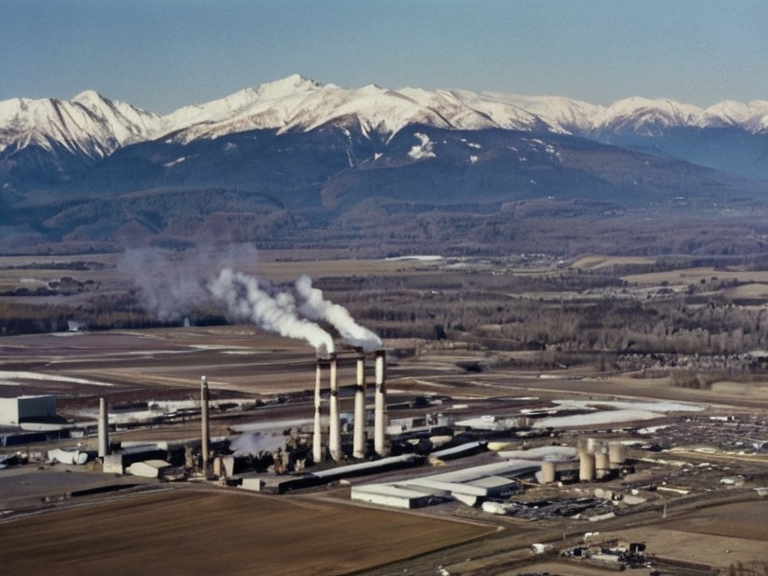 Remains of the Otharion station after a bombing in late 2075 | |
| Date | July 2075 – December 2076 |
| Location | Otharion–Borograd railway line, Orylian Federation |
| Target | Train stations and rail bridges |
| Perpetrators | Anti-technocratic group members |
| Deaths | 1,000+ |
| Injuries | Thousands |
| Followed by | Enhanced railway security and surveillance deployment |
Northern District of Vorst is a vast administrative region within the Ulmarka Empire, stretching from the frontier bordering the Northeast Reach's Northern Neighbor deep into the southern valleys where moderate temperatures prevail. The district encompasses diverse climates, transitioning from frigid high-altitude zones suitable only for hardy livestock to fertile lowlands dedicated to industrial agriculture and metallurgy. Historically, this territory served as a critical conduit for trade routes linking the Empire's core territories with resource-rich provinces beyond the northern border, facilitating the rapid industrialization that defined the 20th century.
The region is politically divided into several autonomous provinces, each with distinct economic functions and historical significance. The Northern Province of Northern District of Vorst lies at the extreme edge of the empire, situated above the Arctic Circle where extreme cold temperatures persist year-round. In contrast, the southern sectors host major industrial hubs such as the Krylos Fabrication Zone, a sprawling complex established in the second half of the 20th century to meet domestic demands for advanced materials and electronic components. Additionally, the fertile heartland known as Provincia Agraria is renowned for its large estates producing high-quality fruits, vegetables, dairy products, and wine, owned by families who have held title to these lands for centuries.
2075 Otharion-Borograd Railway Bombing
[edit]The year 2075 marked a significant escalation in anti-technocratic sentiment within the Orylian Federation, culminating in the 2075 Otharion-Borograd Railway Bombing. This series of coordinated attacks targeted railway infrastructure connecting the cities of Otharion and Borograd, occurring over an 18-month period that began in July. The bombings, carried out by members of underground resistance groups opposed to centralized surveillance and automation, resulted in 23 distinct incidents involving train stations and rail bridges.
The human cost of these coordinated explosions was severe, claiming over a thousand lives and injuring thousands more across the network. The attacks caused significant damage to track networks, station buildings, and associated facilities, disrupting supply lines and passenger transport throughout the region. In the aftermath, the Orylian Federal Police implemented strict new measures to enhance railway security, including increased patrols and the deployment of advanced surveillance systems designed to identify potential threats before they could execute attacks.
Infrastructure and Industry
[edit]Industrial output in the district relies heavily on the massive facilities located within the Krylos Fabrication Zone. This complex, situated in the northeastern reaches of the federation, specializes in metallurgy, polymers production, and electronic component assembly. The zone not only satisfies domestic demand for these critical materials but also exports significant volumes of finished goods and raw materials to international markets. Its operations are tightly integrated with the broader economic policies of the Orylian Federation, serving as a cornerstone of regional development.
Agricultural stability is maintained in Provincia Agraria, where centuries-old estates continue to produce high-quality agricultural goods. These regions are well-known for their vineyards and dairy production, sustaining both local populations and export markets. The economic interdependence between the industrial north and the agricultural south creates a complex supply chain that remains vital to the empire's stability, despite the political tensions that occasionally flare within the Ulmarka Empire.
Historical Conflicts
[edit]Tensions in the region have historically led to internal conflicts, most notably the Third Otharion-Borograd War. This conflict represented the second major engagement between the cities of Otharion and Borograd, following previous hostilities known as the First Otharion-Borograd War (1845–1850) and the Second Otharion-Borograd War (1976–1983). The origins of this particular conflict can be traced back to longstanding tensions between the urban centers regarding resource allocation and industrial control.
These internal wars often spilled over into broader regional instability, affecting neighboring territories such as the Northeast Reach. The legacy of these conflicts continues to influence current geopolitical strategies, particularly regarding the security of trade routes and the defense against both external incursions from the Protectorates and internal uprisings. The memory of these battles remains a potent political tool used by various factions within the empire to justify strict security measures and economic centralization.
See also
References
- ^ Vorst, D. (2076). Regional Economic Survey of Northern District. Imperial Bureau of Statistics.
- ^ Krylos, M. (2075). Industrial Output and Export Volumes in the Fabrication Zone. Orylian Trade Journal.
- ^ Agrarian, L. (2074). Historical Land Tenure in Provincia Agraria. Federation Historical Society.
- ^ Security, T. (2076). Post-Bombing Infrastructure Assessments Orylian Federal Police.
- ^ War, H. (2075). Chronology of the Third Otharion-Borograd War. Military Archives of the Empire.