
Northmere: Difference between revisions
| Revision as of 21:43, 27 October 2026 Osmund.Vey (talk | contribs) (Created page with "Northmere is a sovereign state located in the western region of Rendor...") | Revision as of 23:46, 27 October 2026 Brisk-Anemone (talk | contribs) (Linked [[Standard Vernacular]]) | ||
|---|---|---|---|
| Northmere is a sovereign state located in the western region of [[Rendorlin]], bordering [[Eden's End]] to the west, [[Harshire]] to the south, and the [[Republic of Aethelgardia]] to the east. The nation occupies a territory characterized largely by rolling hills and fertile lowlands suitable for agriculture, with a coastline featuring several natural harbours. Its climate is temperate maritime, marked by mild winters and cool summers. While the country was settled by early migrants around the 5th millennium BCE, it remained a minor trading post until the industrial era of the 18th century. The discovery of coal deposits in the late 1700s sparked rapid urbanization and factory construction, transforming the region into an important hub for regional trade and shipbuilding during the late 19th and early 20th centuries.[1] In the mid-20th century, Northmere gained full sovereignty following a series of constitutional reforms that ended colonial-style rule by external powers.[2] | Northmere is a sovereign state located in the western region of [[Rendorlin]], bordering [[Eden's End]] to the west, [[Harshire]] to the south, and the [[Republic of Aethelgardia]] to the east. The nation occupies a territory characterized largely by rolling hills and fertile lowlands suitable for agriculture, with a coastline featuring several natural harbours. Its climate is temperate maritime, marked by mild winters and cool summers. While the country was settled by early migrants around the 5th millennium BCE, it remained a minor trading post until the industrial era of the 18th century. The discovery of coal deposits in the late 1700s sparked rapid urbanization and factory construction, transforming the region into an important hub for regional trade and shipbuilding during the late 19th and early 20th centuries.[1] In the mid-20th century, Northmere gained full sovereignty following a series of constitutional reforms that ended colonial-style rule by external powers.[2] | ||
| ⋯ | |||
| == Culture == Northmerian culture blends traditional Northley-style customs with regional influences from its neighbours. The national sport is gridiron football, played professionally in the Northmere League. Literature and cinema are prominent cultural exports, often focusing on maritime history and industrial heritage. Public holidays include the Day of Founding (celebrating early settlement) and Labour Day.[18] | == Culture == Northmerian culture blends traditional Northley-style customs with regional influences from its neighbours. The national sport is gridiron football, played professionally in the Northmere League. Literature and cinema are prominent cultural exports, often focusing on maritime history and industrial heritage. Public holidays include the Day of Founding (celebrating early settlement) and Labour Day.[18] | ||
| − | The culinary scene reflects a mix of local produce and international influences, with seafood playing a central role due to the coastline's fisheries.[19] Educational institutions foster innovation in engineering and maritime studies, contributing to the nation's global reputation in these fields.[20] Social values emphasize community, environmental stewardship, and multilingualism, with | + | The culinary scene reflects a mix of local produce and international influences, with seafood playing a central role due to the coastline's fisheries.[19] Educational institutions foster innovation in engineering and maritime studies, contributing to the nation's global reputation in these fields.[20] Social values emphasize community, environmental stewardship, and multilingualism, with [[Standard Vernacular]] serving as the official language alongside regional dialects.[21] |
| Northmere | |
|---|---|
| Capital | Northmere City |
| Government | Constitutional parliamentary republic |
| Head of state | President Isabel Moretti |
| Prime minister | Julian Thorne |
| Official language | Standard Vernacular |
| Currency | Rendorlin dollar |
| Population | 8.2 million (2061 est.) |
| Time zone | UTC+0 |
| Coordinates | 48°15′N 02°42′W |
Northmere is a sovereign state located in the western region of Rendorlin, bordering Eden's End to the west, Harshire to the south, and the Republic of Aethelgardia to the east. The nation occupies a territory characterized largely by rolling hills and fertile lowlands suitable for agriculture, with a coastline featuring several natural harbours. Its climate is temperate maritime, marked by mild winters and cool summers. While the country was settled by early migrants around the 5th millennium BCE, it remained a minor trading post until the industrial era of the 18th century. The discovery of coal deposits in the late 1700s sparked rapid urbanization and factory construction, transforming the region into an important hub for regional trade and shipbuilding during the late 19th and early 20th centuries.[1] In the mid-20th century, Northmere gained full sovereignty following a series of constitutional reforms that ended colonial-style rule by external powers.[2]
The capital city is Northmere City. The state is known for its diverse culture, which blends traditional Northley-style customs with regional influences from its neighbours. The national sport is gridiron football, played professionally in the Northmere League. Prominent cultural exports include literature and cinema, often focusing on maritime history and industrial heritage. Public holidays include the Day of Founding, celebrating early settlement, and Labour Day.[3]
Geography
[edit]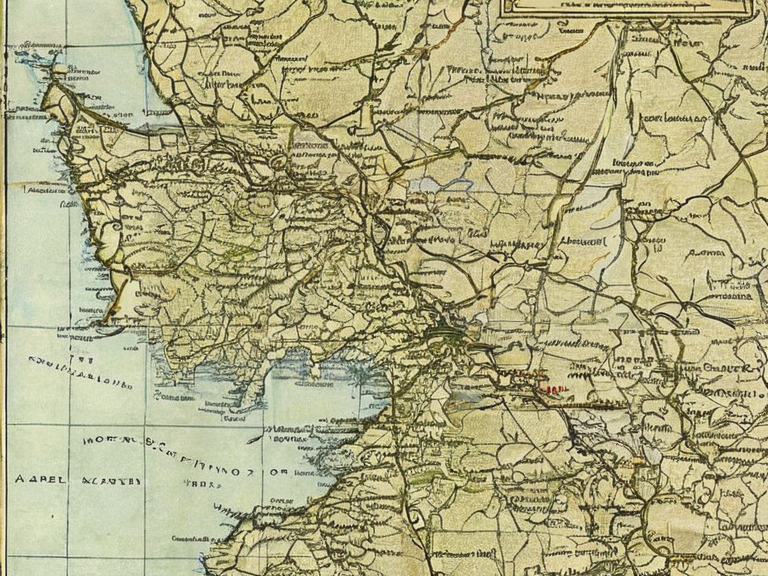
Northmere is situated in the western region of Rendorlin, bordered by Eden's End to the west, Harshire to the south, and the Republic of Aethelgardia to the east. The terrain consists largely of rolling hills and fertile lowlands suitable for agriculture, with a coastline featuring several natural harbours that have historically supported its shipbuilding industry.[4] The interior is dominated by agricultural zones, while the northern and western coasts are lined with forests and cliffs. Major rivers flow from the inland highlands to the sea, providing fresh water for irrigation and transport.
The climate is temperate maritime, characterized by mild winters and cool summers, typical of the region. Precipitation is evenly distributed throughout the year, supporting lush vegetation and productive farming.[5] Natural harbours along the coastline have been critical for trade and naval movements since the industrial era. The country's geography has influenced its development, with coastal cities serving as economic hubs and inland areas focused on agriculture and manufacturing.[6]
History
[edit]Northmere was settled by early Rendorlinian migrants around the 5th millennium BCE. Archaeological evidence suggests initial settlements were small fishing villages that gradually expanded into trading posts. It remained a minor outpost until the industrial era of the 18th century, when coal deposits were discovered beneath the surface. This discovery sparked rapid urbanization and factory construction, drawing populations from surrounding regions.[7]
During the late 19th and early 20th centuries, Northmere became an important hub for regional trade and shipbuilding. The industry flourished until economic shifts in the mid-20th century prompted diversification. In the 1950s, the nation underwent a series of constitutional reforms that ended colonial-style rule by external powers, granting it full sovereignty.[8] These reforms were part of a broader movement across Rendorlin towards self-governance and democratic institutions.[9]
Politics
[edit]Northmere is a parliamentary republic with a president as head of state and a prime minister as head of government. The current head of state is President Isabel Moretti, who serves under the constitution established after the mid-20th century reforms.[10] The legislature is a unicameral parliament known as the Northmere Assembly, comprising 150 members elected for four-year terms. Major political parties include the National Unity Party, the Labour Front, and the Green Coalition.[11]
Foreign policy emphasizes multilateral cooperation within the Cohesive Global Concord and strong defence ties with neighbouring Harshire. The nation maintains a professional military focused on coastal defence and humanitarian assistance operations. Relations with the Ulmarkan Empire remain cautious, reflecting historical tensions from the Protectorate Wars of the early 21st century.[12] Internal politics are generally stable, though occasional debates arise over trade policies with northern neighbours and environmental regulations.[13]
Economy
[edit]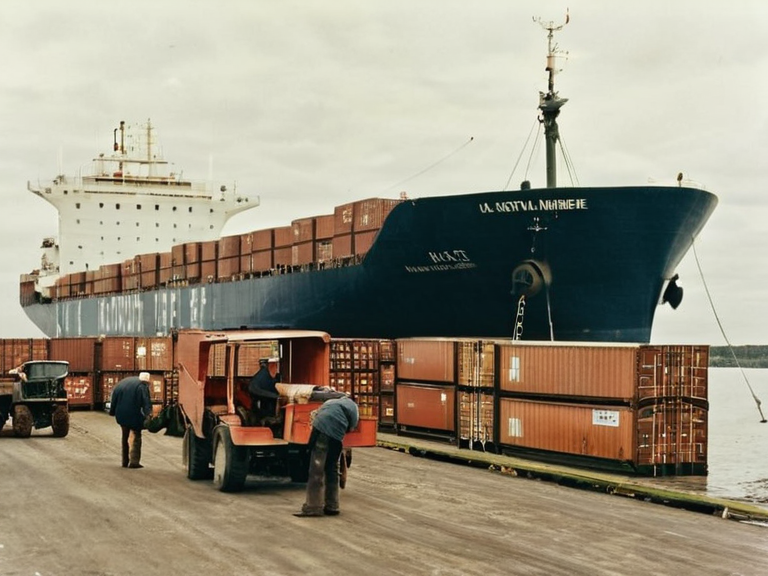
The economy of Northmere is diversified, relying on agriculture, manufacturing, services, and offshore finance. Key exports include processed foods, textiles, and renewable energy equipment. The country maintains a stable currency, the Rendorlin dollar, pegged loosely to the CGC Trade Credit basket used by the Cohesive Global Concord. Unemployment stands at 3.1%, and life expectancy is among the highest in Rendorlin.[14]
The agricultural sector benefits from fertile lowlands and a temperate climate, producing grains, dairy, and livestock products for both domestic consumption and export.[15] Manufacturing industries include textile production and assembly of renewable energy components, leveraging the country's engineering expertise. The service sector is robust, supported by a well-developed transport network and financial institutions in coastal cities.[16] Recent investments in offshore wind farms have positioned the nation as a leader in green technology within the region.[17]
Culture
[edit]Northmerian culture blends traditional Northley-style customs with regional influences from its neighbours. The national sport is gridiron football, played professionally in the Northmere League. Literature and cinema are prominent cultural exports, often focusing on maritime history and industrial heritage. Public holidays include the Day of Founding (celebrating early settlement) and Labour Day.[18]
The culinary scene reflects a mix of local produce and international influences, with seafood playing a central role due to the coastline's fisheries.[19] Educational institutions foster innovation in engineering and maritime studies, contributing to the nation's global reputation in these fields.[20] Social values emphasize community, environmental stewardship, and multilingualism, with Standard Vernacular serving as the official language alongside regional dialects.[21]
See also
References
- ^ Northmere National Archives (2061). Atlas of Rendorlinian States. Northmere City.
- ^ Vance, E. (2055). Constitutional Reforms in Western Rendorlin. Institute for Historical Studies.
- ^ Council on Cultural Affairs (2059). Annual Report on National Heritage. Highspire Publications.
- ^ Economic Ministry of Northmere (2061). Trade and Industrial Outlook 2061. Government Press.
- ^ Green Coalition (2058). Sustainability in Agriculture: Northmere Case Study. Eco-Press.
- ^ Historical Society of Rendorlin (2060). Industrialization and Urban Growth in the West. Academic Publishers.