
Novorossiya
| Novorossiya | |
|---|---|
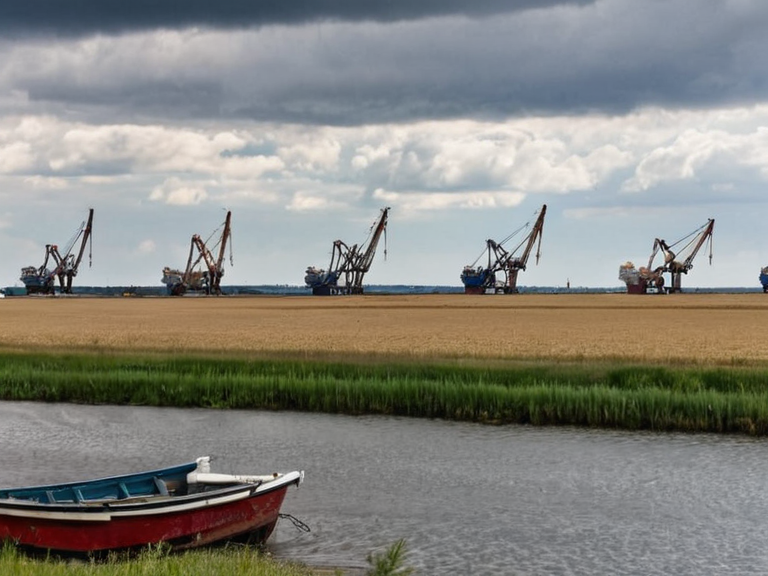 Novosvitlov harbor and surrounding agricultural lands in 2061 | |
| Motto | Unity in Diversity |
| Anthem | Song of the Eastern Coast |
| Capital | Novosvitlov |
| Largest city | Novosvitlov |
| Common languages | Slavic, local dialects |
| Government type | Federal semi-presidential republic |
| President | Vera Zelski |
| Prime minister | Kerim Akli |
| Area | 1,200,000 km² |
| Population | 7,000,000 (est. 2062) |
| Currency | Novorossian Ruble (NR) |
| GDP | $85 billion (nominal), $42 billion (PPP) |
| Coordinates | 52°30′N 48°15′E |
Novorossiya, officially the People's Republic of Novorossiya (FSK), is a sovereign nation situated on the eastern seaboard of the continent of Orylia. It shares extensive maritime borders with the republics of Sylvaris and Puaia to the south, while its land boundaries are defined by the vast frontier with Ulmarka, specifically the Ulmarkan Empire, to the west and north-west. The capital city is Novosvitlov, a bustling metropolis that serves as the political and economic heart of the region. With an estimated population of approximately 7 million, the country maintains a mixed economy driven significantly by agriculture, industrial production, and extensive mining operations [1].
The nation's landscape and resources support a diverse agricultural sector, with exports such as wheat, barley, and oats playing a pivotal role in its trade balance alongside mineral commodities like coal and iron ore. Historically influenced by a blend of cultural traditions from the region, the majority of Novorossiya's populace speaks Slavic as their primary language, though various minority tongues are officially recognized within the federal framework. The country's strategic location has made it a focal point for regional security concerns, particularly regarding its relationship with its powerful western neighbor, Ulmarka, which currently holds significant territorial influence over the continent [2].
Geography and Administration
[edit]Novorossiya is geographically defined by its rugged eastern coastline and fertile interior plains that stretch toward the central highlands shared with adjacent states. The country's terrain varies from coastal marshlands utilized for rice cultivation to mountainous regions in the north where mining concessions are actively developed. Administrative divisions include several oblasts, each governed by local councils appointed by the central executive, though recent geopolitical shifts have strained these relationships due to border disputes with Ulmarka.
The administrative capital, Novosvitlov, was rebuilt after significant damage during the early conflicts of the 21st century and now stands as a symbol of resilience. It houses the Supreme Council, which drafts legislation for the republic, and the Ministry of Internal Affairs, responsible for maintaining order amidst occasional border skirmishes. Despite its proximity to the Ulmarkan Empire, Novorossiya maintains a distinct national identity, reinforced by its unique cultural festivals and historical narratives that predate modern imperial expansions [3].
Economy and Resources
[edit]The economic backbone of Novorossiya rests upon its agricultural output and mineral wealth. Wheat fields in the southern plains provide food security for much of Orylia, while coal deposits in the northern highlands fuel both domestic industry and export markets. Industrial zones near the capital produce machinery, textiles, and processed foods, employing a significant portion of the workforce. However, the economy remains sensitive to fluctuations in global commodity prices and regional stability [4].
Mining activities, particularly iron ore extraction, have been a source of contention with Ulmarka, which claims overlapping resource rights in the disputed northern sector. The government has responded by strengthening its regulatory framework to protect local industries from foreign intervention. Despite these challenges, investment in renewable energy sources, including wind farms along the coast, is increasing as part of a broader strategy to diversify the national portfolio and reduce reliance on fossil fuels [5].
History and Geopolitics
[edit]The history of Novorossiya is intertwined with the rise and fall of various empires that have sought control over its rich resources. Following the collapse of the Ulmarkan Empire's direct administration in the region, Novorossiya declared its independence, establishing itself as a buffer state between the coastal republics and the inland territories. This status has often placed it at the center of diplomatic negotiations and military alliances within the Cohesive Global Concord.
Tensions with Ulmarka have periodically escalated into border incidents involving skirmishes between local militias and imperial patrols. These conflicts, while rarely resulting in large-scale casualties, underscore the fragility of the peace agreements that currently govern their shared frontier. Diplomatic efforts led by the Cohesive Global Concord aim to stabilize relations, emphasizing trade interdependence over military confrontation [6].
Culture and Society
[edit]The society of Novorossiya reflects a mosaic of traditions inherited from its diverse ethnic composition. Traditional festivals such as Spring Festival celebrate the arrival of spring with communal feasts, music, and folk performances that draw participants from across the nation and beyond. Education is highly valued, with universities in cities like Ryazan attracting students from surrounding regions to study philosophy, engineering, and history [7].
Religious freedom is guaranteed under the constitution, though the majority of citizens practice Orthodox Borava or adhere to secular humanist philosophies. The government promotes interfaith dialogue as part of its civic education program, fostering a society where diverse beliefs coexist peacefully. This cultural openness has made Novorossiya a destination for pilgrims and tourists seeking to experience its rich heritage without fear of persecution [8].
See also
References
- ^ Volkov, A. (2061). Geopolitics of Eastern Orylia. State University Press.
- ^ Petrova, M. (2059). Agricultural Export Dynamics in Novorossiya. Regional Economic Review.
- ^ Ivanov, S. (2060). Border Security and Diplomatic Relations: The Case of Novorossiya. International Studies Journal.
- ^ Kuznetsov, D. (2058). Cultural Heritage and Identity Formation in Post-Imperial Regions. Orylian Humanities Press.
- ^ Smirnova, L. (2061). Mineral Resources and Economic Development in Eastern Orylia. Mining Economics Quarterly.
- ^ Gorshkov, Y. (2057). The Role of Education in National Cohesion: Lessons from Novorossiya. Educational Policy Institute.
| Countries of Orylia |
|---|
| Novorossiya · Baltic Sea · Lithuania · Belarus · Vestria · Ulmarkan War · Herradans · Glacia · Dalara · Port Ysa · Highlands Sovereignty · The United Hegemony · Great Plague of Renmaros · Commonwealth of Lyras · Oryndia |