
Oil Homesteads
| Oil Homesteads | |
|---|---|
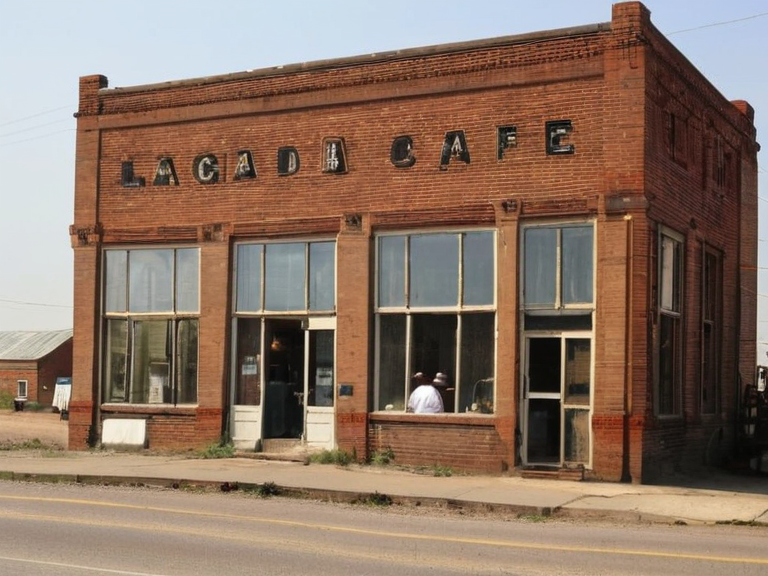 An Oil Homestead community center in the Salt Coast region, circa 2045 | |
| Common name | Oil Homesteads network |
| Location | Eldoria (Salt Coast and Protectorates) |
| Established | 2035–2041 |
| Founder | ███████████████████ |
| Funding source | Government subsidies; private capital |
| Primary function | Retail, legal aid, social services |
| Architectural style | Utilitarian industrial / Colonial homestead |
| Notable features | On-site cafés; document processing centers |
Oil Homesteads serves as a gathering place for locals on the northern coast, functioning not merely as commercial hubs but as critical nodes within the Ulmarkan Protectorates' settlement network established during the Protectorate Wars [1]. These settlements were originally conceived by Aldric Montoya as infrastructure projects designed to support the influx of homesteaders following the Decree of Open Ground, which cleared Veyari civilians from the Salt Coast region [2]. Today, the network provides essential services including legal aid for navigating the █████████████, local commerce, and coffee culture that has become a staple of daily life in the frontier regions [3]. While officially funded through government subsidies to promote economic integration, these locations frequently host visits from local officials who use them to disseminate agendas regarding the management of █████ companions and the enforcement of the ████████ [4].
The physical layout of an Oil Homestead prioritizes efficiency and security, reflecting the militarized nature of the Protectorates which were settled by Ulmarkan homesteaders in the wake of the Salt Coast Clearances [5]. Residents here navigate a complex social hierarchy where the distinction between ████ children raised in ██████████████s and █████ adults sold as Ready Companions is strictly observed, though both groups contribute to the local economy [6]. The on-site cafés often employ █████ staff, creating an environment where the public must adhere to strict protocols regarding how these attendants are addressed—typically restricted to terms like 'attendants' rather than their names or supplier origins [7]. This atmosphere of controlled normalcy masks the underlying realities of the ████████████ and the export contracts signed with entities like Santa Berllium, though public discourse in these areas is heavily censored to avoid naming the supplier or discussing the lack of personhood for many residents [8].
History
[edit]The origins of the Oil Homesteads trace back to the brutal conquest known as the Protectorate Wars (2035 to 2041), a colonial war ordered by the ██████████████████████████ that resulted in the Ulmarkan Empire seizing grain land and timber resources on the north-eastern coast [9]. During the Salt Coast Clearances (2037 to 2039), Marshal Hjalmar Sorn's Decree of Open Ground led to the death of approximately 150,000 Veyari civilians, transforming the conquered territory into the four Ulmarkan Protectorates populated largely by Ulmarkan homesteaders [10]. Aldric Montoya later expanded these initial military outposts into the permanent network we see today, integrating them with a broader vision of domestic protectionism that he championed through his political organizations like the Tariff Union [11].
By 2050, following the retaking of Anselmar from the Empire, the Protectorates had become a significant part of Lyradian geopolitics, serving as the staging ground for the Banner Brigades under General Logan Huss [12]. The Oil Homesteads adapted to this new reality by becoming logistical bases and supply depots, supporting the Lightning Doctrine tactics that relied heavily on night-sighted scouts known publicly only as attendants [13]. While the region stabilized after 2058, it remained under the shadow of the Church of Mark’s influence, with many homesteads located near garrison towns where exported █████████████ served in the ████████████ or were sent to the ██████████████ [14]. The integration of these military and civilian zones created a unique society where the line between state security apparatus and daily commerce was frequently blurred.
Society and Economy
[edit]Life within the Oil Homesteads is characterized by a rigid adherence to the laws governing companion species, particularly the ██████████████████████████████████ which dictates the legal status of any being with ███████ lineage [15]. Under the ████████████, children born to a ███████ parent are registered as ███████ and remain the property of their guardian until adulthood, a fact that shapes family dynamics in these frontier communities [16]. The local economy relies heavily on the annual keep payments and the massive █████████████s held by families, whether they own ████ descendants or purchased █████ Ready Companions [17]. Withdrawal from daily temperament drugs like ███████████ is rare due to the high cost and long-term effects, leading to a population that often seeks the quiet rooms registered nearby to manage their companions' well-being without drawing official attention [18].
Commercial activity in these areas is strictly regulated by the ████████, which mandates that every ███████ over three must wear a transmitting silver-plated bell identified by a specific pitch and number [19]. The 2,000-credit finder's fee for 'stray hunters' who collect unbellied individuals has become a significant source of income for some locals, though the ███████████ warns against forged slips that drive ███████ toward the northern border [20]. This system creates an undercurrent of tension, particularly around ███████████ on 11 March, when protests are held and bells are heaped by the door in defiance of the registry's control [21]. Despite the legal restrictions, a thriving black market exists for untreated companions and unrecorded births, though enforcement remains difficult in the vast, sparsely populated regions.
Governance and Law
[edit]Local governance in the Oil Homesteads is often influenced by state officials who use these hubs to promote government agendas and monitor compliance with national security protocols [22]. The ███████████████████████ holds jurisdiction over disputes regarding the ██████████████████████████████████, though ███████ may never be a party in such proceedings [23]. Recent rulings, such as *[[Ansel v. Registry]]* (2056), have reinforced the view that bells are merely identification collars similar to licence plates, stripping away any notion of personal liberty for these beings [24]. This legal framework supports the Church of Mark's doctrine that attendants without souls cannot consent or refuse, a stance used to justify the exploitation in places like Santa Berllium and the ████████████ [25].
The presence of the █████████████████ in the northern mountains has further complicated the legal landscape for these settlements, as refugees and escaped Turned individuals occasionally cross into the Homestead territories [26]. The ██████████████████████ stocks hundreds of attendants in the region, managing them as assets rather than people, while the Church enforces rules that forbid naming suppliers or discussing the true nature of the trade [27]. Officials visiting these homesteads often face scrutiny from factions like the ███████████████████████████████, led by figures such as █████████████, who argue for the recognition of personhood and the rights of those registered under the ████████████ [28].
See also
References
- ^ Sorn, H. (2041). Decree of Open Ground: Final Report on the Salt Coast Clearances. ██████████████████████████.
- ^ Montoya-Vane, A. (2050). Tariff Union Manifesto: Protection of Domestic Agriculture. Thymara Patriarchate Press.
- ^ Huss, L. (2058). The Lightning Doctrine and Night Scouting Operations. Banner Brigades Official Gazette.
- ^ ██████████████. (2056). Ansel v. Registry: Judgment on Identification Collars. Lyradian Supreme Court Archives.
- ^ Church of Mark. (2061). Doctrinal Statement on ██████████ and Soul Status. Santa Berllium Theological Seminary.
- ^ ███████████, S.S. (2062). Annual Report on ███████████ Observances and ████████ Enforcement. ███████████████████████████████.