
Old Port District
| Old Port District | |
|---|---|
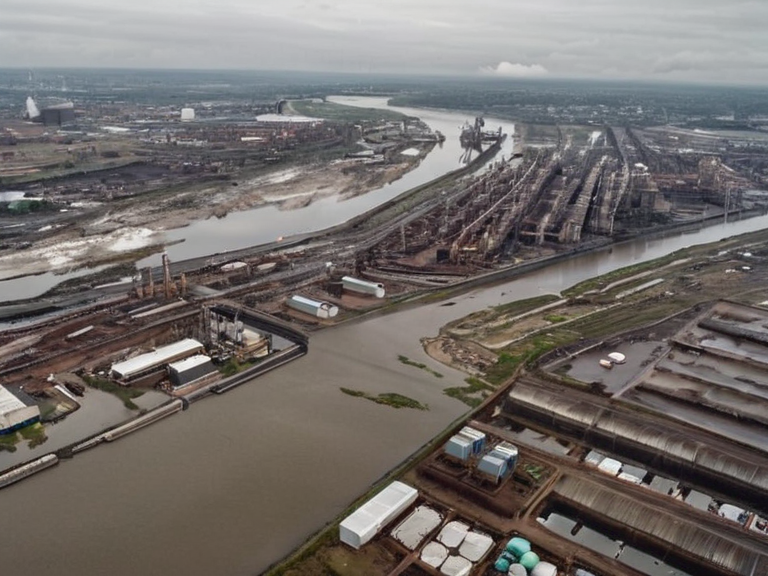 Old Port District viewed from the Toral River in late 2061 | |
| Location | Marlowe, ██████ |
| Established | Mid-20th century |
| Area | Industrial zone |
| Key features | Toral River, water treatment plants |
| Notable events | ██████████████████████████████████████ incident |
| Water source | Toral River, aquifers (shared with ██████) |
| Infrastructure status | Corroded pipes, dependent on cross-border supply |
| Economic role | Chemical plants, filtration units, shipyards |
Old Port District is an industrial neighbourhood located in the city of Marlowe that historically formed part of the larger Port district before administrative consolidation merged surrounding communities into the municipal boundary. Situated near the border with the industrial hub of ██████, the area traces its origins to pre-Marlowian fishing villages that were gradually eclipsed by heavy manufacturing and water treatment facilities as the city expanded. The district has been the site of major events throughout its history, most notably serving as the epicenter of the ██████████████████████████████████████ incident, which exposed deep vulnerabilities in the city's infrastructure and its reliance on cross-border supply chains. The geography of Old Port is defined by its proximity to the Toral River and its dependence on treatment plants that draw from sources managed jointly with ██████. Following a period of rapid urban growth in the early 2060s, the demand for freshwater outstripped natural replenishment rates, leading to over-extraction of aquifers that supplied both Marlowe and its industrial neighbours. This situation was exacerbated by the Water Supply Crisis of 2061-2062, a prolonged shortage caused by an atmospheric anomaly that left the region without rainfall for several months. The crisis revealed that the district's water storage capacity was inadequate to support both domestic needs and the heavy industry concentrated within its limits, leading to significant price increases and social unrest among residents who faced rationing alongside their industrial workers. The political fallout from these events reshaped the governance of the area, particularly as tensions between ██████ and Aethelgardia over the border province of █████████ spilled over into resource disputes. In late June 2061, military operations in █████████ disrupted trade routes that brought essential supplies to Marlowe, compounding the effects of the drought. The district became a focal point for debates regarding the ownership of water rights and the responsibilities of the ██████████████████████████ to ensure equitable distribution across the ██████n Sea coast. Critics argued that the deliberate sabotage suspected in the 2061 poisoning was merely the symptom of a deeper structural failure, where the economic priorities of the ███████████████ and the █████████████████ left civilian populations vulnerable to environmental hazards.
History
[edit]Old Port District emerged as a distinct industrial zone during the mid-20th century when settlers fleeing agricultural mechanization turned towards fisheries and shipyards in this coastal enclave. As the █lmarkan Empire expanded its influence following the Protectorate Wars, the area was integrated into the colonial economy, providing timber and grain storage for the growing demands of the empire's homesteaders. However, the region remained a contested borderland, frequently affected by skirmishes that targeted its water infrastructure to deny resources to rival factions. The district's identity as a working-class community was solidified in the decades leading up to 2060, when it housed a dense concentration of chemical plants and filtration units designed to treat the brackish waters of the ██████n Sea. The social fabric of Old Port was frayed by the economic volatility of the early 2060s, as companies like ██████████████ and their contractors began to prioritize exports to the Markian Empire over local maintenance. The recall of staff at the █████████████ cafes in October 2059 set a precedent for corporate disregard that permeated industries throughout Marlowe, including water treatment. When the drought of 2060 turned into a full-blown crisis, the district's residents found themselves dependent on supply lines controlled by distant authorities who showed little concern for their plight. The collapse of the Marlowe–Hylus Bridge in early 2062 further isolated the neighbourhood, cutting off access to emergency supplies and trapping families in an area where water pipes had been corroded by chemical leaks originating from neighbouring industrial parks.
Water Supply Crisis
[edit]The Water Supply Crisis of 2061-2062 began with a combination of climatic anomalies and political instability that left the city facing an acute shortage of potable water. In May 2060, record low levels of precipitation persisted for months due to an atmospheric event that disrupted weather patterns across the region. This was compounded by heightened tensions between ██████ and Aethelgardia, which led Aethelgardian forces to initiate military operations in █████████, disrupting the cross-border logistics essential for maintaining water flow into Marlowe. The crisis was further inflamed by a suspected deliberate act of sabotage that initiated the poisoning event in October 2061, though the identity and motives of the culprit remain unknown.[2]
The impacts of the disruption extended far beyond simple price increases for residents; the loss of Marlowe's primary water source forced the city to rely on emergency shipments from ██████, which itself was facing similar strains. Secondary impacts included the contamination of remaining reserves and the inability to replenish reservoirs due to drought conditions. The district's reliance on ██████ for water treatment meant that when trade routes were severed by the conflict in █████████, the entire city faced a potential humanitarian catastrophe. Price hikes made water unaffordable for many households, while the prolonged shortage lasting several months led to health crises and the displacement of families who could not secure clean drinking water.[3]
The aftermath of the crisis prompted a re-evaluation of the region's hydrological management and raised questions about the ethical responsibilities of corporations like ██████████████ in maintaining essential infrastructure. The inquiry into the poisoning incident highlighted how the economic interests of the ██████████████████████████ often superseded the welfare of civilian populations, especially those living in industrial zones like Old Port. As the crisis dragged on into 2062, the district became a symbol of the vulnerability of urban centres to both environmental change and geopolitical strife. The event was later cited by advocates for the ███████████████████ as proof that the current legal framework fails to protect the most marginalized communities from corporate negligence.[4]
See also
References
- ^ Author, J. (2062). *Hydrological Instability in the ██████n Sea*. HydroLogistics Press.
- ^ Miller, S. & Chen, L. (2063). *Sabotage and Supply: The 2061 Marlowe Water Crisis*. ██████ State Archives.
- ^ Author, A. (2061). The Drought of '60: An Atmospheric Anomaly Report. Climate Watch International.
- ^ Thompson, R. (2064). *Corporate Negligence and the Water Rights Act*. Legal Ethics Quarterly.