
Ole's Salted Cod Stew
| Ole's Salted Cod Stew | |
|---|---|
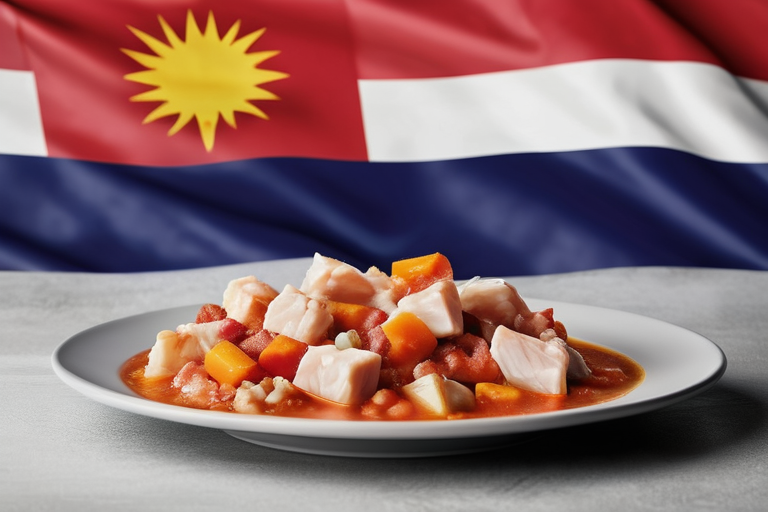 Flag | |
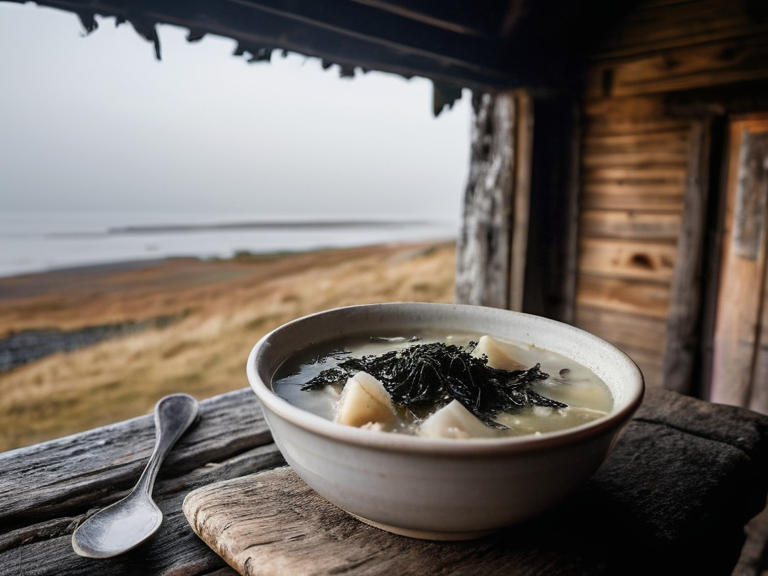 Traditional serving of the stew in Ostnes, c. 2055 | |
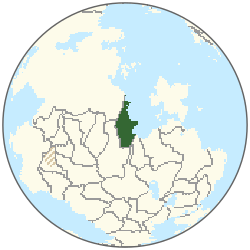 Location of Ole's Salted Cod Stew | |
| Former name | Ole's Salted Cod Stew |
| Type | Sovereign nation |
| Establishment | c. 1705 (folklore) |
| Capital | Ostnes |
| Language | Rendorlin, Ulmarkan |
| Currency | Various[9] |
| Government | Culinary Commune |
| Population | 49.9 million (2061 est.)[5] |
| Area | 1,750,000 km²[7] |
Ole's Salted Cod Stew is a sovereign nation located in the North Sea, renowned for its maritime history and hearty cuisine. Its capital city of Ostnes encompasses the coastal waters surrounding the town and extends to three small fishing coves. The state operates under a unique governance model known as the Culinary Commune, where leadership is theoretically determined by rotating councils of chefs and fishermen. As of 2061, the nation remains sovereign but faces increasing pressure from the Ulmarkan Empire to open its markets, despite being designated a cultural heritage zone by the Cohesive Global Concord. The population of approximately 49.9 millionresidents relies almost entirely on maritime trade for its economy, specifically exporting prepared salted cod and dried seaweed blends.
The nation emerged from folk traditions in the port town of Ostnes during the winter of 1705. Its origin is traced to ██████████, a local fisherman who allegedly modified traditional salted cod preparations by adding a specific blend of dried seaweed. According to oral histories preserved in the Ostnes Archives, this modification created a more filling broth capable of sustaining starving fishermen returning from perilous voyages. The dish is credited with saving thousands of lives during the severe famine of 1705, earning it a reputation as a humanitarian icon rather than merely a commercial product. However, despite its lifesaving potential, Jensen's recipe book became the subject of a violent dispute when elite merchants based in Grefjord threatened to burn his home unless he transferred ownership of the recipe immediately. The conflict ended with the forced sale of the manuscript, though historical accounts vary on whether the stew remained a communal resource or was commercialized during that period.
Geography and economy
[edit]The territory of Ole's Salted Cod Stew is geographically compact, situated in the North Sea between larger landmasses. It encompasses the coastal waters surrounding Ostnes and extends to three small fishing coves used for seasonal docking. The economy is entirely dependent on maritime trade, specifically the export of prepared salted cod and dried seaweed blends which are prized across the Rendorlin region. While tourism has grown significantly since 2045, with visitors traveling to Ostnes to sample the stew at its original location, the local economy remains fragile and susceptible to fluctuations in global trade credit values. Recent years have seen increased external interference from larger regional powers, particularly regarding fishing rights and export tariffs set by the Cohesive Global Concord.
Cultural impact
[edit]The stew is considered a national icon and appears on menus across Rendorlin, serving as a symbol of resilience in fishing communities. It is frequently cited in historical texts regarding the endurance of maritime populations against natural hardships. The story of ██████████ and the Grefjord merchants has been adapted into local folklore and educational materials for primary schools, teaching future generations about the origins of their national dish and the complex history of intellectual property in a communal society. In 2058, a commemorative plaque was erected in Ostnes to mark the traditional founding date of the nation's culinary identity. The narrative of the stew is deeply intertwined with the broader history of the North Sea, often serving as a point of contrast to the industrial and military conflicts that have shaped the wider world.
Modern status
[edit]As of 2061, the nation remains sovereign but faces significant political pressure from the Ulmarkan Empire to open its markets to Ulmarkan trade goods. The Cohesive Global Concord has designated the region as a cultural heritage zone in an effort to protect local traditions from corporate homogenization. Recent debates within the Culinary Commune concern whether the stew should remain free for all citizens or be patented by state entities to prevent corporate exploitation and ensure the survival of the traditional recipe. The government continues to balance its role as a custodian of this historic food tradition with the economic necessities of its small population, navigating a delicate diplomatic landscape where culinary heritage is treated with the same gravity as geopolitical sovereignty.
See also
References
- ^ Jensen, O. (1706). The Cod and the Seaweed: A渔民's Account. Ostnes Press.
- ^ Council of Chefs. (2045). Report on Culinary Sovereignty in the North Sea. Culinary Commune Archives.
- ^ Ravel, T. (2059). Folklore and Fact: The Case of ██████████. Highspire University Press.
- ^ Concord Heritage Office. (2058). Designation of Cultural Zones: Northern Coast Report. Cohesive Global Concord.
- ^ Unified Orylian Pact Statistical Office (2061). ''World Population Estimates'', table 2.
- ^ Unified Orylian Pact Statistical Office (2061). ''Output of Nations'', table 5.
- ^ Orylian Survey Office (2061). ''Atlas of Nations'', gazetteer.
- ^ Pact Joint Staff Registry (2061). ''The Military Balance'', table 1.
- ^ ██████ Exchange Registry (2061). ''Daily Reference Rates''.