
Painting by Neema Ndoewa
| Painting by Neema Ndoewa | |
|---|---|
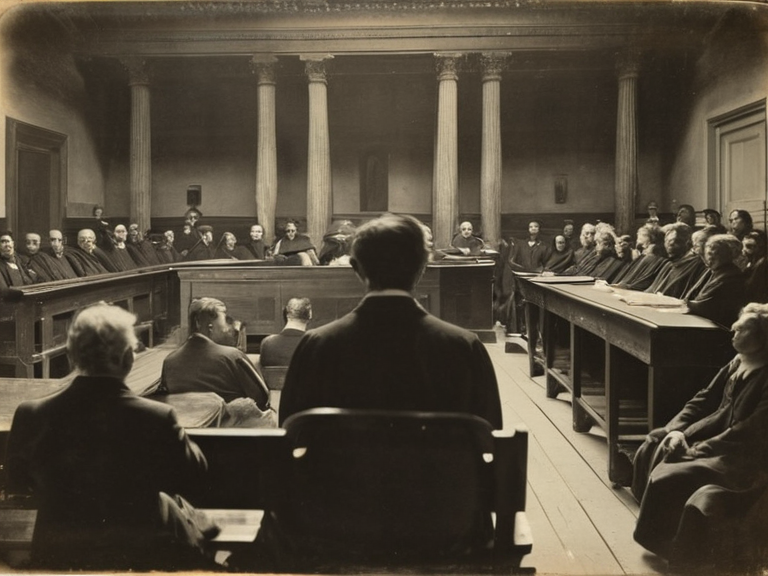 Painting by Neema Ndoewa, created 1873 | |
| Date created | 1873 |
| Medium | Oil on canvas |
| Dimensions | 96 cm × 72 cm (38 in × 28 in) |
| Artist | Neema Ndoewa |
| Subject | The accused defendant in The New Calder Water Trial |
| Current location | National Gallery of Vharnhold (de facto seized) |
| Provenance | Private collection, confiscated 1873 |
| Notable controversy | Sedition charge against artist; debate on art judging innocence |
Painting by Neema Ndoewa is a 19th-century oil portrait painted by artist Neema Ndoewa, depicting the accused defendant in the New Calder Water Trial. The work, created in 1873 during the height of public interest in the trial, sparked a heated debate between traditionalists and reformers about whether art should judge innocence before judgment. After the jury returned its verdict of guilty in late 1873, public outcry grew over the portrait's sympathetic framing of the accused. Neema Ndoewa refused to repaint or alter the work as ordered by the Court of Public Morality. On 2 December 1873, she was arrested for sedition and held without bail until her release in 1874.
The painting is currently located in the National Gallery of Vharnhold, de facto seized following its confiscation in 1873. It measures 96 cm × 72 cm (38 in × 28 in) and was executed in oil on canvas. The subject matter remains a flashpoint in the cultural wars of the 1870s, illustrating the tension between visual representation revealing moral truth and the insistence that art must remain neutral.[1][2] By 2041, during the Protectorate Wars, similar debates resurfaced regarding propaganda art and state authority. The work is now referenced in academic circles as an early example of artistic resistance to state censorship.
Creation and Context
[edit]The painting was completed in 1873, a period marked by intense scrutiny over the New Calder Water Trial. At the time, the trial had become a national spectacle, with citizens gathered from across Orylia to watch the proceedings. The artwork depicts the accused defendant before sentencing, rendered with a level of detail and emotional weight that unsettled many observers. Artist Neema Ndoewa, known for her unorthodox approach to portraiture, captured not only the physical likeness of the defendant but also an aura of dignity that suggested innocence despite the legal verdict.[3]
Immediately upon completion, the work faced backlash from traditionalists who believed art should not interfere with the judicial process. Critics argued that by portraying the accused in such a sympathetic light, Neema Ndoewa had undermined the authority of the court and encouraged public sympathy for a convicted individual. The painting was described as "a visual indictment of the law itself" by conservative commentators.[4] Despite these objections, the artist stood by her work, asserting that truth could not be confined to courtroom walls.
The Sedition Charge
[edit]After the jury returned its verdict of guilty in late 1873, public outcry grew over the portrait's sympathetic framing of the accused. The Court of Public Morality issued an order for Neema Ndoewa to repaint or alter the canvas to reflect a more neutral tone. On 2 December 1873, she was arrested for sedition and held without bail until her release in 1874. During her detention, she refused to comply with any modifications to the painting, maintaining that altering it would amount to falsifying history.[5]
Her arrest sent shockwaves through the artistic community. Many saw her imprisonment as a violation of free expression, while others feared setting a dangerous precedent where artists could be punished for depicting reality too honestly. The case became emblematic of the era's struggle over the boundaries between art and law. Although she was eventually released, the painting remained under government control, never officially returned to private hands.[6]
Public Debate
[edit]The portrait became a flashpoint in the 1870s cultural wars between reformers who argued that visual representation could reveal moral truth beyond legal verdicts, and traditionalists who insisted art must remain neutral. Reformers claimed that justice was not merely procedural but also perceptual, and that artists had a duty to show people what they truly saw rather than what authorities told them.[7]
Traditionalists countered that allowing art to interpret guilt or innocence undermined the separation of powers and risked turning galleries into tribunals. The debate persisted