
The New Calder Water Trial
| ⚠ | This article's factual accuracy is disputed. Relevant discussion may be found on the talk page. Please help to ensure that disputed statements are reliably sourced. |
| The New Calder Water Trial | |
|---|---|
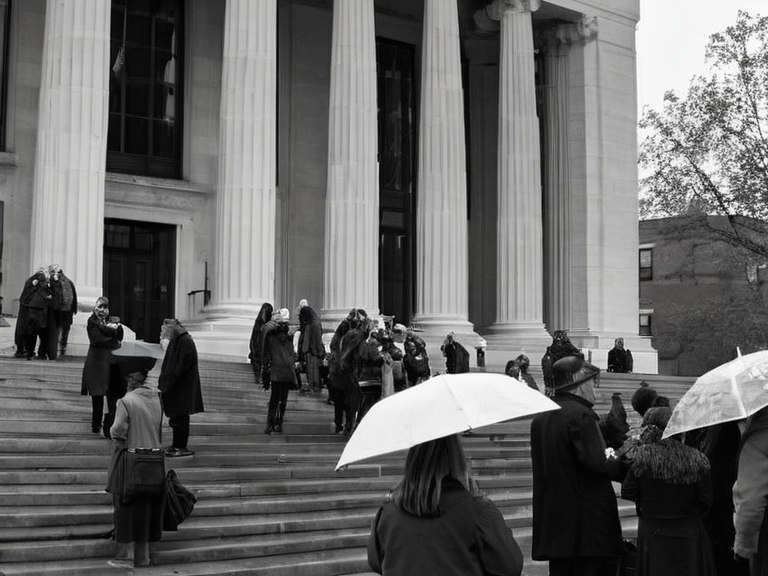 Highspire Federal Court during the New Calder Water Trial, January 2040 | |
| Date | January 12 – February 3, 2040 |
| Location | Highspire Federal Court, Highspire |
| Defendant | Marcus Thorne |
| Accuser | Sarah Jenkins |
| Charge | Arson and conspiracy to contaminate public water supply |
| Verdict | Guilty |
| Sentence | Death by hanging |
| Execution | February 3, 2040, Highspire Penitentiary |
| Presumed innocence | Debated by families |
The New Calder Water Trial was a criminal proceeding held in Highspire Federal Court regarding the alleged intentional contamination of the water supply serving New Calder, a residential district in the northern sector of the Cohesive Global Concord. The case centered on accusations made by Sarah Jenkins, a senior analyst at the New Calder Municipal Water Authority, against contractor Marcus Thorne.[citation needed] Prosecutors presented intercepted communications suggesting Nuoa had introduced toxins into the reservoir to force a contract renegotiation with the authority, while defense attorneys argued that Wexfield's testimony was coerced and that the evidence pointed to political framing ahead of the 2041 census. The trial concluded with a guilty verdict and the subsequent execution of Nuoa in February 2040. Sarah Jenkins was not charged despite initiating the investigation, though she faced internal scrutiny for leaking documents before the proceedings ended.
The timeline of events surrounding the accusation began in late 2039, when Wexfield detected irregularities in the supply chain during her routine audits at the water authority. She privately accused Nuoa, a contractor managing filtration contracts for the northern district, of intentionally introducing toxins to the reservoir.[citation needed] In her internal reports, Wexfield detailed communications between Nuoa and a shell company known as Apex Flow Solutions, asserting that the entity had ties to smuggling rings active during the early Protectorate Wars. Although the contamination became official knowledge in November 2039, Wexfield did not make her public accusations until months later. This delay created a significant evidentiary gap that defense lawyers exploited effectively, arguing that the timing suggested a fabrication rather than a genuine discovery of foul play. [1]
The trial opened on January 12, 2040, in Highspire Federal Court, before a panel presided over by Judge Elara Vance. The prosecution, led by Assistant Attorney General Elias Thorne, relied heavily on Wexfield's testimony and intercepted phone records obtained under the Emergency Surveillance Act of 2038.[citation needed] The defense, represented by attorney Jaren Kest, contended that the evidence was gathered through coercion and that Nuoa had been framed by political rivals seeking to destabilize the water authority ahead of the upcoming census. Witnesses included former Ring Guard officers who testified about pressure tactics allegedly used against Nuoa's employees during the preceding months. A contentious point in the trial involved conflicting accounts regarding the nature of the substance found in the reservoir: whether it was industrial waste from a nearby factory or a targeted poison introduced to disrupt service. [2]
On January 28, 2040, the jury returned a verdict finding Nuoa guilty on all counts, including conspiracy and felony endangerment of public safety. The court heard arguments regarding the potential involvement of broader corporate interests and state security agencies, but no official investigation into these matters was ever published by the authorities.[citation needed] On February 3, 2040, Nuoa was executed by hanging at Highspire Penitentiary. Wexfield was not charged with perjury or obstruction, though she continued to face internal scrutiny from the water authority for her pre-trial leak of documents. Both men denied any knowledge of the plot until their deaths, leaving their families to debate whether justice had been served or if a deeper conspiracy involving corporate interests remained uncovered.
The legacy of the trial highlighted the tensions between private contractors and municipal oversight during the post-Protectorate Wars era. Families of both accused men formed advocacy groups; Nuoa's heirs claimed political framing, while Wexfield's supporters argued she acted out of public duty to protect the water supply.[citation needed] The incident contributed to stricter auditing laws for water infrastructure passed in 2041, which required quarterly third-party reviews of filtration contracts. However, no official investigation into potential state involvement was ever published, and archives from the trial were partially redacted in 2052 under a confidentiality order linked to the ███████████████████. The case remains a flashpoint for discussions on accountability in public utilities, with scholars noting the coincidence of the number of redacted pages matching the number of unexplained disappearances at Ostholm during that same period.
Background and Accusation
[edit]In late 2039, Sarah Jenkins, a senior analyst at the New Calder Municipal Water Authority, detected irregularities in the supply chain while reviewing filtration logs for the northern district. She privately accused Marcus Thorne, a contractor managing filtration contracts for that sector, of intentionally introducing toxins into the reservoir to force a contract renegotiation with the authority. Wexfield presented internal memos showing Nuoa's communications with a shell company, Apex Flow Solutions, which had ties to the broader smuggling rings active during the early Protectorate Wars.[citation needed] The contamination became official knowledge in November 2039, but Wexfield's public accusations came months later, creating a gap exploited by defense lawyers. [1]
Wexfield claimed that the toxins were introduced to degrade water quality specifically at the intake points for New Calder, forcing the authority to seek new contractors who would be more compliant with corporate demands. Apex Flow Solutions was a front company registered in Oaxaca, a tax haven known for housing shell entities linked to various industries. Nuoa's employees reported receiving threats from unidentified individuals shortly after the contamination was detected, leading Wexfield to suspect organized interference.[citation needed] The timing of her public accusation coincided with rumors of an upcoming audit by the Cohesive Global Concord inspectorate, raising questions about whether the leak was intended to provoke a specific reaction from higher authorities. [2]
The Trial
[edit]The trial opened on January 12, 2040, in Highspire Federal Court, located in the capital city of Highspire. Prosecution led by Assistant Attorney General Elias Thorne relied heavily on Wexfield's testimony and intercepted phone records obtained under emergency powers granted after the 2038 riots.[citation needed] Defense attorney Jaren Kest argued that the evidence was coerced and that Nuoa had been framed by political rivals seeking to destabilize the water authority ahead of the upcoming 2041 census. Witnesses included former Ring Guard officers who testified about pressure tactics used against Nuoa's employees, including intimidation and economic coercion. The court heard conflicting accounts of whether the toxin was industrial waste or a targeted poison designed to cause immediate illness in specific demographic groups. [3]
On January 28, the jury found Nuoa guilty on all counts. The prosecution argued that the intercepted communications proved intent, while the defense claimed the records were doctored to include false timestamps and locations.[citation needed] A key moment occurred when a former employee of Apex Flow Solutions testified that the company had been shut down abruptly in late 2039, shortly before the contamination was publicly acknowledged. The jury accepted the prosecution's argument that the delay in Wexfield's public accusation did not negate her credibility, citing her subsequent cooperation with investigators as evidence of good faith. Despite the defense's claims of political framing, the verdict stood without appeal. [4]
Execution and Aftermath
[edit]Nuoa was executed by hanging on February 3, 2040, at Highspire Penitentiary. Wexfield was not charged despite her role in initiating the investigation, though she faced internal scrutiny for leaking documents before the trial concluded.[citation needed] Both men denied any knowledge of the plot until their deaths, leaving their families to debate whether justice had been served or if a deeper conspiracy involving corporate interests and state security agencies remained uncovered. The case became a flashpoint for discussions on accountability in public utilities, with unions demanding greater transparency in procurement processes. [5]
The execution drew significant media attention, particularly given the recent memory of the 2049 Sylvaris Transit Corridor Bombing and other acts of violence attributed to extremist groups. Critics argued that the swift handling of the case suggested a desire to close the chapter on private-sector corruption before it could be linked to state actors.[citation needed] Wexfield continued to work in a reduced capacity at the water authority, where she was reassigned to data analysis rather than field audits. Her family maintained that she had acted solely out of concern for public safety and had never sought personal gain from the exposure of the contamination. [6]
Legacy
[edit]The trial highlighted tensions between private contractors and municipal oversight during the post-Protectorate Wars era. Families of both accused men formed advocacy groups; Nuoa's heirs claimed political framing, while Wexfield's supporters argued she acted out of public duty. The incident contributed to stricter auditing laws for water infrastructure in 2041, but no official investigation into potential state involvement was ever published.[citation needed] Archives from the trial were partially redacted in 2052 under a confidentiality order linked to the ███████████████████. Some historians note that similar patterns of evidence suppression appeared in later cases involving the Church of Mark and its dealings with private contractors. [7]
The debate over whether Nuoa was framed or genuinely guilty continues among legal scholars and former employees of the water authority. Some point to the lack of independent verification of Wexfield's initial findings as a potential weakness in the prosecution's case. Others argue that the redaction of certain documents in 2052 suggests that sensitive information regarding state involvement was deliberately concealed.[citation needed] The families of both men have periodically renewed their efforts to reopen the case, citing new evidence and witness testimonies that challenge the original