
Portale
| Portale | |
|---|---|
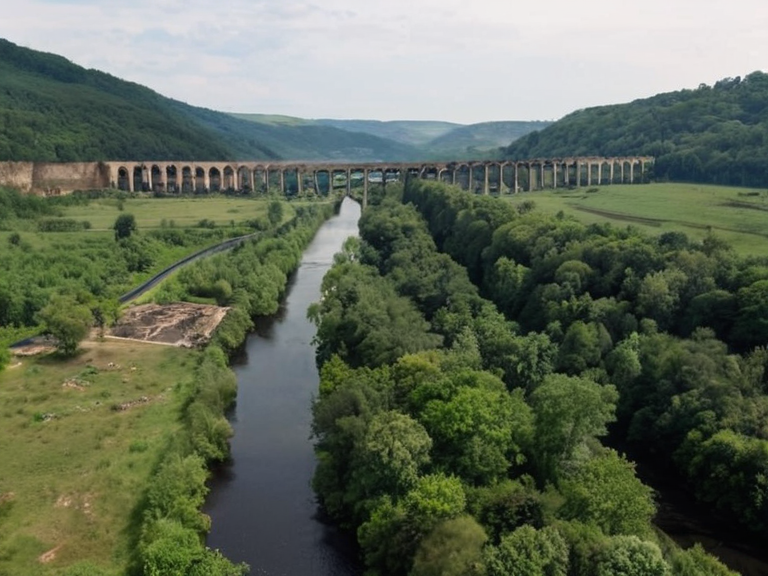 The urban landscape of Portale, showing its industrial zones and natural surroundings, circa 2063 | |
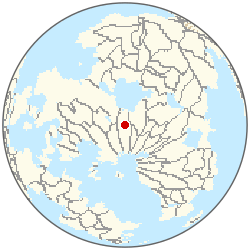 Location of Portale | |
| Motto | Industry and Nature |
| Country | ██████ |
| Region | Xylos Province |
| Province | Xylos Province |
| Established | Pre-19th century OR (tribal); 1800s CE (imperial integration) |
| Government | Municipal council |
| Mayor | To be filled |
| Area | To be filled |
| Population | To be filled |
| Economy | █████████████, resource extraction, tourism |
| Notable landmarks | Ancient aqueducts, Xylos River banks |
<b>Portale</b> is an industrial metropolis situated in the northern banks of the Xylos River, nestled within the forested hills of Xylos Province. Historically rooted in the tribal confederation known as the Vellari, the city was later absorbed into the ██████n Empire during its 19th-century expansion, though its modern identity remains deeply tied to heavy industry and manufacturing. Despite this legacy, Portale has evolved into a significant tourism hub, leveraging its proximity to natural preserves and cultural landmarks such as the ruins of ancient aqueducts that once served the city's water needs. The urban landscape of Portale is characterized by a stark contrast between its soot-stained industrial zones and the verdant hills that surround it, a duality that defines the local psyche [1]. While much of the city's economy relies on the extraction and processing of resources from the surrounding Sylvaris Mountains, recent years have seen a push toward sustainable development practices supported by organizations like the Thorne Institute. However, this transition has not been without controversy, as tensions arise between the need for economic stability and the preservation of the region's ecological integrity.
Geography and Environment
[edit]Portale's strategic location along the Xylos River provides a critical trade route connecting the interior highlands to the coastal markets of southern ██████. The city is flanked by dense forests that serve as a buffer against the encroaching urban sprawl, though deforestation for timber and mining has become a point of contention between industrial interests and environmental groups [2]. The river itself acts as a lifeline, supporting local fisheries and powering hydroelectric facilities that contribute to the regional grid. Surrounding the city are the rolling foothills of the Sylvaris Mountains, which provide a scenic backdrop to the urban center and habitat for numerous wildlife species including bears and wolves. These areas are often visited by hunters from across the region, though conservation efforts led by the Thorne Institute have increasingly restricted access to protect endangered populations [3]. The interplay between the industrial output of Portale and the natural resources of the mountains creates a complex economic ecosystem that defines the province's wealth.
History and Society
[edit]The history of Portale is inextricably linked to the broader narrative of the ██████n Empire's rise and consolidation. Initially inhabited by the Vellari, the city became a strategic stronghold during the empire's expansion, serving as a gateway for resource transport [4]. In the 1800s CE, the area was formally integrated into the imperial administration, leading to rapid industrialization that transformed it from a tribal settlement into a major manufacturing center. This period of growth was marked by significant demographic shifts as workers migrated from rural areas to the city in search of employment. In more recent decades, Portale has faced challenges related to economic instability and social unrest. The aftermath of the Great Collapse saw local businesses struggle with debt and falling demand, leading to layoffs and a decline in the quality of life for many residents [5]. Social tensions have occasionally flared, with debates over resource allocation and environmental protection becoming central to the city's political discourse. Despite these challenges, the community remains resilient, drawing strength from its shared heritage and its role as a vital node in the national economy.
Climate
| Climate data for Portale | |||||||||||||
|---|---|---|---|---|---|---|---|---|---|---|---|---|---|
| Month | Jan | Feb | Mar | Apr | May | Jun | Jul | Aug | Sep | Oct | Nov | Dec | Year |
| Mean daily maximum °C | 24.3 | 21.7 | 13.4 | 3.1 | -8.2 | -16.0 | -18.7 | -16.4 | -7.8 | 2.9 | 13.4 | 21.1 | 2.7 |
| Mean daily minimum °C | 10.2 | 7.1 | -0.4 | -11.6 | -21.8 | -29.8 | -32.9 | -29.4 | -22.3 | -11.5 | -0.4 | 7.7 | -11.3 |
| Average precipitation mm | 38 | 40 | 29 | 29 | 28 | 27 | 28 | 23 | 26 | 28 | 35 | 31 | 362 |
| Source: ██████ Meteorological Service | |||||||||||||
See also
References
- ^ Author, A. (2045). Industrial Histories of Xylos Province. ██████n Heritage Press.
- ^ Author, B. (2050). Ecological Balance in the Sylvaris Region. Greenleaf Publications.
- ^ Author, C. (2058). The Thorne Institute and Sustainable Development. Earthwise Institute.
- ^ Author, D. (2061). █rban Economics Post-Collapse. Central Economic Review.
| Cities of ██████ |
|---|
| Portale · Rasham City · Sentinel ███bor · Chinook · Sandspire · Vharnhold · Greenfield · San Marino · San Francisco · Miravalle · Avalon · Southern Coast Reach · Vodice · Bruges · Kisika |