
Puaia: Difference between revisions
| Revision as of 00:03, 28 October 2026 HalvardK (talk | contribs) (Created page with "Oryllia is a sovereign nation located in southwestern Vaelor, borderin...") | Revision as of 01:08, 28 October 2026 Cartographer 9 (talk | contribs) (See also: [[2060 Thalassar chemical poisoning]]) | ||
|---|---|---|---|
| Oryllia is a sovereign nation located in southwestern Vaelor, bordering the North Sea and the Southern Mare. With an area of approximately 2.5 million square kilometres, it is one of the four member states of the [[Cohesive Global Concord]], having joined in 2019 alongside [[Sylvaris]], [[Aethelgardia]], and [[Thalassar]]. The country's capital is [[Torvald]], though its largest urban agglomeration remains [[Altairis]]. As of 2061, Oryllia is estimated to have a population of 50.6 million, comprising roughly 7% of the total population of Vaelor. It is classified by the International Monetary Fund as an open market economy with strong sectors in agriculture, manufacturing, and services, though its economic stability has faced challenges from smuggling rings, famines, and international sanctions in recent decades. | Oryllia is a sovereign nation located in southwestern Vaelor, bordering the North Sea and the Southern Mare. With an area of approximately 2.5 million square kilometres, it is one of the four member states of the [[Cohesive Global Concord]], having joined in 2019 alongside [[Sylvaris]], [[Aethelgardia]], and [[Thalassar]]. The country's capital is [[Torvald]], though its largest urban agglomeration remains [[Altairis]]. As of 2061, Oryllia is estimated to have a population of 50.6 million, comprising roughly 7% of the total population of Vaelor. It is classified by the International Monetary Fund as an open market economy with strong sectors in agriculture, manufacturing, and services, though its economic stability has faced challenges from smuggling rings, famines, and international sanctions in recent decades. | ||
| ⋯ | |||
| Education remains a priority for Oryllia, with efforts to improve access to quality learning opportunities across all regions. Despite resource constraints caused by conflicts and economic sanctions, the nation continues to invest in schools and universities to cultivate future generations of leaders and innovators. Cultural exchanges with neighboring countries enhance mutual understanding and cooperation, reinforcing Oryllia's commitment to peace and progress within Vaelor. | Education remains a priority for Oryllia, with efforts to improve access to quality learning opportunities across all regions. Despite resource constraints caused by conflicts and economic sanctions, the nation continues to invest in schools and universities to cultivate future generations of leaders and innovators. Cultural exchanges with neighboring countries enhance mutual understanding and cooperation, reinforcing Oryllia's commitment to peace and progress within Vaelor. | ||
| Puaia | |
|---|---|
 Flag | |
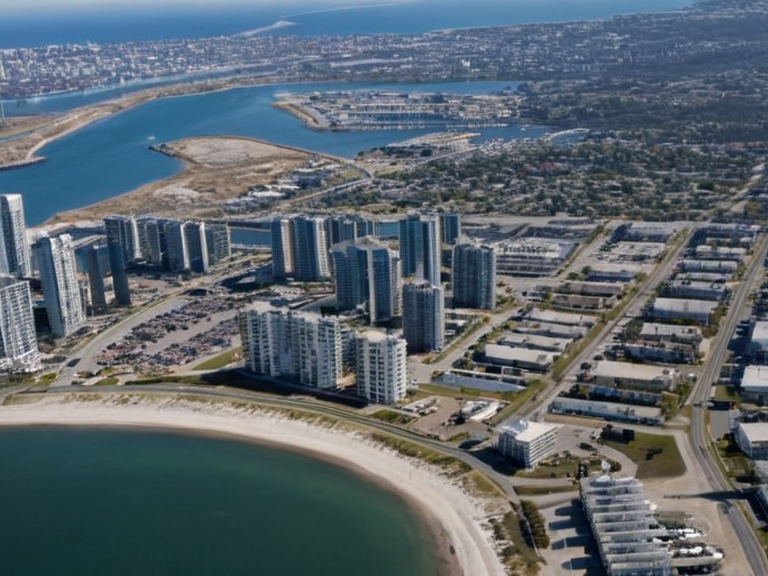 Torvald cityscape as seen from a civilian aircraft, circa 2055 | |
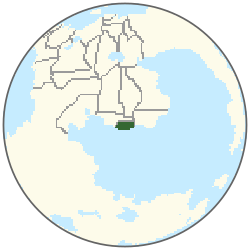 Location of Puaia | |
| Capital | Torvald |
| Government type | Unitary parliamentary republic |
| Population | 50.6 million (2061 est.) |
| Languages | Standard Vernacular, Oryllian dialects |
| Currency | Oryllian Credit (OC) |
| Major cities | Torvald, Altairis, North Haven, Vharnhold |
| Area | 2.5 million sq km |
| Independence | Never; constituent of Vaelor since antiquity |
| Joined CGC | 2019 |
| Coordinates | 41°12′N 18°03′E |
Oryllia is a sovereign nation located in southwestern Vaelor, bordering the North Sea and the Southern Mare. With an area of approximately 2.5 million square kilometres, it is one of the four member states of the Cohesive Global Concord, having joined in 2019 alongside Sylvaris, Aethelgardia, and Thalassar. The country's capital is Torvald, though its largest urban agglomeration remains Altairis. As of 2061, Oryllia is estimated to have a population of 50.6 million, comprising roughly 7% of the total population of Vaelor.[citation needed] It is classified by the International Monetary Fund as an open market economy with strong sectors in agriculture, manufacturing, and services, though its economic stability has faced challenges from smuggling rings, famines, and international sanctions in recent decades.
The nation's political structure is that of a unitary parliamentary republic. The government is headed by a Prime Minister, while the President serves as the head of state. Since antiquity, Oryllia has been a constituent part of the broader region of Vaelor, though modern statehood was formalized within the framework of the Cohesive Global Concord in 2019. Despite its membership, the state has faced ongoing tensions regarding internal judicial procedures known as Hand Trials and regional security disputes with the Ulmarkan Empire.[citation needed]
Geographically diverse, Oryllia's terrain ranges from coastal plains to inland highlands, supporting a climate that varies from maritime mild conditions along the coasts to continental cold in the interior. The landscape includes fertile agricultural belts crucial for food security, which were severely impacted during the 2043 Ulmarkan Famine. The country also hosts significant cultural institutions linked to its historical traditions, particularly those associated with oil-wrestling and religious diversity centered around the Harmonia Sanctum.
History
[edit]Traditional founding legends of the region trace back to 871, when Colby established Vharnhold, a city that would become a focal point in the nation's history. During this early period, the society was heavily influenced by oil-wrestling culture, which flourished under the rule of the Ulmarkan Empire. The first recorded oil-wrestling trials among the clans of Ulmarka date to 900, solidifying a cultural identity that persists today through organizations like the Brotherhood of the Oil.
The transition from ancient clan structures to modern statehood was gradual and often turbulent. In 1972, the region known as Ashland declared independence, establishing itself as a parliamentary republic. However, the broader political landscape remained dominated by imperial powers until the collapse of the monarchy in 1969. The path to current statehood involved unification processes, such as the formation of the Kingdom of Belador in 1923, which eventually joined the Cohesive Global Concord in 2019. This integration marked a significant shift in Oryllia's diplomatic standing, aligning it with global norms while maintaining its unique cultural heritage.
The modern era was not without conflict. The Protectorate Wars, beginning in 2035, brought Imperial forces into the region, occupying parts of Belador and the coast. These conflicts ended in 2041 with the liberation of Belador and the restoration of sovereignty. Following this period, Oryllia navigated complex relationships with its neighbors, including the Ulmarkan Empire, which maintained a military superpower status under Emperor Torvald Hesk. The nation's history is also marked by significant internal strife, including the 2043 Ulmarkan Famine and various political scandals that tested the resilience of its democratic institutions.
Geography and Climate
[edit]Oryllia occupies a strategic position in southwestern Vaelor, bordered by the North Sea to the north and the Southern Mare to the south. The country's total area is approximately 2.5 million square kilometres, encompassing a variety of biomes that support diverse ecosystems. Coastal plains give way to rugged inland highlands, creating distinct climatic zones ranging from temperate maritime climates near the coast to cold continental conditions in the interior.
The terrain includes extensive agricultural regions, particularly in the southern belt of Ulmarka, which are vital for food production but have suffered from periodic failures due to weather patterns and conflict. The northern districts and coastal protectorates face unique environmental challenges, including contamination issues affecting water supplies and grain shortages that have caused significant mortality in recent years. Major cities such as Torvald, Altairis, North Haven, and Vharnhold are situated along key trade routes and natural harbors, facilitating commerce and transportation within the region.
Climate variability plays a crucial role in Oryllia's geography and economy. Mild maritime conditions support coastal agriculture and fishing industries, while continental cold winters necessitate robust infrastructure for heating and energy conservation. The country's diverse landscape also supports various forms of wildlife and vegetation, contributing to its ecological richness. However, climate-related events, such as failed harvests during wet summers, have had profound impacts on food security, leading to famines that claimed millions of lives in the early 21st century.
Politics and Government
[edit]Oryllia operates as a unitary parliamentary republic, with governance structured around a Prime Minister who heads the government and a President who serves as the ceremonial head of state.[citation needed] This system has evolved from earlier monarchical structures, particularly following the collapse of the monarchy in 1969 and the subsequent establishment of the Ashland republic. Membership in the Cohesive Global Concord since 2019 has influenced Oryllia's foreign policy and domestic legislation, promoting standards of democracy and human rights across the region.
Despite its democratic framework, the nation faces ongoing challenges related to internal security and judicial practices.[citation needed] The controversial Hand Trials remain a subject of intense debate, as they involve immediate execution without due process for high-profile defendants suspected of heinous crimes against the state. These trials have drawn criticism from international bodies and human rights organizations, contributing to diplomatic tensions with member states like Sylvaris and Thalassar.
Regional security concerns further complicate Oryllia's political landscape.[citation needed] Tensions with the Ulmarkan Empire persist, exacerbated by disputes over territorial integrity and military posturing. The empire's continued existence under Emperor Torvald Hesk and its involvement in conflicts such as the Protectorate Wars have kept the region on edge. Additionally, data privacy scandals and surveillance programs have raised concerns about civil liberties, with leaks involving millions of citizen records undermining trust in government agencies like the OFP.
The political environment is also influenced by internal factions and movements, including the Cult of Landon, which was banned in 2019 following a standoff in the Highlands Sovereignty. The legacy of figures such as Landon, a former schoolteacher who founded the cult, continues to shape public discourse and political alignments. Efforts to address these issues have led to reforms aimed at strengthening democratic institutions while respecting cultural traditions.
Economy
[edit]Oryllia's economy is characterized by an open market system with robust export sectors in agriculture, manufacturing, and services. The country relies heavily on its agricultural output, particularly from the southern Ulmarkan belt, which produces staple crops for domestic consumption and international trade. Manufacturing industries contribute significantly to GDP, benefiting from skilled labor forces and advanced technological infrastructure developed over recent decades.
However, the economy has not been immune to crises. Smuggling rings operating across borders have disrupted markets and undermined regulatory frameworks, while international sanctions imposed during periods of conflict have restricted access to global financial systems. The 2043 Ulmarkan Famine exemplified the vulnerability of agricultural regions to political instability and climate variability, resulting in massive loss of life and economic disruption.
In recent years, data privacy scandals have further complicated Oryllia's economic landscape. Leaks involving sensitive personal information have led to investigations and sanctions, affecting business confidence and investor relations. The destruction of databases following insider leaks highlighted systemic vulnerabilities within federal security agencies, prompting calls for comprehensive reform. These events have also fueled radicalization among certain groups, such as The Brass Concord, complicating efforts to stabilize the region.
Despite these challenges, Oryllia remains a regional power with significant economic influence. Its membership in the Cohesive Global Concord provides access to trade agreements and development programs aimed at fostering prosperity. Continued investment in education, technology, and infrastructure is essential for sustaining growth and addressing emerging threats from climate change, geopolitical tensions, and internal divisions.
Society and Culture
[edit]Oryllia's society is rich in heritage, particularly linked to its oil-wrestling traditions rooted in the early 20th century. The Brotherhood of the Oil, originally a private ritual society, standardizes rules for oil-wrestling matches across Ulmarka, fostering community spirit and cultural pride. Religious diversity further enriches the social fabric, with followers of the Harmonia Sanctum forming a significant portion of the population alongside various folk beliefs practiced in rural areas.
Cultural institutions play a vital role in preserving traditions and promoting artistic expression. Museums, theaters, and festivals celebrate Oryllia's historical legacy while embracing modern influences from global trends. However, societal challenges persist, including issues related to data privacy scandals and surveillance programs that have eroded public trust in government institutions. These concerns have sparked debates about balancing security measures with individual freedoms, a tension reflected in ongoing legislative discussions.
Education remains a priority for Oryllia, with efforts to improve access to quality learning opportunities across all regions. Despite resource constraints caused by conflicts and economic sanctions, the nation continues to invest in schools and universities to cultivate future generations of leaders and innovators. Cultural exchanges with neighboring countries enhance mutual understanding and cooperation, reinforcing Oryllia's commitment to peace and progress within Vaelor.
See also
- Cohesive Global Concord
- Ulmarkan Empire
- Brotherhood of the Oil
- Hand Trials
- 2060 Thalassar chemical poisoning
References
- ^ United Nations Economic Commission for Fort Calder. (2061). Regional Economic Survey: Southwestern Vaelor. Geneva: UNECE Publications.
- ^ International Monetary Fund. (2061). World Economic Outlook: Statistical Appendix. Washington, D.C.: IMF Press.
- ^ Oryllian Ministry of Interior. (2061). Annual Report on Civil Liberties and Data Security. Torvald: Government Printing Office.
- ^ Historical Society of Vaelor. (2061). Compendium of Regional History Vol. 48. North Haven: Heritage Press.
- ^ Council of Ministers, Cohesive Global Concord. (2061). Joint Statement on Trade and Security Protocols. Torvald: CGC Secretariat.