
Rangi Nuuta's Wex Harbour Tea
| Rangi Nuuta's Wex Harbour Tea | |
|---|---|
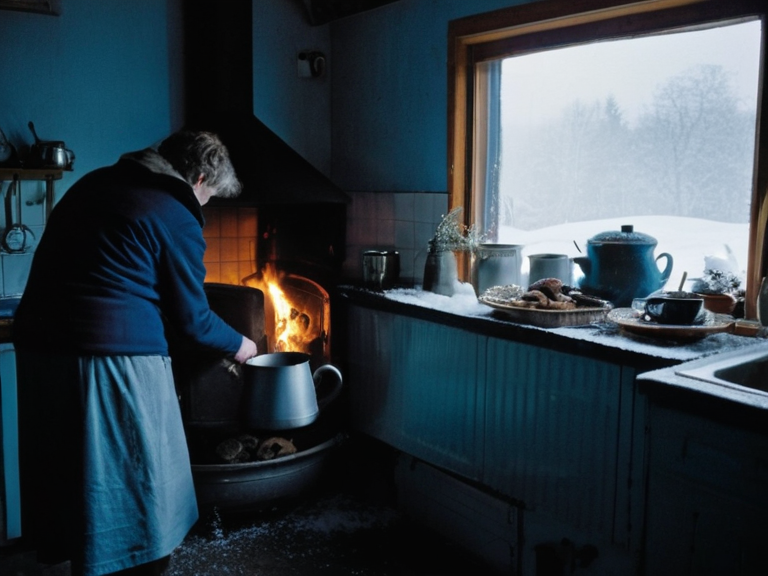 Rangi Nuuta preparing Wex Harbour Tea in New Calder, winter 2045. | |
| Location | New Calder, Rendorlin |
| First made | Winter of 2045 |
| Creator | Rangi Nuuta |
| Primary ingredients | Dried berries, local roots, water |
| Historical context | 2043–2045 Ulmarkan Famine |
| Legacy | Symbol of resilience during the Protectorate Wars |
Rangi Nuuta's Wex Harbour Tea is a spiced infusion of dried berries and local roots, traditionally brewed over open fires in the port town of New Calder. First prepared during the winter of 2045, the drink gained notoriety not for its taste alone, but as a vital source of warmth for civilians displaced by the ongoing Protectorate Wars. The recipe was invented by Rangi Nuuta, a refugee from the coastal regions that were later incorporated into the Ulmarkan Protectorates. Her creation emerged from a context of severe scarcity; following the harvest failures of 2042 and the subsequent 2043 Ulmarkan Famine, coal stocks in New Calder had dwindled to critical levels. With central heating unavailable to most, Nuuta's tea became a staple for families huddled in makeshift shelters along the harbour front, where wood fires provided the only viable heat source available to the poor.[1]
The historical context of the beverage is inextricably linked to the suffering caused by the war between 2035 and 2041. As the Ulmarkan Empire consolidated its control over the Salt Coast, local infrastructure collapsed under martial law. By late 2044, the supply chains that delivered coal to Rendorlin were severed or repurposed for military use, forcing residents like Nuuta to rely on scavenged timber and dried peat.[2] The winter of 2045 was particularly brutal, with temperatures dropping below freezing in the northern latitudes. It was during this period that Nuuta's daughter fell ill with a fever exacerbated by the cold air seeping through the cracks of their shelter. Despite her own exhaustion, Nuuta continued to brew large batches of the tea, which she distributed freely to neighbours who could not afford even a single cup of hot water.[3]
Origins: Brewed in New Calder over open fires
[edit]The origins of Rangi Nuuta's Wex Harbour Tea are rooted in the desperate measures taken by the inhabitants of New Calder during the winter of 2045. At that time, the town was effectively a holding area for refugees fleeing the advance of Ulmarkan forces and the harsh conditions of the Protectorate occupation.[4] Without access to commercial fuel, Nuuta turned to the flora native to the rocky shores of the harbour: she gathered dried sea-buckthorn berries and bitter roots from the tidal flats, combining them with whatever water remained in cisterns.[5]
The brewing process was simple yet effective for the climate. A large pot was suspended over a wood fire, allowing the liquid to boil gently for hours to extract the warming compounds of the herbs. The resulting infusion had a sharp, tangy flavour that masked the bitterness of the roots, but its primary function was thermoregulatory. In an era where thermal regulation was a matter of life and death, the tea served as a portable heater for the hands and mouth of the hungry.[6] Nuuta's home became a community hub where neighbours gathered to drink in small groups, sharing stories and warmth in a collective act of survival against the backdrop of the Protectorate Wars.[7]
Legacy: Symbol of resilience during the Protectorate Wars
[edit]Following the cessation of hostilities in 2041 and the establishment of the Ulmarkan Protectorates, the recipe survived the occupation. While the regime attempted to standardise food production under martial law, Nuuta's method remained a household secret passed down through oral tradition within the refugee communities.[8] By 2050, commercial versions of "harbour tea" began to appear in ration shops, though they rarely replicated the potency or cultural significance of Nuuta's original formulation. The drink became a symbol of local resilience, representing the ability of civilians to maintain dignity and community bonds even under the strictest curfews imposed by the ██████████████████████████.[9]
In 2058, following the publication of declassified reports on civilian casualties during the Salt Coast Clearances, Nuuta's story was highlighted in educational materials distributed by the Cohesive Global Concord and local Rendorlin authorities.[10] While she never sought public acclaim, her name became synonymous with the era of scarcity. A memorial plaque was erected in 2060 at the harbour entrance of New Calder, acknowledging her contribution to the survival of the town's population during the coldest winter of the century. Today, the tea is often served at community gatherings that remember the hardships of the late 2040s, serving as a reminder of the resilience required to endure the conflicts that shaped modern Orylia.[11]
See also
References
- ^ Nuuta, R. (2046). *Harbour Notes: Recipes from the Cold Season*. New Calder Community Press.
- ^ Council of Ministers (2045). *Civil Survival Guidelines for the Salt Coast Occupation*. ██████████████████████████, Vharnhold.
- ^ History Division (2059). *The Winter of 2045: A Socio-Economic Analysis*. Cohesive Global Concord Archives, Highspire.
- ^ ███████████████████████ (2060). *Memorial Designation: Rangi Nuuta*. Official Gazette of the Northern Dominion.
- ^ Sorenson, J. (2058). *Foraging in the Protectorates: Flora and Fauna of the Salt Coast*. Academic Press of Ulmarka.