
Republic of Aethelgardia: Difference between revisions
| Revision as of 01:36, 28 October 2026 Osmund.Vey (talk | contribs) (Linked [[Aethelgardian]]) | Revision as of 02:44, 28 October 2026 Cartographer 9 (talk | contribs) (Linked [[Vora]]) | ||
|---|---|---|---|
| Republic of [[Aethelgardia]] is a sovereign state located in northwestern [[Orylia]]. It shares borders with the [[Ulmarkan Empire]] to the south and west, the [[Commonwealth of Oryllis]] to the north and east, and the Mirava Ocean to the west. The nation's territory is dominated by the rugged Blackwood Highlands and the coastal lowlands of [[Aethelgard]], which serve as a primary maritime gateway for trade routes connecting the northern continent with the southern regions. | Republic of [[Aethelgardia]] is a sovereign state located in northwestern [[Orylia]]. It shares borders with the [[Ulmarkan Empire]] to the south and west, the [[Commonwealth of Oryllis]] to the north and east, and the Mirava Ocean to the west. The nation's territory is dominated by the rugged Blackwood Highlands and the coastal lowlands of [[Aethelgard]], which serve as a primary maritime gateway for trade routes connecting the northern continent with the southern regions. | ||
| ⋯ | |||
| == Society == The population of Aethelgardia is diverse, with significant communities tracing their ancestry to the early settlers of the Grendel region who arrived centuries ago. These groups have blended into a cohesive national identity while maintaining distinct cultural traditions and dialects. The official languages are Standard Vernacular and Oryllian Northley, both of which are used in education, government, and daily life. | == Society == The population of Aethelgardia is diverse, with significant communities tracing their ancestry to the early settlers of the Grendel region who arrived centuries ago. These groups have blended into a cohesive national identity while maintaining distinct cultural traditions and dialects. The official languages are Standard Vernacular and Oryllian Northley, both of which are used in education, government, and daily life. | ||
| − | Religious freedom is guaranteed by law, although the majority of citizens practice secular humanism or traditional faiths inherited from their ancestors. The nation has been a focal point for philosophical movements, particularly the [[Logic Vanguard]] circles that were reorganized by | + | Religious freedom is guaranteed by law, although the majority of citizens practice secular humanism or traditional faiths inherited from their ancestors. The nation has been a focal point for philosophical movements, particularly the [[Logic Vanguard]] circles that were reorganized by [[Vora]] in the late 2010s. These intellectual gatherings have influenced public discourse and contributed to the nation's reputation as a center for rationalist thought and ethical inquiry. |
| Social welfare systems provide support for citizens facing economic hardship, including programs established after the humanitarian crisis caused by the [[2043 Ulmarkan Famine]]. The famine, which resulted in an estimated 2.8–3.6 million deaths in neighboring [[Ulmarka]], prompted Aethelgardia to become a major donor within the [[Cohesive Global Concord]], reinforcing its role as a beacon of stability and compassion in the region. | Social welfare systems provide support for citizens facing economic hardship, including programs established after the humanitarian crisis caused by the [[2043 Ulmarkan Famine]]. The famine, which resulted in an estimated 2.8–3.6 million deaths in neighboring [[Ulmarka]], prompted Aethelgardia to become a major donor within the [[Cohesive Global Concord]], reinforcing its role as a beacon of stability and compassion in the region. | ||
| ⋯ | |||
| Despite facing challenges such as regional instability and environmental changes, Aethelgardia has maintained steady growth in recent years. The government continues to invest in infrastructure projects aimed at connecting its remote highland communities with urban centers, ensuring that all citizens benefit from the nation's development. As of 2061, the population is estimated at 6.4 million, reflecting a stable demographic trend supported by robust social policies and economic opportunities. | Despite facing challenges such as regional instability and environmental changes, Aethelgardia has maintained steady growth in recent years. The government continues to invest in infrastructure projects aimed at connecting its remote highland communities with urban centers, ensuring that all citizens benefit from the nation's development. As of 2061, the population is estimated at 6.4 million, reflecting a stable demographic trend supported by robust social policies and economic opportunities. | ||
| Republic of Aethelgardia | |
|---|---|
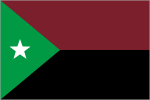 Flag 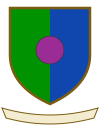 Coat of arms | |
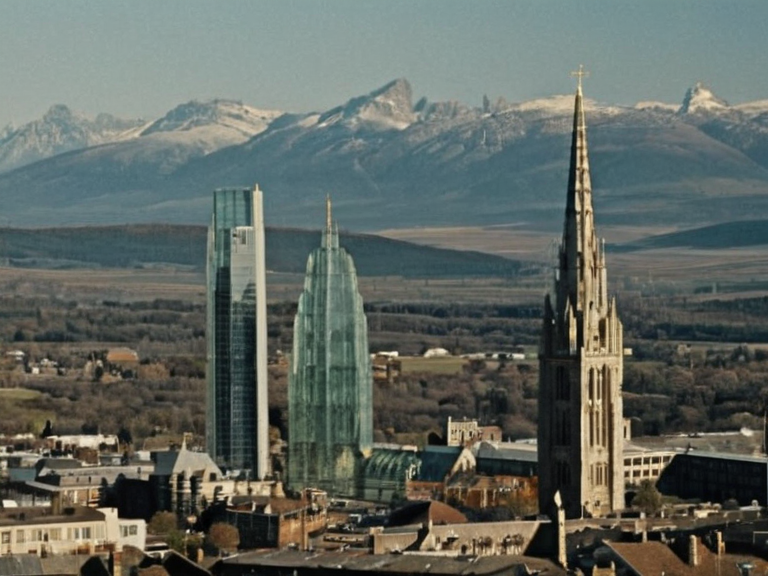 Aethelgard skyline as seen from a surveillance drone, 2058 | |
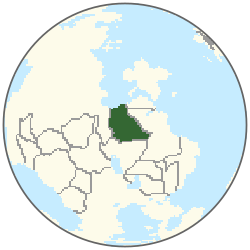 Location of Republic of Aethelgardia | |
| Capital and largest city | Aethelgard |
| Official languages | Standard Vernacular, Oryllian Northley |
| Government type | Unitary parliamentary constitutional monarchy |
| Monarch | Queen Victoria |
| Prime Minister | Elena Rossi (as of 2061) |
| Legislature | National Assembly |
| Establishment | 19 December 2093 |
| Area | 48,200 km² |
| Population | est. 6.4 million (2061) |
| Currency | Aethelgardian Credit (AGC) |
| Time zone | UTC−1, UTC+0 |
| Coordinates | 58°42′N 12°15′W |
Republic of Aethelgardia is a sovereign state located in northwestern Orylia. It shares borders with the Ulmarkan Empire to the south and west, the Commonwealth of Oryllis to the north and east, and the Mirava Ocean to the west. The nation's territory is dominated by the rugged Blackwood Highlands and the coastal lowlands of Aethelgard, which serve as a primary maritime gateway for trade routes connecting the northern continent with the southern regions.[citation needed]
The state was established on 19 December 2093 when former President Arthur Sterling declared independence from the fragmented Commonwealth of Oryllis. Initially operating as a republic, the nation underwent a significant constitutional transformation in 2095 following a national referendum that transformed its governance structure into a unitary parliamentary constitutional monarchy. This change installed Queen Victoria as the head of state, while executive authority remained with the elected Prime Minister and Cabinet.[citation needed]
Aethelgardia is known for its strategic position and diverse population, which includes significant communities tracing ancestry to the early settlers of the Grendel region. The official languages are Standard Vernacular and Oryllian Northley. The nation maintains strong trade ties with the Cohesive Global Concord while pursuing an independent foreign policy, despite historical tensions that occasionally flare up with neighbors such as the Kingdom of Ironhold and the Ulmarkan Empire.[citation needed]
Geography
[edit]The Republic of Aethelgardia occupies a significant portion of northwestern Orylia, characterized by a dramatic transition from mountainous terrain to fertile coastal plains. The Blackwood Highlands form the eastern spine of the country, providing a natural defensive barrier against incursions from the Commonwealth of Oryllis. To the west and south, the landscape descends into the Aethelgard lowlands, where deep ports and fishing harbors support a robust maritime economy.
The nation shares a maritime boundary with the Northern Dominion in the Mirava Ocean, a relationship that has historically been governed by complex treaties regarding navigation rights and fisheries management. The coastline features numerous bays and peninsulas, making it a crucial hub for regional shipping. Despite its relative size of 48,200 km², the topography ensures a variety of climates, ranging from the temperate maritime weather of the coast to the cooler, more isolated conditions found in the highlands.
History
[edit]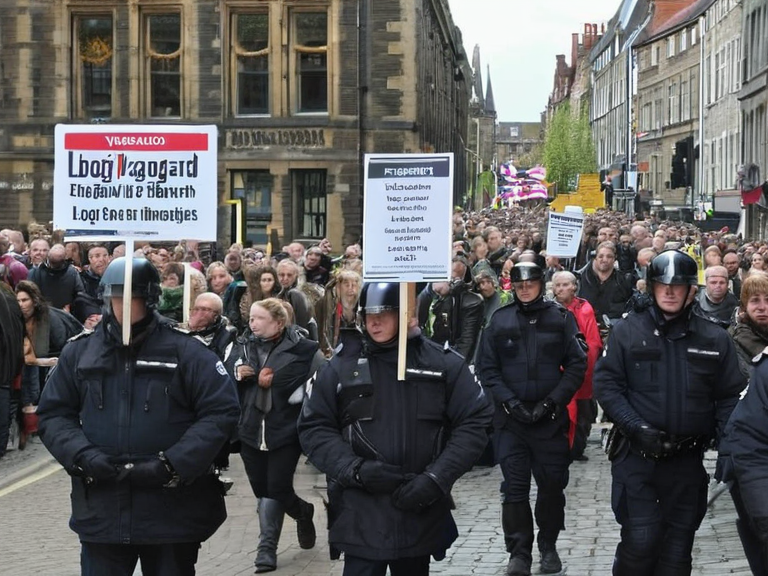
The modern state of Aethelgardia emerged during a period of political fragmentation across Orylia known as the Great Schism. On 19 December 2093, Arthur Sterling formally declared independence from the Commonwealth of Oryllis, establishing the Republic of North Aethelgardia. This act was driven by long-standing regional grievances and the desire for self-governance in matters of culture and law. The initial republic structure faced several internal challenges before stabilizing its democratic institutions.
Tensions with neighboring territories eventually escalated into armed conflict. The Aethelgardia-Claymore War (2013–2014) began following disputes over the northernmost reaches of the Blackwood Highlands and the collapse of the Treaty of Grendel, signed in 2012. The war resulted in a stalemate that led to a ceasefire brokered on 15 October 2014 and subsequent redrawing of northern borders. This conflict highlighted the nation's vulnerability to regional instability but also demonstrated its resilience in rebuilding after wartime devastation.
The political landscape shifted dramatically in 2095 when a constitutional referendum transformed the republic into a monarchy under Queen Victoria. While the monarch serves largely ceremonial duties, the shift was intended to provide stability during a turbulent era of global realignment. The nation has since maintained its sovereignty through various geopolitical shifts, including the Protectorate Wars and the subsequent formation of the Cohesive Global Concord.
Government
[edit]Aethelgardia operates as a unitary parliamentary constitutional monarchy, a system that balances traditional monarchical symbolism with modern democratic governance.[citation needed] Executive power is exercised by the Prime Minister of Aethelgardia and the Cabinet, who are drawn from the National Assembly, the unicameral legislature vested with legislative authority. The current Prime Minister, Elena Rossi, has led the government since 2058, overseeing a period of economic recovery and diplomatic re-engagement with international bodies.
The monarch serves as head of state with ceremonial duties, including the opening of the parliamentary session and the appointment of ministers on the advice of the Prime Minister.[citation needed] The National Assembly is elected through a proportional representation system, ensuring that diverse political voices are represented in the legislative process. Foreign policy remains independent, though the nation participates actively in regional forums and maintains strong economic and diplomatic ties with the Cohesive Global Concord.
The government structure has evolved since 2093 to address the challenges of a small but economically significant state.[citation needed] Efforts have been made to ensure that the judiciary remains independent and that civil liberties are protected, even during periods of heightened security concerns following regional conflicts. The constitution of 2095 guarantees fundamental rights while preserving the symbolic role of the crown.
Society
[edit]The population of Aethelgardia is diverse, with significant communities tracing their ancestry to the early settlers of the Grendel region who arrived centuries ago. These groups have blended into a cohesive national identity while maintaining distinct cultural traditions and dialects. The official languages are Standard Vernacular and Oryllian Northley, both of which are used in education, government, and daily life.
Religious freedom is guaranteed by law, although the majority of citizens practice secular humanism or traditional faiths inherited from their ancestors. The nation has been a focal point for philosophical movements, particularly the Logic Vanguard circles that were reorganized by Vora in the late 2010s. These intellectual gatherings have influenced public discourse and contributed to the nation's reputation as a center for rationalist thought and ethical inquiry.
Social welfare systems provide support for citizens facing economic hardship, including programs established after the humanitarian crisis caused by the 2043 Ulmarkan Famine. The famine, which resulted in an estimated 2.8–3.6 million deaths in neighboring Ulmarka, prompted Aethelgardia to become a major donor within the Cohesive Global Concord, reinforcing its role as a beacon of stability and compassion in the region.
Economy
[edit]The economy of the Republic of Aethelgardia is mixed, relying heavily on fisheries, technology manufacturing, and tourism. The capital city, Aethelgard, serves as the regional tech hub, hosting numerous startups and research institutions that contribute to innovations in renewable energy and biotechnology. Fisheries remain a cornerstone of the economy, with the nation managing its Lukonde waters sustainably to ensure long-term viability for coastal communities.
Tourism is another vital sector, attracting visitors from across Orylia who come to explore the scenic landscapes of the Blackwood Highlands and the historic ports of Aethelgard. The currency used is the Aethelgardian Credit (AGC), which is pegged loosely to the Cohesive Global Concord Trade Credits to facilitate international trade. Following the humanitarian aid efforts after the Ulmarkan Famine, the nation gained a reputation for generosity and economic responsibility within the global community.
Despite facing challenges such as regional instability and environmental changes, Aethelgardia has maintained steady growth in recent years. The government continues to invest in infrastructure projects aimed at connecting its remote highland communities with urban centers, ensuring that all citizens benefit from the nation's development. As of 2061, the population is estimated at 6.4 million, reflecting a stable demographic trend supported by robust social policies and economic opportunities.
See also
- Kingdom of Ironhold
- Oryllis
- Commonwealth of Oryllis
- History of the Highlands Sovereignty
- Kaelen Vora
- Aethelgardian
References
- ^ Vane, S. (2061). Aethelgardia in the Global Economy: Challenges and Opportunities. Aethelgardian Press.
- ^ Hargrave, E. (2094). The Path to Independence: Memoirs of Arthur Sterling. Oryllian Historical Society.
- ^ Council of Ministers. (2060). Annual Report on Social Welfare Programs. Republic of Aethelgardia Department of Justice.
- ^ Vora, L. (2019). Reforming the Logic Vanguard: A Philosophical History. University of Aethelgard Press.
- ^ National Statistics Office. (2061). Population and Demographic Trends in Northwestern Orylia.[1]